 Tampa Siding
 Why Lutz Roofs Wear Differently Than Roofs Up North
Lutz sits far enough inland to escape the worst of direct coastal surge, but it still takes the full brunt of everything else Tampa Bay weather throws around: sustained hurricane-force winds during tropical systems, near-daily summer thunderstorms with wind-driven rain, and some of the most intense year-round UV exposure in the continental United States. Add the salt-laden air that drifts inland off Tampa Bay and the Gulf, and you have a climate that ages a roof faster than almost anywhere else in the country.
An asphalt shingle roof in this area isn't just protecting a house from rain. It's holding up against constant thermal cycling (baking hot afternoons followed by sudden downpours), granule loss from UV bombardment, and uplift forces during named storms that a roof in a milder climate never has to handle. A shingle roof built to a generic national standard, installed the same way it would be in a dry, mild climate, does not hold up the same way here. The materials, the fastening pattern, the underlayment, and the flashing details all need to be chosen and installed with Hillsborough County's weather in mind.
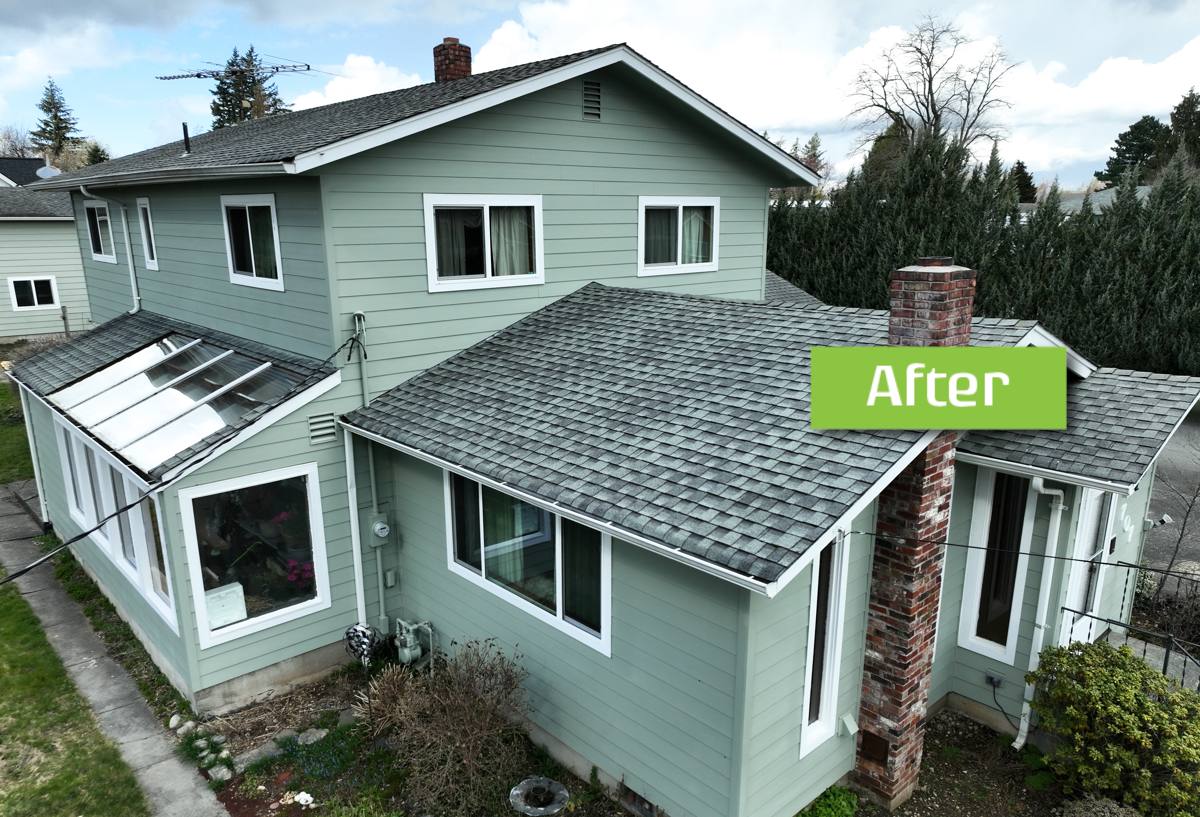
What a Correct Installation Actually Involves
"Asphalt shingle roof" covers a wide range of quality outcomes. The shingles themselves are only one part of the system — a roof is a layered assembly, and every layer matters for how it performs in wind and rain.
Underlayment
We install synthetic underlayment (not old-style felt) as the water-resistant barrier beneath the shingles. In a high-rain, high-humidity climate like ours, synthetic underlayment resists tearing, holds up better to job-site foot traffic during installation, and doesn't absorb moisture the way felt can if a storm rolls in mid-project. Self-adhering underlayment (also called ice-and-water shield, though it's not ice we're worried about here) gets used at valleys, eaves, and penetrations — the spots most likely to see wind-driven rain pushed sideways or backward under the shingle courses.
Fastening Pattern
Nail placement and nail count are not cosmetic details — they're the difference between shingles that stay on in a windstorm and shingles that don't. Florida Building Code specifies fastening requirements based on wind zone, and Hillsborough County inspectors check this. We install to the manufacturer's high-wind nailing pattern and the applicable code requirement, not the minimum a shingle bundle's label allows for milder climates.
Flashing
Step flashing at walls, counter-flashing at chimneys, and properly lapped flashing at valleys and roof-to-wall transitions are where most leaks actually originate — not from the shingle field itself. Reused or improperly integrated flashing is one of the most common shortcuts we see on roofs that "look fine" from the ground but leak during a hard-driving rain event.
Ventilation
Attic ventilation affects shingle lifespan directly. A poorly ventilated attic bakes shingles from underneath in our summer heat, which accelerates granule loss and can void manufacturer warranties. Balanced intake (soffit vents) and exhaust (ridge vent or equivalent) keep attic temperatures and moisture in a range the shingles were engineered for.
Choosing the Right Shingle for a Lutz Home
Not every asphalt shingle product is built for the same conditions, and price differences between tiers usually reflect real differences in wind performance, granule adhesion, and warranty terms — not just brand markup.
| Shingle Type | Typical Wind Rating | Expected Lifespan Here | Best Fit For |
|---|---|---|---|
| 3-tab (economy) | Lower rating, less resistant to uplift | Shorter, given our UV and wind exposure | Budget-limited projects, rental properties |
| Architectural / laminate | Higher rating with proper fastening | Solid mid-to-long-term performance | Most owner-occupied Lutz homes |
| Impact-rated / high-wind laminate | Highest available rating, often paired with insurance discounts | Longest-performing option in this category | Homes prioritizing storm resilience and long-term insurance savings |
Color and granule technology matter too. Algae-resistant granules (usually marketed with a warranty against streaking) are worth the small upcharge in our humidity — dark streaking from algae growth is common on roofs without this protection within a few years in Central Florida. Lighter shingle colors can also modestly reduce attic heat gain, which is a real consideration given how much of the year Lutz spends in direct, intense sun.
Repair, Recover, or Full Replacement?
Not every roof problem calls for a full tear-off, and a straight-shooting contractor should tell you that. The right call depends on the roof's age, how much of it is affected, and what's underneath the shingles.
- Localized repair makes sense for isolated wind damage, a single failed flashing detail, or storm damage confined to a small area on a roof that's otherwise sound and not near the end of its service life.
- Full replacement is the right call when the underlayment has aged out, granule loss is widespread, the decking has moisture damage, or the roof is old enough that repeated repairs are just delaying the inevitable at a rising cost.
- A "recover" (new shingles over old) is rarely something we recommend — it traps existing damage, adds weight, and often isn't allowed under current code once a roof already has multiple layers.
Signs Worth a Look
Granules collecting in gutters, shingles that look cupped or curled at the edges, dark or discolored patches, soft spots underfoot, or daylight visible in the attic around roof penetrations are all reasons to get an inspection before a small issue becomes a leak during the next storm.
How Our Process Works
We keep the process straightforward and give you real information at each step, not a sales pitch.
1. Inspection and Honest Assessment
We walk the roof, check the attic, and look at flashing details and ventilation — not just the shingle surface. You get a plain-language explanation of what we find, including whether repair is a legitimate option.
2. A Clear, Written Estimate
Scope, materials, and pricing spelled out in writing, with shingle options at different tiers so you can see the trade-offs rather than guess at them.
3. Permitting
Roof replacements in Hillsborough County require a permit and inspection. We handle the permit application and coordinate the required inspections so the work is documented and code-compliant — which also matters if you ever file an insurance claim or sell the home.
4. Tear-Off and Deck Inspection
We remove the old roofing down to the deck and inspect the decking itself for rot or moisture damage before anything new goes down. Hidden deck problems are common on older roofs and need to be addressed before new shingles are installed over them.
5. Installation
Underlayment, flashing, and shingles installed per code and manufacturer specification, with the fastening pattern appropriate for our wind zone.
6. Final Walkthrough and Cleanup
Magnetic sweep for nails, full site cleanup, and a walkthrough so you understand what was done and what warranty coverage applies.
Permits, Code, and Insurance Considerations in Hillsborough County
Florida Building Code sets wind-load and fastening requirements that vary by region, and Hillsborough County enforces its own permitting and inspection process on top of that. A roof installed without a permit — or one that skips required inspections — can create real problems later: insurance claim denials, complications during a home sale, and no documented proof the work meets code. We pull permits on every full roof replacement, not as an upsell, but because it protects you.
Wind mitigation matters for insurance premiums here too. A properly installed, correctly fastened, code-compliant roof can qualify a home for a wind mitigation inspection that lowers homeowners insurance costs — often a meaningful factor in the Tampa Bay area given how much wind exposure factors into local premiums.
Why a Crew That Already Works Lutz Matters
A contractor who works this specific area regularly knows the practical realities that generic advice misses: what Hillsborough County's permitting office actually expects on submittals, which shingle products hold up best against the UV and humidity here versus how they perform in a lab or a different climate, and how to sequence a job around our afternoon storm patterns so a roof isn't left exposed mid-installation when a summer thunderstorm rolls through with little warning. That local familiarity shows up in fewer surprises, fewer inspection delays, and a roof that's actually built for what it has to withstand — not just what a spec sheet says on paper.
Maintenance That Extends the Life of a Lutz Roof
A correctly installed roof still needs basic upkeep to reach its full expected lifespan in this climate.
- Clear gutters and downspouts regularly so water isn't backing up under the eaves during heavy rain.
- Trim overhanging branches to reduce debris buildup and abrasion damage during wind events.
- Schedule a visual inspection after any major storm, even if nothing looks obviously wrong from the ground.
- Watch for granule accumulation in gutters as an early sign of shingle wear.
- Address small leaks or flashing issues promptly — they rarely stay small in a climate with this much rain.
If you're weighing a repair, a replacement, or just want a straight answer about where your roof stands, we're glad to take a look. Request a free, no-pressure estimate using the form below.