 Tampa Siding
 What ColorPlus Technology Actually Is
ColorPlus is James Hardie's factory-applied color system. Instead of shipping raw fiber cement board that gets primed and painted on site — or worse, painted years later when the original finish fails — Hardie bakes the color onto the board in a controlled factory environment, using a multi-coat process that cures under heat rather than air-drying on a job site in July humidity.
That distinction matters more than it sounds. A factory-cured finish bonds to the substrate more evenly than anything applied outdoors, because the process isn't at the mercy of temperature swings, rain, or the amount of time a painter has before the next job. In Tampa, where afternoon storms can roll in with almost no warning during summer, that consistency is not a small thing.
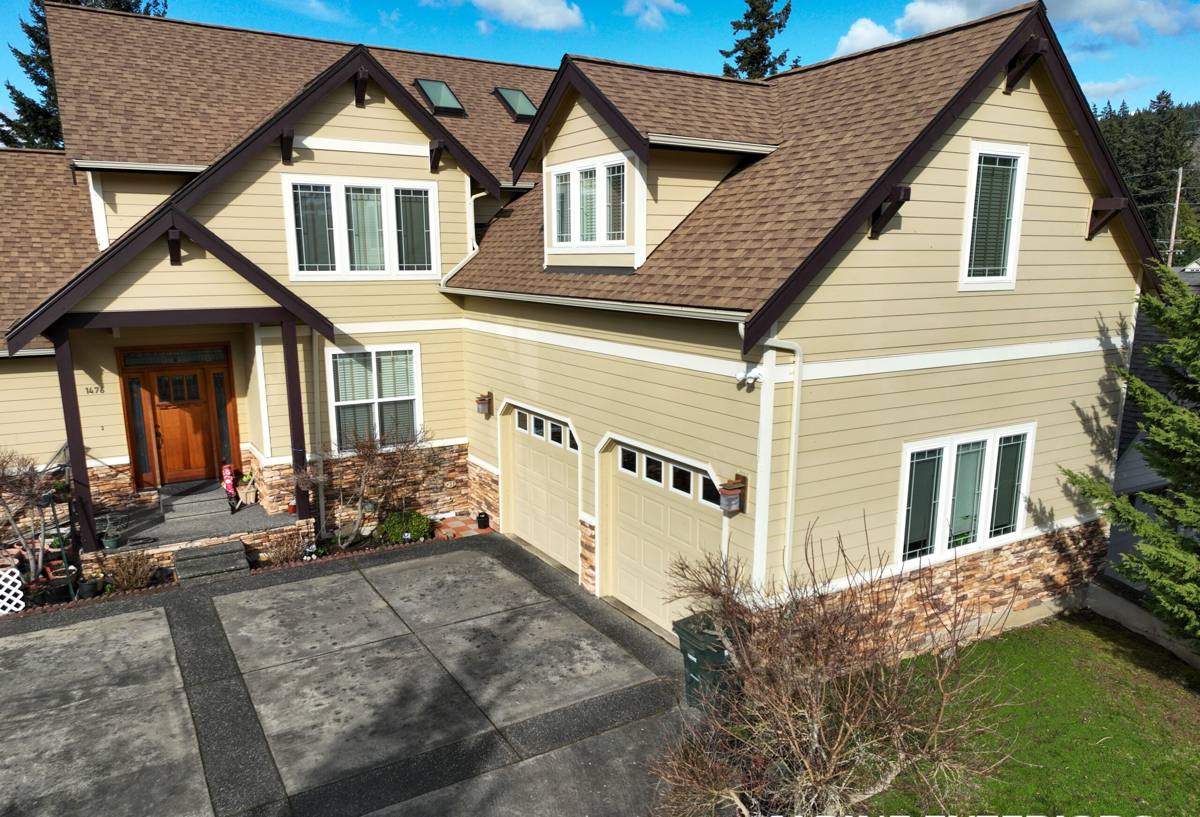
Why the Finish Matters More Here Than in Most Markets
Hillsborough County sits in one of the more punishing climate zones for exterior siding in the continental United States. Homes here deal with:
- Intense, near year-round UV exposure that breaks down pigment and resin in ordinary paint
- Wind-driven rain during tropical storms and hurricane season that pushes moisture into every seam and fastener hole
- Salt-laden air, especially for homes closer to Tampa Bay, Old Tampa Bay, and the coastal fringes of the county
- Sustained high humidity that keeps field-applied paint from ever fully curing the way factory finishes do
Field-applied paint on any siding substrate is fighting all four of those conditions at once, every day, for the life of the house. ColorPlus is engineered around them from the start, which is a large part of why it's the only finish system we put on homes.
The ColorPlus Color Palette
Hardie's Statement Collection includes a broad range of factory colors — neutrals like Arctic White, Cobblestone, and Khaki Brown; deeper tones like Iron Gray, Rich Espresso, and Aged Pewter; and accent colors like Boothbay Blue, Mountain Sage, and Countrylane Red that work well on trim, shutters, or accent walls. Availability by product line and region can shift over time, so we walk homeowners through the current palette and physical color samples rather than relying on a printed list, since screens and swatches never render a color exactly true.
Most Tampa homeowners land in one of three approaches:
- Coastal neutral — whites, warm grays, and soft beiges that reflect heat and read clean against Florida's bright light
- Warm traditional — tans, browns, and muted greens common in established Tampa neighborhoods like Seminole Heights, Sun City Center, and Brandon
- Bold contrast — a darker body color paired with white or cream trim, popular on newer construction and coastal-style remodels around Apollo Beach and South Tampa
Trim, Fascia, and Accent Coordination
Hardie's trim boards and fascia come in ColorPlus finishes designed to coordinate with the lap siding and panel colors, which keeps the color relationship consistent instead of guessing at a paint match between two different manufacturers' products. If you're mixing HardiePlank with HardieTrim or HardieShingle accents, staying inside the ColorPlus system avoids the slight color drift that happens when trim gets painted separately after installation.
Matching Color to Tampa Architecture
Color choice isn't purely aesthetic here — it interacts with a few local realities:
HOA and Deed Restrictions
Many subdivisions across Hillsborough County, particularly newer developments in areas like FishHawk, Riverview, and Wesley Chapel-adjacent communities, have HOA-approved color lists. We've worked with enough of these that we usually know which ColorPlus tones tend to fall inside or outside common HOA guidelines, but the homeowner's HOA documentation is always the final word — we recommend submitting for approval before ordering material.
Sun Exposure by Elevation
A south- or west-facing wall in Tampa takes dramatically more direct UV than a north-facing one. It's worth knowing that even the best factory finish will show more wear on the sun-hammered side of a house over a couple of decades than on the shaded side — that's physics, not a defect. Choosing a color you're comfortable seeing weather gradually, rather than a color that shows every shift starkly, is a reasonable planning consideration.
Roof and Masonry Coordination
A lot of Tampa homes have tile or dark asphalt roofing and existing brick or block accents that aren't changing. We look at the roof color, any stone or brick veneer, and the driveway/hardscape before finalizing a siding color, since a color that looks great on a sample chip can clash badly against a terra cotta tile roof or a warm-toned paver driveway.
Dark vs. Light Colors: The Honest Trade-offs
Darker ColorPlus colors absorb more heat and, on paper, are more prone to visible fading over a very long timeline because darker pigments show UV degradation more readily than light ones. That said, ColorPlus finishes are formulated specifically to resist fading far better than standard field-applied paint in the same color, so the comparison that matters isn't "light vs. dark" in isolation — it's ColorPlus in that color versus conventional paint in that color.
| Factor | Lighter ColorPlus Colors | Darker ColorPlus Colors |
|---|---|---|
| Heat absorption | Lower — stays cooler to the touch | Higher — noticeably warmer in direct sun |
| Visible fade over time | Less noticeable | More noticeable, though still far better than field-painted board |
| Salt/UV touch-up needs | Blends easier if minor touch-up is needed | Slightly harder to match perfectly over years |
| Common Tampa use case | Coastal, ranch, contemporary builds | Accent walls, trim contrast, traditional/craftsman styles |
Neither choice is wrong. It's a matter of knowing what you're trading and picking intentionally instead of by accident.
What the ColorPlus Warranty Actually Covers
It's worth separating two different warranties, because homeowners often assume they're the same thing:
- The product warranty on the fiber cement board itself (30 years, non-prorated, on HardiePlank HZ10 products) covers the integrity of the siding — cracking, rotting, or manufacturing defects.
- The ColorPlus finish warranty (15 years) covers the factory finish specifically — chipping, cracking, peeling, and fading beyond the manufacturer's specified threshold.
Both are transferable to a subsequent homeowner within the applicable terms, which matters for resale. Field-painting over ColorPlus siding — even a simple touch-up done with the wrong product — can affect finish warranty coverage on the areas painted, which is why Hardie sells matched touch-up kits specifically for small repairs instead of relying on a general-purpose exterior paint.
Installation Details That Protect the Finish
A lot of what determines whether a ColorPlus finish looks good in year fifteen comes down to how it was installed in week one:
- Cut edges exposed during fitting need to be sealed with Hardie's touch-up product, not left raw or covered with mismatched caulk
- Fastener heads should be set flush and, where visible, touched up so they don't rust-stain the finish over time
- Caulking at joints and trim needs to be a product compatible with the ColorPlus finish, not whatever tube happens to be in the truck
- Proper clearance from grade, roofing, and hardscape prevents moisture wicking that stains or degrades the finish from the board's edge inward
These aren't cosmetic nice-to-haves — they're the difference between a finish that reaches its 15-year warranty term looking close to new and one that shows premature wear at every joint and fastener within a few years.
Comparing Finish Systems
| Finish Type | Applied | Typical Longevity Before Repaint | Warranty Structure |
|---|---|---|---|
| ColorPlus (factory) | Baked on under controlled conditions before install | Often 15+ years | 15-year finish warranty, separate from product warranty |
| Field-applied paint on fiber cement | Sprayed/rolled on site after install | Commonly 7-10 years in this climate | Paint manufacturer's standard warranty, not tied to siding warranty |
| Primed board requiring paint | Primed at factory, painted on site | Same repaint cycle as field-applied paint | No factory finish warranty; repaint cost is the homeowner's |
A Practical Checklist for Choosing Your Color
- Check HOA-approved color lists before falling in love with a shade
- View physical ColorPlus samples outdoors, in direct Tampa sunlight, at different times of day
- Consider your home's sun exposure by elevation, not just the front-facing wall
- Coordinate against your actual roof color and any brick, block, or stone that isn't changing
- Decide intentionally on light vs. dark, understanding the heat and long-term fade trade-offs
- Confirm trim and accent colors are within the same ColorPlus system for a clean match
- Ask your installer how cut edges and fasteners will be sealed and treated before they start
Why We Only Install ColorPlus Hardie Siding
We standardized on James Hardie with ColorPlus finish because it removes the weakest link in most siding installations — the paint. A factory-cured finish, backed by a real warranty and matched to Hardie's climate-engineered HZ10 boards, holds up to what Tampa throws at a house: hurricane-force wind events, salt air drifting in off the bay, and sun exposure that most parts of the country never see. We're not interested in installing a product that puts a homeowner back on a ladder with a paint can inside a decade.
If you're planning a siding project and want to see ColorPlus samples against your own home's roof, brick, and trim, we're happy to walk you through it. Reach out for a free, no-pressure estimate — there's a form right below this page.