 Tampa Siding
 Board and batten is one of the oldest siding patterns in American building — wide vertical panels with a narrow strip, or "batten," covering each seam. It started as a practical way to keep barns and farmhouses weathertight before it became a design statement. Today it's one of the most requested looks on new builds and remodels across Hillsborough County, showing up on everything from Craftsman bungalows in Seminole Heights to modern farmhouse builds in New Tampa. This guide covers what board and batten actually is, how James Hardie makes it, what it costs relative to other siding profiles, and what correct installation looks like in a climate that doesn't forgive shortcuts.
What Board and Batten Actually Is
At its core, board and batten is a two-layer system. Wide vertical boards (or in fiber cement's case, a single engineered panel that mimics the look) run up the wall, and a thinner strip covers each vertical seam. The pattern reads as clean, evenly spaced vertical lines — a strong contrast to the horizontal lap siding most people picture when they think "siding."
There are two ways to build this look with James Hardie products:
- Hardie Artisan Board & Batten: A factory-engineered panel system designed specifically for this pattern, with deeper reveals and a more dimensional, authentic look.
- Hardie Panel + Batten Strips: Flat fiber cement panels installed with vertical batten strips (often HardieTrim) fastened over the seams — a more traditional and typically more budget-friendly approach.
Both are legitimate ways to get the look. The right choice depends on budget, the style of the home, and how much dimensional shadow-line you want the batten strips to throw.
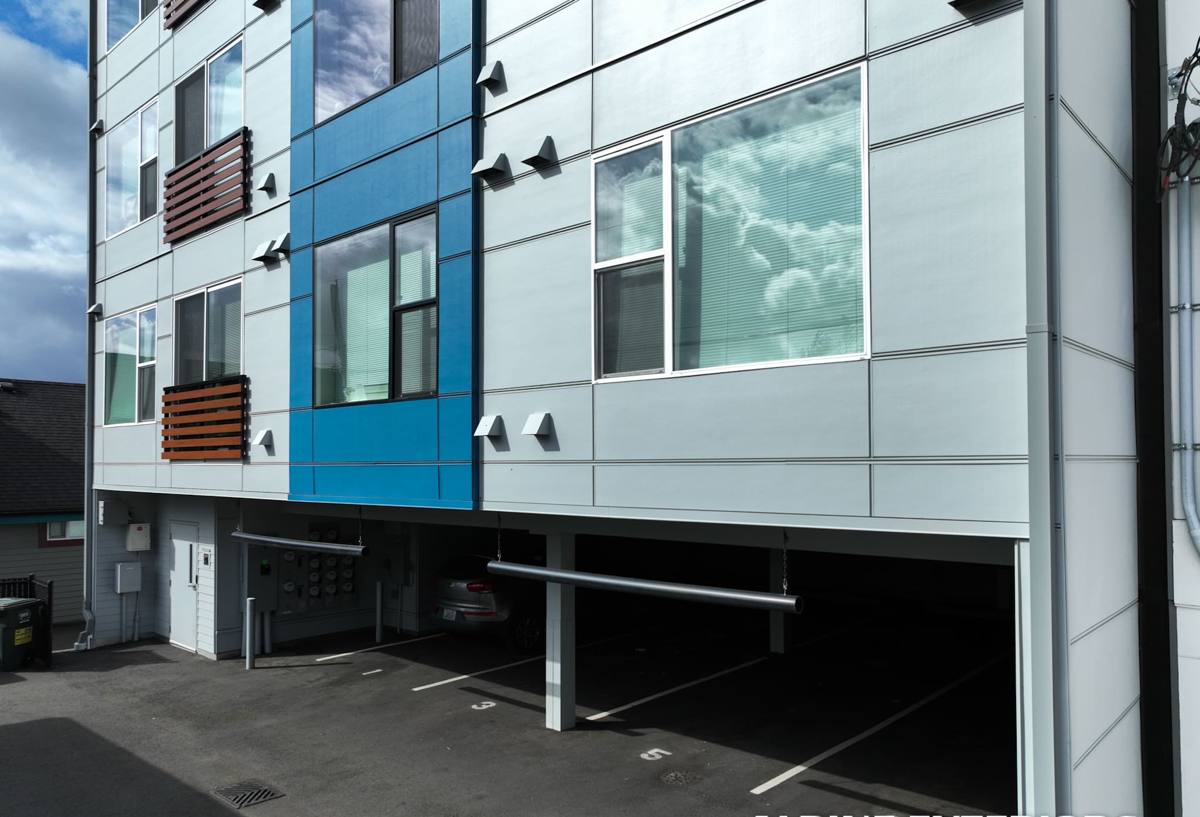
Why Homeowners Are Choosing This Look in Tampa
Vertical siding patterns pair naturally with the modern farmhouse, coastal cottage, and Craftsman styles that are popular in new Tampa-area developments and in remodels of older Hillsborough County homes. Board and batten is also frequently used as an accent — on a gable end, a dormer, an entry feature, or a full front elevation — paired with horizontal lap siding on the rest of the house. That mixed approach lets a home stand out on the block without looking like every other house on the street.
It's worth being honest about the trade-off: full-elevation board and batten shows dirt, streaking, and UV fade differently than lap siding because of the deep vertical shadow lines and the exposed batten edges. On a home facing years of Tampa's humidity and afternoon storms, that texture holds onto grime in the recessed channels a little more than a smooth lap profile does. It's not a reason to avoid the look — it's a reason to choose a factory finish built to handle it, and to plan on an occasional gentle rinse.
How James Hardie Engineers This Product for Florida
HZ10 Climate Engineering
James Hardie makes region-specific formulations of its fiber cement, and the HZ10 line is engineered for hot, humid climates like ours — built to resist moisture intrusion, cracking, and the freeze-thaw cycles that aren't really our problem here, but humidity and wind-driven rain absolutely are. Hillsborough County sits in a zone where wind-driven rain during tropical storms and afternoon downpours pushes water sideways against exterior walls for hours at a time. A siding product engineered around that reality behaves differently over a decade than one that wasn't.
ColorPlus Factory Finish
Every Hardie board and batten product is available with the ColorPlus finish — a coating baked onto the fiber cement at the factory under controlled conditions, rather than painted on site after installation. This matters more on board and batten than almost any other profile, because the vertical battens and deep reveals create dozens of extra edges and corners that a site-applied paint job has to cover evenly. A factory finish coats every surface, including the edges, before the boards ever reach the job site.
Non-Combustible Core
Fiber cement is made primarily from cement, sand, and cellulose fiber — it does not support flame spread the way wood-based or vinyl siding products can. That's a real consideration on homes near dry brush, wooded lots, or simply for homeowners who want one less combustible material on their exterior.
Color and Style Considerations
Board and batten's strong vertical lines mean color choice matters more here than on a standard lap profile. A few practical notes for Tampa homes specifically:
- Darker colors read as more dramatic on board and batten because the shadow lines from the battens are more visible against a dark field. They also absorb more heat and show dust between rain events more readily than lighter tones.
- Whites and warm neutrals are the most common choice for a reason — they keep the classic farmhouse look crisp and hide seasonal pollen and dust that's common in the Tampa Bay area during spring.
- Accent applications (gables, dormers, entry features) let you use a bolder color without committing the whole house to it, and without multiplying the maintenance concern across every elevation.
ColorPlus finishes come in a defined palette engineered to match, so board and batten sections and standard lap sections on the same house can be color-matched precisely rather than approximated with field-mixed paint.
Cost Factors: Board and Batten vs. Standard Lap Siding
Board and batten generally costs more than standard lap siding of the same material, mostly due to labor. The table below breaks down why, in broad terms — actual numbers depend on the home's size, elevation complexity, and whether it's new construction or a retrofit.
| Factor | Standard Lap Siding | Board & Batten |
|---|---|---|
| Installation labor | Fewer pieces, faster coverage | More pieces and fasteners per square foot; batten strips add a second install pass |
| Material waste | Lower — long horizontal runs | Higher — more cuts around openings and corners |
| Trim and flashing detail | Standard J-channel and corner trim | More custom flashing behind each batten to manage water paths correctly |
| Best suited for | Full-house coverage, budget-conscious projects | Accent walls, gables, or homeowners set on the farmhouse/cottage look |
Many homeowners split the difference: lap siding across most of the home, with board and batten reserved for a gable, dormer, or entry accent. It gets the visual interest without pricing the whole project at the higher labor rate.
Why Correct Installation Matters More on This Profile
Board and batten has more seams and fastener penetrations per square foot than any other fiber cement profile, and every one of those seams and battens is a potential water entry point if it's not flashed correctly. This is where a lot of the real risk on this product lives — not in the material, but in the install.
What Correct Installation Requires
- Proper water-resistive barrier and rainscreen or drainage plane behind the entire assembly, not just at the seams.
- Flashing integrated behind every batten strip and around every window and door opening before the battens go on, not caulked over after the fact.
- Correct fastener spacing and placement per the manufacturer's installation instructions — over-driven or misplaced fasteners are one of the most common causes of cracking on any fiber cement job.
- Proper clearance at the bottom of the wall (typically a minimum gap above grade, decks, and roof lines) so the siding isn't sitting in standing water or constant splash-back.
- Caulking only at the joints the manufacturer specifies — over-caulking board and batten seams can trap moisture behind the boards instead of letting it drain.
James Hardie's warranty coverage is tied to installation according to their published instructions. A beautiful board and batten elevation installed without correct flashing behind each batten can look perfect for a year or two and then develop moisture problems that are expensive to trace and repair, because the damage is hidden behind the battens themselves.
Living With Board and Batten Long-Term
Once installed correctly, Hardie board and batten doesn't require much beyond what any exterior surface needs in this climate:
- An occasional gentle rinse with a garden hose to clear pollen, salt residue, and dust out of the recessed batten channels — pressure washers should be used carefully, if at all, and never aimed directly into seams.
- A yearly walk-around to check caulking at window and door transitions, since caulk (not the fiber cement itself) is the component most likely to need attention over time.
- Prompt attention to any impact damage — a cracked board should be replaced rather than just caulked over, since a crack is a direct path for water behind the assembly.
Because the ColorPlus finish is baked on rather than field-applied, homeowners generally don't face a repaint cycle on the same timeline as painted wood siding — that's one of the more meaningful long-term savings of the system, board and batten included.
Where This Fits on a Tampa Home
Between hurricane-force wind events, salt air drifting in off Tampa Bay, intense year-round UV, and the sheer volume of wind-driven rain during our wet season, exterior materials here get tested harder than in most parts of the country. Board and batten's deeper reveals and extra seams make installation quality the deciding factor in how well it holds up — which is exactly why we treat the flashing and fastening details on this profile with more attention than a standard lap job, not less.
If you're weighing a full board and batten elevation, an accent application, or just want to understand how it would look on your home, we're happy to walk the property with you and talk through the real trade-offs — no pressure, no obligation. Request a free estimate below and we'll give you a straight answer.