 Tampa Siding
 Exterior Work in Lutz, FL
Lutz sits in northern Hillsborough County, a mix of older lake-front homes, wooded acreage, and newer subdivisions that have filled in over the past two decades. It's a different exterior environment than dense urban Tampa — more mature tree canopy, more shade-to-sun transitions on a single wall, and often larger lots where a home's siding, roof, windows, and deck all face years of weather with fewer neighboring structures to block wind and sun. We work throughout the Tampa area, and Lutz homes bring their own set of exterior challenges worth understanding before you replace anything.
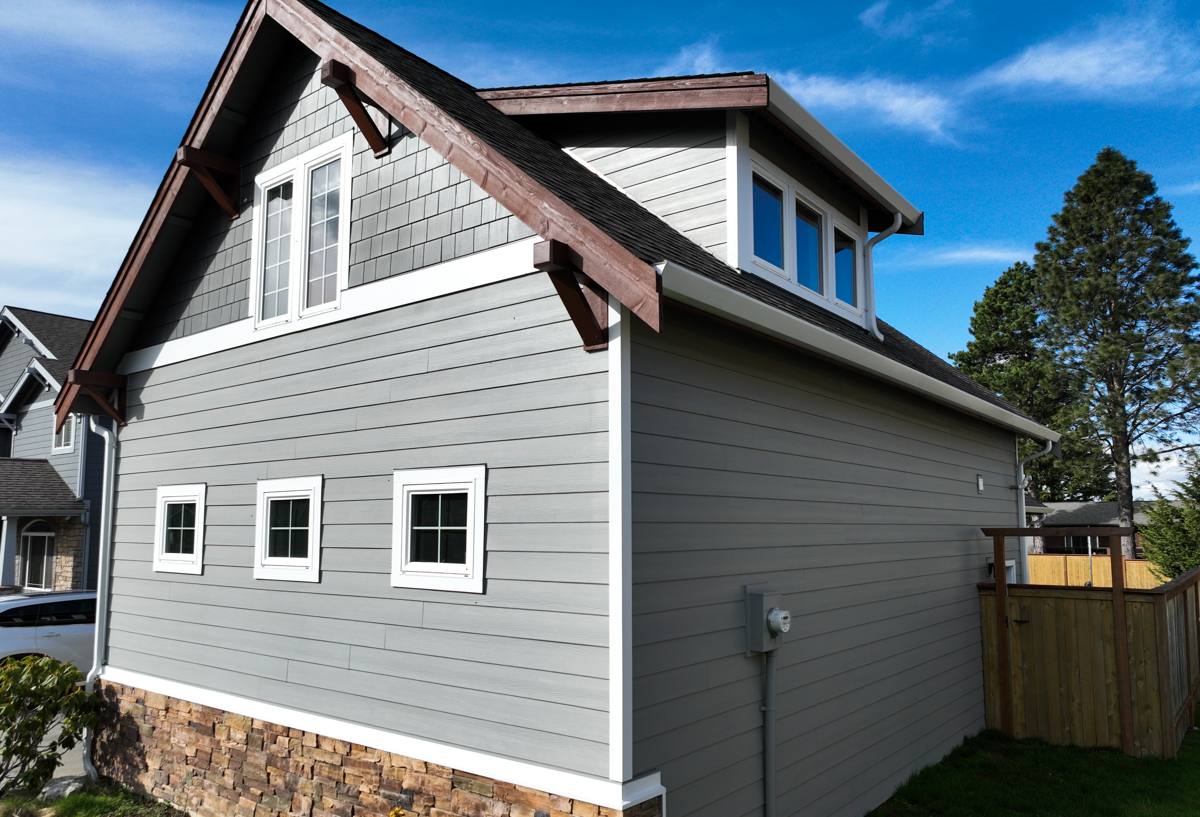
What the Climate Does to Lutz Homes
Hillsborough County sits squarely in a hurricane-exposed, high-humidity part of Florida, and Lutz gets the full package. A few things matter most for exterior materials here:
- Hurricane-force wind: Even homes well inland from Tampa Bay see sustained tropical-storm and hurricane winds during active seasons. Siding, trim, and soffits need real wind-load performance, not just a good caulk job.
- Intense, year-round UV: Florida sun is strong nearly twelve months a year. Paint fades, plastics chalk, and cheaper composite materials can degrade faster than their published lifespans suggest.
- Wind-driven rain: Tropical systems and summer storms don't just drop rain straight down — wind pushes water sideways into seams, laps, and trim joints. Materials and installation details that handle vertical rain fine can still let water in in these conditions.
- Salt air: Tampa Bay's influence carries salt-laden air well inland across the region, accelerating corrosion on fasteners, flashing, and any hardware that isn't rated for it.
- Humidity and shade: Lutz's tree cover and lake proximity mean some exterior walls stay damp longer after rain than a wide-open lot would. That's a real factor in mold, mildew, and moisture-related siding failure — especially on the north and east sides of a home.
Why Siding Choice Matters More Here Than in a Milder Climate
In a dry, mild climate, a lot of siding products perform fine for a long time simply because they're never really tested. In Lutz, every material gets tested every year — by sun, by wind, by moisture, and eventually by a named storm. That's why we standardized on James Hardie fiber cement siding and stopped installing several other common products, even though homeowners still ask about them. It's not that those products don't have a place anywhere — it's that we've seen how they hold up specifically in this climate, and we'd rather put our name behind one system we trust than offer several we have reservations about.
Why not vinyl siding?
Vinyl is affordable and easy to install, which is why it's everywhere. But it's a thin plastic product that softens in high heat and can become brittle over years of intense UV exposure — exactly the two conditions Lutz has in abundance. In wind events, vinyl panels are more prone to cracking or blowing off than a heavier, mechanically fastened material. It also can't be painted a darker color in most cases without risking heat-related warping, which limits design options long-term.
Why not LP SmartSide, primed spruce, or cedar?
These are wood-based or engineered-wood products. Wood, treated or engineered, is organic — it can absorb moisture, and in a humid, shaded environment like parts of Lutz, that moisture exposure adds up over the years. Even well-installed engineered wood siding depends heavily on maintaining an intact paint or sealant layer; once that layer is compromised at a cut edge or fastener point, moisture can get in and cause swelling or rot from the inside out. Cedar has real aesthetic appeal, but it demands ongoing refinishing to hold up in Florida's sun and rain.
Why not Cemplank or Allura?
Cemplank and Allura are also fiber cement products, and fiber cement as a category is the right call for this climate — non-combustible, dimensionally stable, and resistant to moisture and pests. Our choice to install James Hardie specifically comes down to product engineering (their HardieZone system is formulated for specific climate zones, including ours), the factory-applied ColorPlus finish, and the strength and clarity of the transferable warranty. It's a manufacturer-level decision, not a knock on fiber cement as a material.
James Hardie: What We Actually Install
James Hardie fiber cement siding is engineered from cement, sand, and cellulose fiber, cured into a dense, stable board. For Florida installations, Hardie's HZ5 product line is formulated for hot, humid, high-moisture climates — different from the HZ10 formulation used in colder, freeze-thaw regions up north. That distinction matters: a siding product engineered for a Minnesota winter isn't the same product you want on a Lutz roofline baking in August sun.
What comes with a James Hardie installation
- ColorPlus Technology: a factory-applied, baked-on finish that resists fading far better than field-applied paint, with touch-up product available for the rare nick or scratch.
- Non-combustible core: fiber cement doesn't contribute fuel to a fire the way wood-based sidings can, which matters for insurance conversations as much as safety.
- Pest and rot resistance: no organic wood fiber for termites or moisture rot to work on.
- A real warranty: Hardie backs its products with a strong, transferable limited warranty — a meaningful factor if you plan to sell the home down the line.
How Correct Installation Protects Against Lutz's Climate
Fiber cement siding is only as good as the installation behind it. Manufacturer specs exist for a reason, and cutting corners on installation is where most siding failures actually start — not in the material itself. For our region, that means:
- Proper clearance between siding and grade, decking, and roof lines so water doesn't wick up into the board.
- Correctly lapped and sealed house wrap or weather-resistant barrier underneath, so any water that does get past the siding has somewhere to drain instead of sitting against sheathing.
- Corrosion-resistant fasteners driven to the manufacturer's specified pattern and depth — critical given the salt-air exposure across the Tampa Bay region.
- Correct flashing at windows, doors, and any wall penetration, since these joints are where wind-driven rain finds its way in.
- Fastening patterns and joint treatment that meet local wind-load requirements, since Hillsborough County's building code reflects its hurricane exposure.
Beyond Siding: The Full Exterior Envelope
Siding doesn't work in isolation — it's one part of a home's exterior envelope, along with the roof, windows, and any attached structures like a deck. We handle all four because they're interconnected:
- Roofing: a compromised roof edge or flashing detail can send water behind even well-installed siding. Roof and siding work should be coordinated, not treated as separate projects with separate timelines.
- Windows: window flashing and siding termination around openings are one of the most common points of water intrusion in Florida homes. When we replace siding around existing windows, we check and correct that interface rather than just siding up to it.
- Decks: ledger board attachment and flashing where a deck meets the house is another spot where water damage often starts unnoticed, especially on shaded, lake-adjacent lots common in Lutz.
Homeowners often start a conversation about one of these and realize during the estimate that two or three are connected. We'll always tell you honestly if that's the case rather than upselling for its own sake.
What Affects the Cost of a Lutz Siding Project
Every home is different, but the same handful of factors drive most of the cost variation we see on siding jobs in this area:
| Factor | Why It Matters |
|---|---|
| Home size and wall complexity | More square footage and more corners, gables, and dormers mean more material and labor time |
| Existing siding removal | Tear-off of old wood, vinyl, or damaged fiber cement adds labor and disposal cost |
| Underlying sheathing condition | Rot or moisture damage found once old siding comes off may need repair before new siding goes up |
| Trim, soffit, and fascia scope | Whether these are being replaced or matched alongside the siding changes both cost and finished appearance |
| Stories and access | Two-story walls, steep grades, or limited equipment access add time and safety planning |
| Color and profile selection | ColorPlus finish options and board profile (lap, shake-style, panel) affect material pricing |
We walk every home in person before giving a number — photos and square footage alone don't tell the whole story, especially once we start checking for moisture damage behind existing siding.
Choosing a Contractor for Exterior Work in Lutz
A lot of exterior contractors work the greater Tampa area, and not all of them are equally familiar with how coastal-influenced, storm-exposed conditions affect installation details. A few things worth checking before you hire anyone for siding, roofing, window, or deck work:
- Confirm they're licensed and insured to work in Florida, and ask to see current proof — not just a claim of it.
- Ask specifically how they handle flashing and moisture barrier detailing, not just what siding brand they carry.
- Get a written scope that names the exact product line (for fiber cement, this should include the specific HardieZone rating for our climate).
- Ask how they coordinate siding with roofing, window, or deck work if more than one is happening at the same house.
- Be wary of any bid that's dramatically lower than others for the same scope — it's usually a sign of a shortcut somewhere in the installation, not a better deal.
- Ask about their warranty terms in writing, separate from the manufacturer's product warranty.
Maintenance and What to Expect Long-Term
One of the appeals of fiber cement over wood-based alternatives is how little ongoing maintenance it needs. That said, "low maintenance" isn't "no maintenance" — a periodic rinse to remove pollen, salt residue, and mildew buildup (especially on shaded, tree-covered walls common in Lutz) keeps the ColorPlus finish looking its best. Caulking at trim joints should be checked periodically, since even a good sealant has a service life shorter than the siding itself. We're happy to walk you through what a realistic maintenance schedule looks like for your specific home and its sun/shade exposure.
If you're weighing a siding, roofing, window, or deck project for a Lutz home, we're glad to come take a look and give you a straightforward, no-pressure estimate — including an honest answer if your existing siding has more life left in it than you think.