 Tampa Siding
 South Tampa's Exterior Climate Problem
South Tampa sits closer to open water than almost any other part of Hillsborough County, and that proximity shapes what happens to a house's exterior over time. Homes here catch salt-laden air moving off Tampa Bay, take direct sun for most of the year, and sit in the path of wind-driven rain during tropical systems and the summer storm season that rolls through every afternoon from June through September. None of that is unique to one street or subdivision — it's the baseline condition for the whole area, whether a house is a decades-old bungalow with mature tree canopy or a newer build on a smaller lot.
Siding is the material standing between that environment and the wood framing underneath. When it fails, it usually fails slowly — a soft spot near a window, paint that won't hold a finish past a couple of years, seams that swell after a wet season. By the time it's obvious, moisture has often been working behind the surface for a while. That's the pattern we see repeatedly on South Tampa exteriors, and it's the reason our approach to siding here is deliberately narrow: one product system, installed correctly, rather than a menu of options with different failure points.
Salt Air and Coastal Corrosion
Salt exposure doesn't just affect metal fasteners and flashing — it accelerates the breakdown of paint films and can pull moisture into porous or improperly sealed materials. Homes within a few miles of the bay see this faster than homes further inland, but South Tampa's whole footprint is close enough that it matters everywhere in the service area, not just on waterfront lots.
UV and Year-Round Sun
Florida's UV load is intense nearly twelve months a year. Cheaper paint systems and some engineered wood products chalk, fade, or lose adhesion well before their rated lifespan when they're baked at this intensity for years on end. Whatever goes on a South Tampa home needs a factory finish designed to hold color and integrity under that kind of sustained sun exposure — not a coating that depends on a homeowner repainting every few years to stay protected.
Wind-Driven Rain and Tropical Systems
Hurricane-force wind doesn't just tear siding off — it drives rain sideways, forcing water into laps, seams, and fastener penetrations that would stay dry in a normal rainstorm. A siding system's real test in this region isn't a light shower; it's whether the material and the installation detail (flashing, caulking, panel gaps) keep water out when wind is pushing it uphill against the wall.
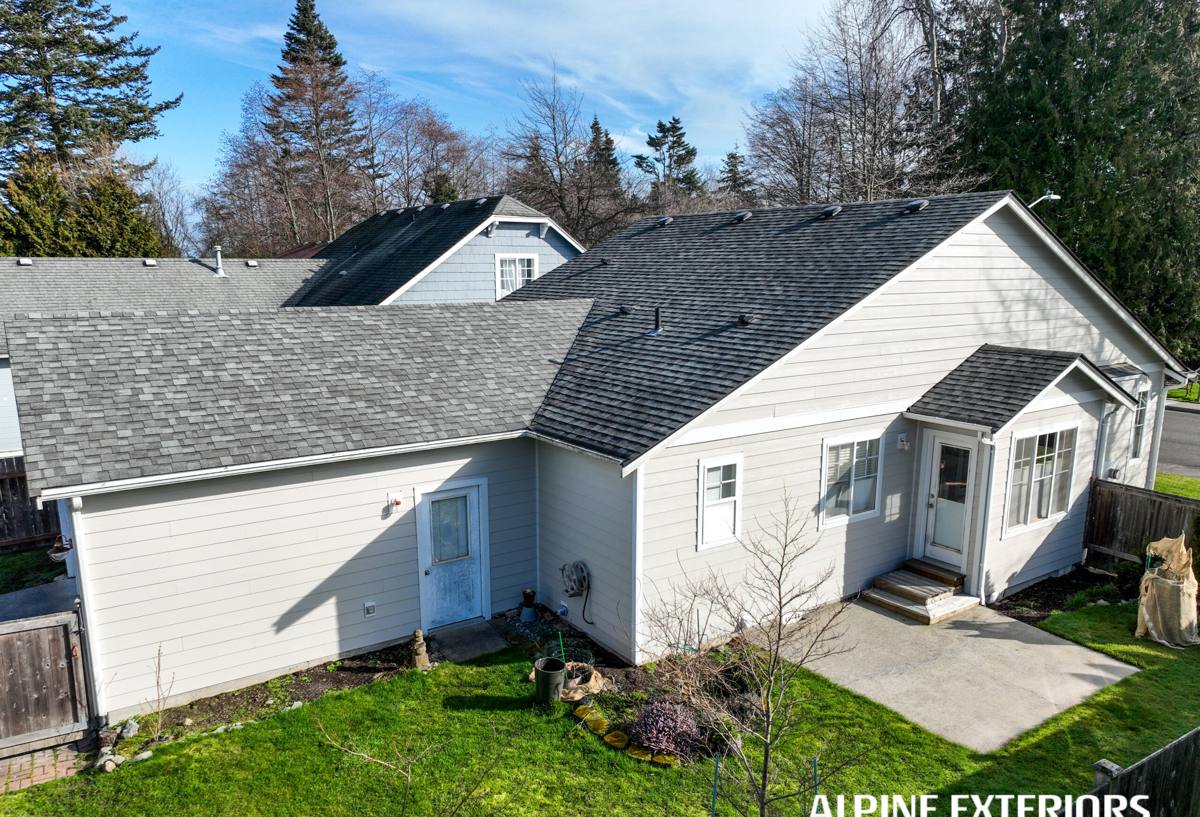
Why We Only Install James Hardie Fiber Cement Here
We install one siding system across our entire service area, including South Tampa: James Hardie fiber cement. We don't offer vinyl, LP SmartSide, primed wood, or other fiber cement brands as alternatives, and that's a deliberate standard, not a limitation of what we're capable of installing.
Fiber cement is a blend of cement, sand, and cellulose fiber. It's non-combustible, it doesn't rot or swell the way wood-based products can when moisture gets behind them, and it holds paint and factory finish far longer than vinyl or engineered wood in a high-UV, high-humidity climate. James Hardie specifically engineers regional product lines — its HZ5 formulation is built for the Southeast's freeze-thaw-free, moisture-heavy conditions — and backs the product with a factory-applied ColorPlus finish that's warrantied separately from the substrate, plus a long transferable limited warranty that survives a home sale. That combination is why we standardized on it: the material, the finish, and the warranty structure all line up with what a South Tampa exterior actually has to survive year after year.
That doesn't mean every other product is unusable everywhere — vinyl and engineered wood siding have legitimate uses in other markets and price points. It means that for the specific combination of salt air, UV, and storm wind this region deals with, we've decided the trade-offs of those other products (moisture sensitivity at cut edges, finish longevity, impact resistance, warranty scope) aren't ones we're willing to put our name behind on a home we install.
What a South Tampa Siding Project Looks Like
Every job starts the same way regardless of neighborhood: a walk of the exterior to assess the current siding, the condition of the wall sheathing underneath, window and door flashing, and any soft or water-damaged areas that need to be addressed before new siding goes on. Fiber cement is only as good as what's underneath it — if there's rot in the sheathing, covering it with new siding just hides the problem.
- Exterior walkthrough and moisture check, including trim, window sills, and any areas showing staining or softness
- Removal of existing siding and inspection of the sheathing and weather barrier underneath
- Repair or replacement of any compromised sheathing before new material goes up
- Installation of a code-compliant weather-resistive barrier and correct flashing details around every penetration
- James Hardie panel or lap installation to manufacturer fastening and clearance specifications
- Final trim, caulking, and touch-up work at seams and corners
Fastening pattern, panel gaps, and clearance from grade and rooflines all matter more in a hurricane-prone climate than in milder regions, because those details determine whether the siding stays watertight when wind is driving rain into the wall assembly. We follow Hardie's installation instructions to the letter rather than field-adjusting for speed, because that's what keeps the manufacturer's warranty intact and keeps water out.
A Full Exterior Approach: Roofing, Windows, and Decks
Siding doesn't operate in isolation on a house — it works alongside the roof, windows, and any exterior structures like decks to keep water out of the building envelope. We handle all four because they're connected problems in this climate. A roof that's shedding granules or has failing flashing will eventually push water down into wall assemblies no matter how good the siding is. Windows with failed seals let wind-driven rain in around the frame, which can look identical to a siding problem from the outside. Decks take the same UV and wind-driven rain exposure as siding, just horizontally instead of vertically.
When we're on a South Tampa property for a siding estimate, we're looking at the whole exterior system, not just the walls. That's not an upsell — it's how you actually diagnose why a house is having moisture problems in the first place.
Comparing Siding Options for a South Tampa Home
Homeowners researching siding often come across several material categories. Here's an honest comparison of how they generally perform against the specific conditions South Tampa deals with — salt air, sustained UV, and wind-driven rain.
| Material | UV / Finish Durability | Moisture Behavior | Wind/Impact Resistance | Typical Warranty |
|---|---|---|---|---|
| James Hardie fiber cement | Factory ColorPlus finish holds color for years in high UV | Non-combustible, doesn't swell or rot; engineered HZ5 line for humid climates | Rated for high-wind zones when installed to spec | Long transferable limited warranty, finish warrantied separately |
| Vinyl siding | Can fade, chalk, or warp under intense, sustained sun | Doesn't rot, but seams and panels can be forced by wind-driven rain | Lower impact resistance; can crack or blow off in high wind | Varies widely by manufacturer and grade |
| LP SmartSide / engineered wood | Depends heavily on paint maintenance and correct sealing of cut edges | Wood-based core is vulnerable if moisture gets behind the finish | Reasonable if intact, but edge/seam integrity is critical | Coverage often narrows with moisture-related claims |
| Cedar or primed wood | Requires regular repainting/staining to hold up under Florida sun | Natural wood is most susceptible to rot, insects, and moisture intrusion | Moderate; heavily dependent on ongoing maintenance | Typically no manufacturer warranty on the material itself |
This isn't a claim that every non-Hardie product fails in Florida — plenty of homes around the country carry these materials without issue in milder climates. It's specifically why, for the conditions South Tampa deals with, we've chosen to install and stand behind only one system.
Why a Local Crew Matters for This Kind of Work
Siding installation is detail work, and the details that matter in South Tampa — flashing around windows facing prevailing wind, fastening schedules rated for hurricane wind zones, clearance from grade in low-lying yards that hold water after heavy rain — are the kind of thing a crew learns by working this specific area repeatedly, not by reading a spec sheet once. A crew that's local to Tampa and Hillsborough County has already dealt with the county's permitting and inspection process, understands the wind-load requirements that apply here, and has seen firsthand what happens when those details get skipped.
There's also a practical accountability argument: a local company is still here next year, next storm season, and the one after that if a warranty issue comes up. That matters more with an exterior product meant to last decades than it does with something you replace every few years.
Maintaining Fiber Cement Siding in a South Tampa Climate
James Hardie siding is low-maintenance compared to wood or vinyl, but "low-maintenance" isn't "no-maintenance," especially in this environment. A simple annual routine keeps it performing the way it's designed to:
- Rinse the exterior periodically to clear salt residue and airborne grime, especially on sides facing the water or prevailing wind
- Walk the exterior after major storms to check for displaced trim, damaged caulking, or debris impact
- Keep gutters clear so water isn't overflowing and running down the siding face repeatedly
- Check caulking at seams, corners, and window trim yearly and re-caulk where it's cracked or pulled away
- Trim back vegetation and irrigation spray that keeps siding constantly wet in one spot
- Watch for any soft spots near ground level, which usually indicate moisture intrusion rather than a siding defect itself
What Drives Cost on a South Tampa Siding Job
Every property is different, so exact numbers only come from a walk-through, but a few factors consistently move the price on jobs in this area:
| Factor | Why It Matters |
|---|---|
| Sheathing condition underneath old siding | Rot or water damage found during tear-off requires repair before new siding goes on |
| Home size and wall complexity | More corners, gables, and window trim mean more cut edges and labor |
| Siding profile and finish selection | Lap width, panel style, and ColorPlus color options vary in material cost |
| Access and site conditions | Tight lots, mature landscaping, or two-story sections affect labor and staging |
| Scope beyond siding | Bundling roofing, window, or trim work into the same project can affect sequencing and overall cost |
We give a firm, itemized estimate after seeing the property in person — not a phone quote based on square footage alone, since so much of the real cost depends on what's found once tear-off starts.
Ready to Talk About Your South Tampa Home
If your siding is showing its age, feels soft in spots, or you're just planning ahead of the next storm season, we're happy to walk the exterior with you and give an honest read on what it needs. Reach out for a free, no-pressure estimate using the form below.