 Tampa Siding
 Why Moisture, Not Wind, Is What Actually Destroys Siding
When Tampa homeowners think about siding damage, they usually picture a storm — a big gust peeling a panel off the wall. That does happen. But the damage that costs the most money and causes the most structural harm is quieter and slower: water getting behind the siding and staying there. Wind is an event. Moisture is a process, and it can run for years before anyone notices a problem.
Siding's job isn't just to look good. It's a water-management system. Every siding material, from vinyl to fiber cement to wood, is designed to shed water off the face of the wall while working with a weather-resistant barrier underneath to handle whatever gets past the surface. When that system is compromised — by a bad install, an aging product, or years of sun and salt air breaking down seals — water starts working its way into the wall assembly. Once it's in, the sheathing, framing, and insulation behind the siding are all at risk, not just the siding itself.
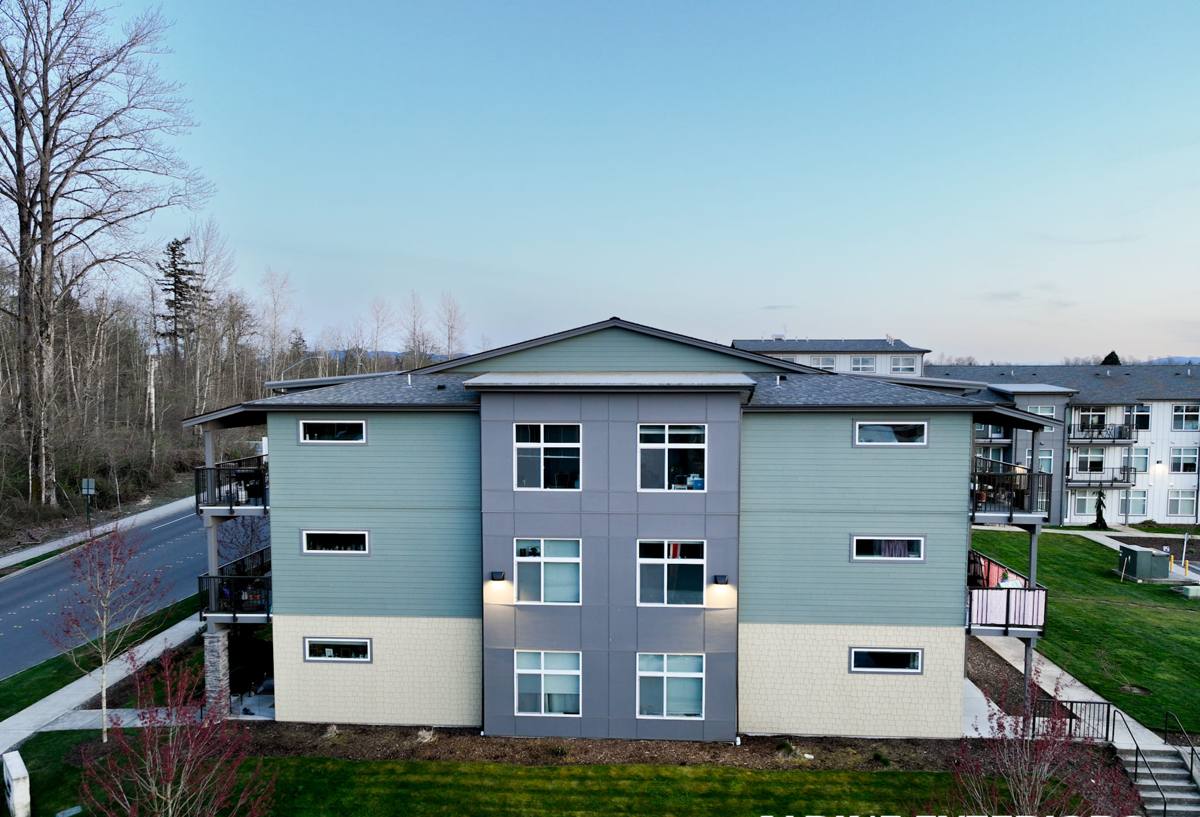
How Water Actually Gets Behind Siding
Very little water damage starts with a dramatic leak. It starts small, in a handful of predictable places:
- Failed caulk joints at seams, corners, and trim — caulk is a wear item, not a permanent seal, and it degrades faster under constant UV exposure
- Missing or incorrect flashing above windows, doors, and at roof-to-wall intersections, where water is directed instead of blocked
- Butt joints and laps that weren't installed with the manufacturer's specified overlap or gap, letting wind-driven rain push in sideways
- Siding installed too close to grade or a roofline, where splash-back or roof runoff keeps the bottom edge wet far more often than the rest of the wall
- Fastener holes that were over-driven, under-driven, or placed outside the manufacturer's nailing zone, creating a wick point for water
None of these are dramatic on their own. But Hillsborough County doesn't give a wall many dry stretches to recover in between. Between wind-driven rain, high year-round humidity, and intense UV, a small installation flaw here tends to turn into an active moisture problem faster than it would in a drier climate.
What Rot Looks Like Before It's Obvious
By the time rot is visible from the street, it's usually been developing for a while. Homeowners who catch it early save real money, because early rot is a repair and late rot is often a section replacement — sometimes including sheathing and framing. Signs worth walking your exterior for once or twice a year:
- Soft or spongy spots when you press on siding near the bottom courses, around windows, or below rooflines
- Paint or finish that's bubbling, peeling, or discoloring in a localized area rather than uniformly across the wall
- A musty smell near an exterior wall from inside the house, especially near baseboards or closets on exterior walls
- Visible gaps opening up at seams, corners, or trim boards that used to sit flush
- Dark staining or streaking running down from a specific joint, which usually points to a flashing or caulk failure directly above it
- Warping, buckling, or a wavy appearance in a section of siding that used to lie flat
If you find one of these, it's worth having someone open up that section rather than just re-caulking the surface. Surface repairs on top of an active moisture problem just hide it for a while.
Why Tampa's Climate Puts Extra Load on Siding
Wind-Driven Rain
Straight-down rain is easy for siding to shed. Wind-driven rain — the kind Tampa gets regularly during summer storms and during any tropical system moving through the Gulf — hits the wall at an angle and pushes into every lap, seam, and gap. This is why lap spacing, flashing details, and fastener placement matter more here than in regions with calmer weather patterns.
Year-Round UV
Florida's UV exposure is intense and consistent essentially all year, not just in summer. UV is what breaks down caulk, degrades unprotected wood fibers, and fades or chalks lower-quality finishes. A sealant or coating rated for a four-season climate up north often has a shorter real-world life on a Tampa-facing wall.
Humidity
Hillsborough County's humidity means wood-based products rarely get a long, dry stretch to fully release moisture they've absorbed. Materials that handle occasional wetting fine in drier states can stay damp longer here, which is exactly the condition rot fungus needs to take hold.
Salt Air
Even well inland from Tampa Bay, salt-laden air accelerates the breakdown of fasteners, flashing metal, and some finishes. Coastal and near-coastal properties see this fastest, but it's a factor across the whole metro area.
How Different Siding Materials Handle Moisture
Not all siding responds to water the same way. This is the core reason we standardized on one product line rather than offering several.
| Material | How It Responds to Moisture | Rot Risk |
|---|---|---|
| Untreated or primed wood (spruce, cedar) | Absorbs water directly into the wood fiber; swells, cups, and holds moisture at cut ends and fastener points | High — wood is an organic material and rot fungus feeds on it directly |
| Vinyl | The panel itself doesn't absorb water, but it isn't a water barrier — water passes behind it at seams and relies entirely on the underlying wrap and flashing | Moderate — moisture problems tend to hide behind an intact-looking surface |
| Engineered wood (OSB-based composite) | Wood-strand core is more moisture-resistant than raw lumber but still an organic wood product; performance depends heavily on edge sealing and correct installation | Moderate to high if edges or seams aren't properly sealed and maintained |
| Fiber cement (James Hardie) | Cement-based composition doesn't feed rot fungus and holds up to repeated wet-dry cycling without swelling the way wood does | Low, when installed to the manufacturer's specifications |
That last line — "when installed to the manufacturer's specifications" — is the part that actually matters most. Every material on this list can fail if it's installed wrong. Fiber cement's advantage isn't that it's magic; it's that its baseline material behavior gives it a much wider margin for error against Florida's climate, and that margin matters when you're dealing with wind-driven rain and near-constant humidity.
Installation Is Where Most Moisture Problems Actually Start
We've said it above but it's worth its own section: the majority of moisture damage we find traces back to installation, not the material itself. Common mistakes we see on inspections around Tampa include:
- Caulk used as the primary defense at a joint instead of proper flashing or overlap
- Missing kick-out flashing where a roofline meets a wall, sending roof runoff straight down behind the siding instead of out and away from it
- Siding butted directly against roofing, decking, or hardscape with no gap or clearance
- Nailing patterns that don't match the manufacturer's specified zone, especially around window and door openings
- Weather-resistant barrier installed with reverse laps, so water is guided inward instead of downward and out
This is why the installer matters as much as the product. A premium siding material installed with shortcuts will still develop moisture problems, and a mid-tier material installed meticulously will outperform expectations. Both pieces have to be right.
What Homeowners Can Do Between Inspections
You don't need to be a contractor to catch problems early. A few habits go a long way:
- Walk the exterior twice a year — once before hurricane season and once after — and look at bottom courses, corners, and window trim specifically
- Keep sprinklers and irrigation heads from spraying directly on siding; constant wetting at one spot accelerates every failure mode above
- Keep gutters clean and downspouts directing water away from the foundation and walls
- Re-caulk visibly cracked or gapped joints promptly rather than waiting for the next round of exterior work
- After any major storm, do a visual check for loose panels, popped fasteners, or new staining
Repair, Recoat, or Replace?
Not every moisture issue means a full re-side. The right call depends on how far the damage has spread and what's causing it.
| Situation | Typical Approach |
|---|---|
| Isolated soft spot or stain at one joint, sheathing intact | Localized repair — replace the affected boards and fix the flashing or caulk detail that let water in |
| Recurring rot at multiple points tied to the same design flaw (e.g., no kick-out flashing across several roof-wall intersections) | Correct the underlying flashing detail, then repair or replace affected siding sections |
| Widespread softness, warping, or rot across large wall sections | Full siding replacement, likely with sheathing repair or replacement underneath |
| Siding material at or past its expected service life with recurring maintenance issues | Planned replacement, ideally before damage reaches the sheathing |
When we do get called in for a full replacement, James Hardie fiber cement is what we install — it's the only siding product we put on homes. We made that decision specifically because of everything above: our climate is hard on siding, and we didn't want to keep repeating the same moisture failures on materials that just aren't built for this level of sun, humidity, and wind-driven rain.
Bottom Line for Tampa Homeowners
Siding failure in this climate is rarely sudden. It's the slow result of water finding a small opening and staying there longer than it should because of the humidity and heat. Catching it early — through a couple of walk-arounds a year and prompt attention to soft spots, staining, or gapped joints — is the cheapest moisture management tool you have. When it's time for something more than a spot repair, the material and the installation both need to hold up to Hillsborough County's conditions, not just look good on install day.
If you're seeing signs of moisture damage, or it's just been a while since anyone looked closely at your siding, we're happy to come out and take an honest look. The estimate is free, there's no pressure, and if what you need is a repair rather than a full re-side, we'll tell you that.