 Tampa Siding
 Vinyl Siding Isn't a Bad Product — It's the Wrong Product for This Climate
We want to be upfront about something: vinyl siding isn't junk. It's inexpensive, it goes up fast, and for a lot of the country it does a reasonably good job for a reasonable amount of time. If we operated in a mild, dry climate with moderate seasonal swings, we might feel differently about it. But we don't. We work on homes in Tampa and across Hillsborough County, where the siding on a house has to survive tropical humidity, sustained summer heat, intense year-round UV, wind-driven rain, and salt-laden air blowing in off Tampa Bay. After years of tearing old siding off homes and seeing exactly how different products age in this environment, we made a decision: we only install James Hardie fiber cement siding. This page explains the reasoning, honestly, without exaggerating vinyl's weaknesses or overselling our own standard.
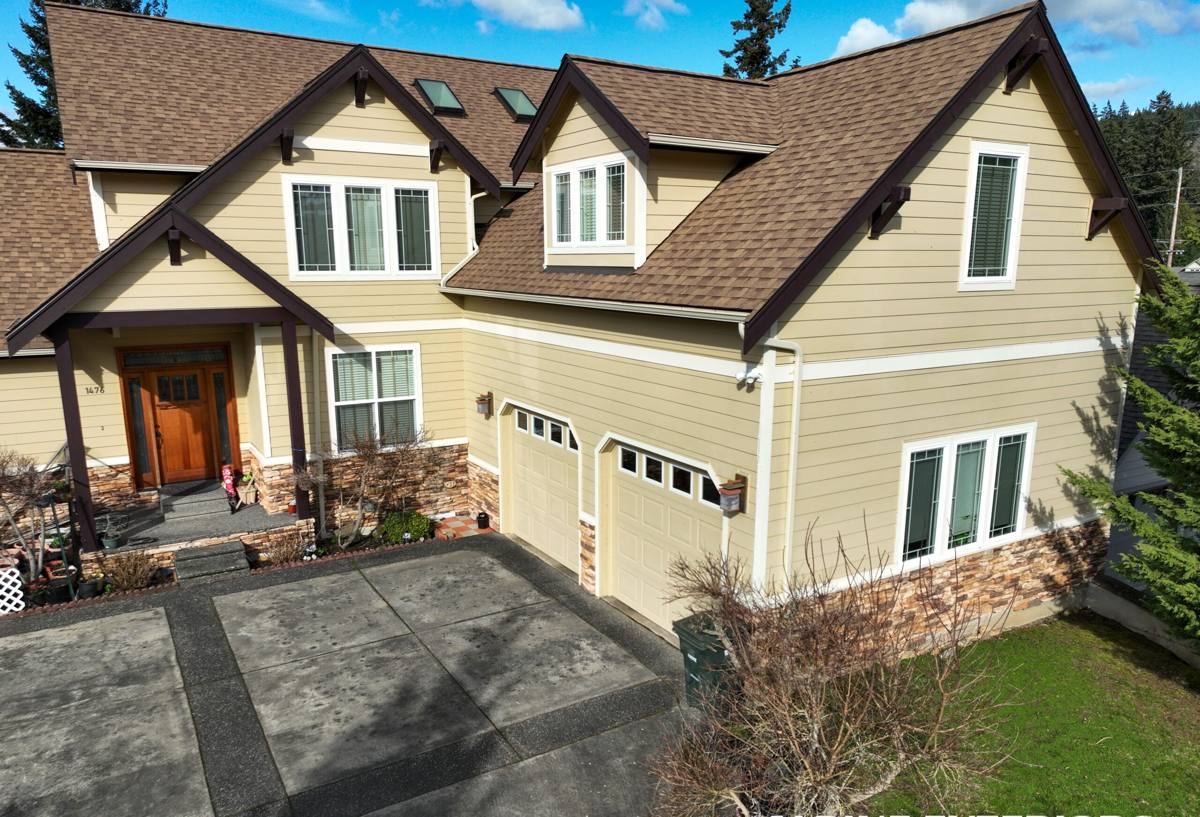
What Vinyl Gets Right
Fair is fair. Vinyl siding has real advantages that explain why it remains the most commonly installed siding product nationally:
- Lower upfront material and labor cost than most other siding types
- No painting required — color is built into the panel
- Lightweight, which makes installation faster
- Resistant to rot and insect damage since it contains no wood fiber
- Widely available in a large range of colors and profiles
For a mild climate, or a starter-home budget where the plan is to resell in a few years, those are legitimate reasons to consider it. Our objection isn't that vinyl is a scam — it's that Tampa's climate is unusually hard on this specific material, and we don't think it's honest to install something we know is likely to underperform here.
Heat and UV: Tampa's Sun Doesn't Take a Day Off
Vinyl siding is a petroleum-based plastic (PVC), and plastic reacts to heat and ultraviolet light in predictable ways: it expands, contracts, and slowly breaks down at the molecular level. Hillsborough County gets intense, direct sun essentially year-round, and summer surface temperatures on south- and west-facing walls routinely climb well above ambient air temperature — dark-colored vinyl panels in direct sun can get hot enough to soften.
What that heat actually does over time
- Warping and buckling. Vinyl expands and contracts more than fiber cement or wood with every heat cycle. Over years of Tampa summers, panels can bow, ripple, or pull loose from their fastening points.
- Fading. UV breaks down the pigments in vinyl over time, especially darker colors, which is part of why the vinyl industry has historically steered buyers toward lighter shades — not because homeowners love pastel houses, but because dark vinyl fades and warps faster.
- Brittleness. Older vinyl becomes more prone to cracking on impact after years of UV exposure, which matters more here than in cooler climates because the exposure is constant.
James Hardie fiber cement is cement, sand, and cellulose fiber — it doesn't soften in heat, and its ColorPlus factory finish is baked on and warrantied against fading in a way that plain vinyl color simply isn't.
Wind: Hurricane Exposure Changes the Math
Hillsborough County sits in an active hurricane corridor, and even in years without a direct hit, tropical storms and squall lines bring sustained high winds and gusts to the Tampa Bay area most seasons. Wind performance is one of the biggest differences between siding products, and it's not a minor detail — it's a structural one.
| Factor | Standard Vinyl Siding | James Hardie Fiber Cement (HZ10) |
|---|---|---|
| Typical wind rating | Varies widely by product; many standard lines are rated well below what a coastal-exposure home may need | Engineered HZ10 products are rated for high-wind zones common along the Gulf Coast |
| Failure mode in high wind | Panels unlock from J-channel and blow off, sometimes in whole sections | Fastened directly to the wall with corrosion-resistant fasteners; doesn't rely on a locking-channel system |
| Post-storm appearance | Missing or flapping panels are common and visible | Panel is mechanically fixed, reducing wind-driven detachment |
| Debris resistance | Lower impact resistance to wind-borne debris | Denser material better resists impact from debris |
Vinyl siding's install method is part of the issue: most vinyl panels hang loosely on a nailing hem and interlock with the panel below, which allows a small amount of "float" for thermal movement. That same looseness is what lets wind get up underneath a panel and peel it away in a bad storm. Hardie siding is face-fastened directly to the wall, which is a fundamentally different — and in our experience, more storm-durable — approach.
What Happens Behind the Panel Matters More Than the Panel Itself
Most vinyl siding failures we see aren't really about the vinyl — they're about moisture that got behind it and had nowhere to go. Vinyl siding is installed as a loose-fitting rain screen, not a sealed barrier, which is by design; it's meant to let some water in and drain it back out. That works fine when the drainage plane, house wrap, and flashing details underneath are done correctly. In wind-driven rain, which Tampa gets regularly during storm season, water can be pushed sideways and upward into laps and seams faster than a loosely fitted panel system is built to shed it.
When that moisture gets trapped against wood sheathing, it doesn't take long in Florida's humidity for rot or mold to set in — often invisibly, since the vinyl panel hides the wall behind it until the damage is significant. Fiber cement doesn't solve bad flashing or bad house wrap by itself, but it gives us a rigid, dimensionally stable surface that we can seal and detail with much tighter tolerances at trim, windows, and butt joints.
Salt Air Adds Another Layer
Homes closer to Tampa Bay and the Gulf deal with airborne salt, which accelerates the corrosion of fasteners, gutters, and trim regardless of siding type. Vinyl itself doesn't corrode, but the aluminum or steel components integrated into a lot of vinyl trim and accessory systems can. We prefer a siding system where the trim and fastener specifications are engineered for coastal exposure rather than adapted after the fact.
Impact Damage and Long-Term Repairability
Florida's storm season brings hail, wind-borne debris, and the occasional falling branch. Vinyl siding cracks or punctures on impact, and because color and gloss shift slightly batch to batch — and fade at different rates depending on sun exposure — a repair patch installed a few years after the original job rarely matches invisibly. Fiber cement is more impact-resistant to begin with, and because Hardie's ColorPlus finish is factory-controlled and consistently available, patch repairs blend in far better over time.
Why We Standardized on James Hardie Instead
None of this means every vinyl-sided home in Tampa is doomed to fail — plenty perform acceptably, especially with diligent maintenance and a mild location. But when we're the ones putting our name on the installation, we don't want to install a product where "acceptable if nothing goes wrong" is the best-case outcome in our climate. James Hardie fiber cement gives us:
- Non-combustible material — cement-based, not petroleum-based
- Climate-engineered HZ product lines built specifically for high-humidity, high-wind Gulf Coast exposure
- ColorPlus factory finish backed by a real fade and finish warranty, instead of raw pigment baked into plastic
- Dimensional stability — it doesn't expand, contract, warp, or soften in Tampa heat the way vinyl can
- A strong, transferable product warranty that follows the house if it's sold
- Proven long-term performance when installed to manufacturer spec, which is the installation standard we hold ourselves to on every job
Correct installation is a real variable here — Hardie siding installed with the wrong fasteners, wrong clearances, or skipped flashing details won't perform the way the product is designed to. That's a large part of why we install exclusively Hardie: it lets our crews specialize in one system, install it correctly every time, and stand behind the result with confidence, rather than spreading expertise thin across several product lines with different rules.
Questions to Ask Before You Choose a Siding Product
Whether you go with vinyl, fiber cement, or something else, these are the questions worth asking any contractor bidding your project:
- What wind rating is this specific product line certified for, and is that rating appropriate for Hillsborough County?
- Is the manufacturer's finish/color warranty prorated, and what does it actually cover after year five or ten?
- What's underneath the siding — house wrap, flashing details, and how is moisture managed if it gets behind the panel?
- How does this product perform in direct, sustained summer sun on south- and west-facing walls?
- If a section is damaged, how well will a patch repair match years down the road?
- Is the installer specialized in this product, or installing it as one of several systems they offer?
If you're weighing your options for an upcoming siding project, we're happy to walk your home, explain what we'd recommend and why, and give you a straightforward, no-pressure estimate.