 Tampa Siding
 Temple Terrace Homes Face a Tough Combination of Weather
Temple Terrace sits inland from Tampa Bay along the Hillsborough River, and that location gives homeowners here a mixed bag when it comes to weather exposure. You're spared the direct wave-driven flooding that coastal neighborhoods deal with, but you still get the same tropical sun, the same summer storm cycle, and the same hurricane risk that defines exterior construction across the entire Tampa Bay region. Add in the mature oak canopy that makes so many Temple Terrace streets shady and pleasant, and you end up with a specific set of demands on a home's exterior that's worth understanding before you pick a siding material.
The short version: intense UV exposure nearly year-round, heavy and frequent rainfall during the wet season, humidity that rarely lets up, hurricane-force wind gusts that show up almost every storm season, and — even this far from open water — salt-laden air that rides inland on Gulf breezes and slowly works on anything not built to resist it. None of this is unique to Temple Terrace, but it's not generic "Florida weather" either. It's a specific load your siding has to carry, month after month, for decades.
What the Local Tree Canopy and Housing Stock Mean for Exterior Work
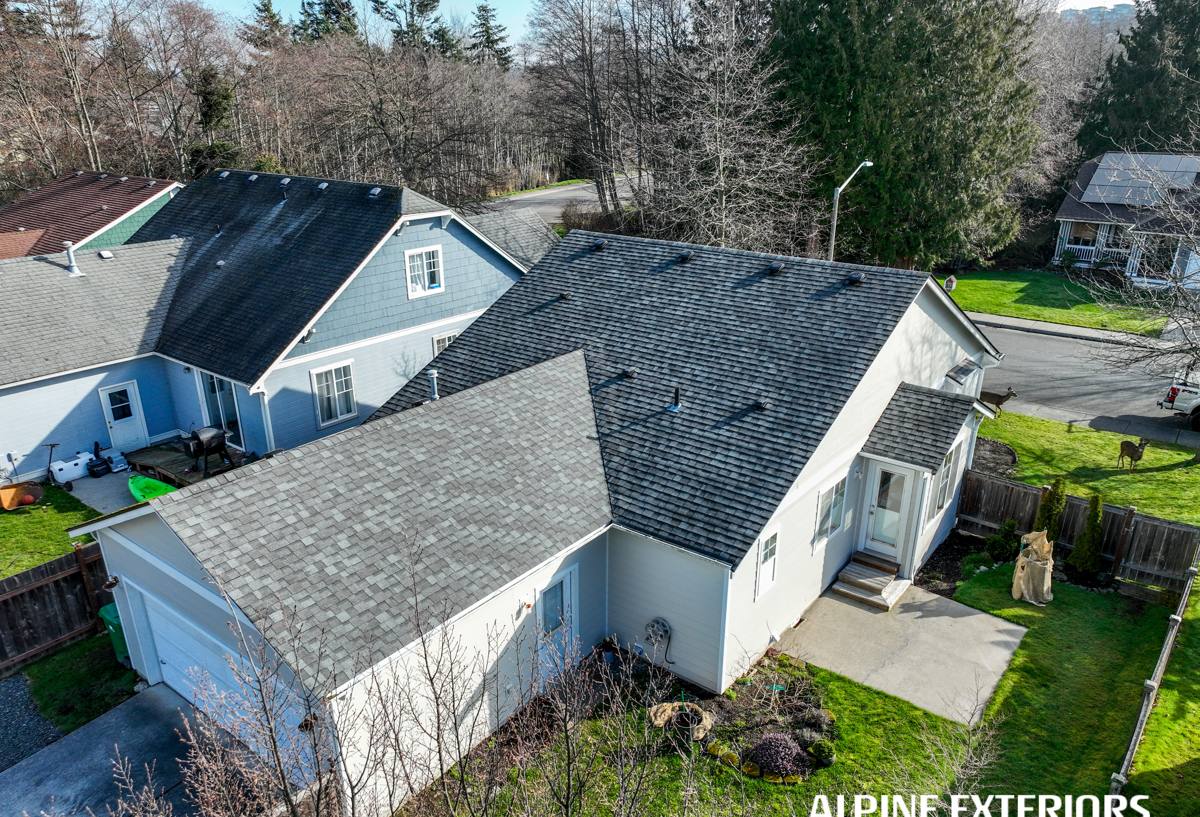
Temple Terrace has a lot of established neighborhoods with mature landscaping, which is one of the things that makes the area attractive to live in. From a siding standpoint, though, heavy tree cover changes the equation in a few ways. Shaded siding stays damp longer after rain, since it doesn't get the direct afternoon sun exposure that dries out a more open lot. Leaf litter and organic debris collect in wall corners, behind shutters, and along trim, holding moisture against the siding surface. Falling limbs and wind-whipped branches during storms are a real source of impact damage, especially at siding corners and eaves.
A lot of the housing stock in and around Temple Terrace also dates back several decades, which means many homes are due — or overdue — for a siding replacement regardless of what triggered the original installation. Older wood siding, old vinyl that's chalked and faded, or original cladding that was never well-flashed to begin with tends to show its age here faster than it would in a drier, sunnier climate. If you're looking at a repaint that keeps failing every few years, or trim that stays soft to the touch after a rainy week, that's usually a sign the underlying material — not just the paint — has reached the end of its useful life.
Common Warning Signs We See on Temple Terrace Homes
- Paint that blisters or peels within 2-3 years of a repaint, especially on sun-facing walls
- Soft or spongy spots near the bottom of walls, around window trim, or at siding seams
- Visible warping, cupping, or separation at panel joints
- Mold or mildew staining that comes back quickly after cleaning
- Gaps around windows and doors where old caulk has shrunk or cracked
- Siding that shows impact damage from fallen limbs or storm debris
Why We Only Install James Hardie Fiber Cement Siding
We made a decision as a company to install James Hardie fiber cement siding exclusively, and we don't treat that as a marketing line — it's a standard we hold ourselves to on every job, including the ones in Temple Terrace. We don't install vinyl siding, LP SmartSide, Cemplank, Allura, or primed wood products like spruce or cedar lap siding. Every one of those products has a legitimate place in the market and each has genuine strengths. But we've looked closely at how they perform over 10, 15, 20 years in exactly the kind of heat, humidity, and storm exposure that Hillsborough County sees, and we'd rather stand behind one product system we trust completely than offer a menu of options with different long-term risk profiles.
Vinyl siding is affordable and easy to install, but it softens and can warp under sustained high heat, it's not rated for the wind speeds hurricane-prone areas require without special bracing, and its color is baked into thin plastic that fades with UV exposure over time. Wood-based composite and primed wood products can look excellent when new, but they depend heavily on unbroken paint film and careful field-sealing of every cut edge — miss one spot during a humid Florida summer and moisture finds its way in. Fiber cement alternatives to James Hardie are legitimate products, but we've standardized on Hardie specifically for its factory-applied ColorPlus finish, its climate-engineered HZ5 product line built for hot, humid regions like ours, and the depth of its installation network and warranty support in Florida.
How James Hardie Performs in a Hillsborough County Climate
James Hardie fiber cement is made from cement, sand, and cellulose fibers, which makes it fundamentally different from vinyl or wood-based siding. It doesn't soften in heat, it doesn't burn (it carries a noncombustible rating), and it doesn't rely on paint film alone to keep moisture out — the material itself is dimensionally stable and resists swelling and rotting even when it gets wet. For a Temple Terrace home under tree cover that stays damp longer after summer storms, that's a meaningful difference from wood-based siding, which depends on staying dry and well-sealed to avoid rot.
James Hardie also engineers its siding by climate zone. Homes in Hillsborough County get the HZ5 product line, formulated specifically to resist the moisture, humidity, and freeze-thaw-free but rain-heavy conditions of the Gulf Coast. The factory-applied ColorPlus finish is baked on and backed by its own finish warranty, which means the color coat is engineered for UV resistance rather than relying on a field-applied paint job that will need repainting every several years. That matters directly here — Temple Terrace gets some of the most consistent, intense sun exposure of anywhere in the country, and a finish that fades or chalks quickly turns into a recurring maintenance bill.
James Hardie Product Lines We Install
| Product | Best Use | Notable Feature |
|---|---|---|
| HardiePlank Lap Siding | Most common wall application | Classic lap profile, multiple textures and widths |
| HardiePanel Vertical Siding | Modern facades, accent walls, gables | Clean vertical lines, board-and-batten look |
| HardieTrim Boards | Window and door trim, fascia, corners | Matches plank profiles, resists rot at cuts |
| HardieSoffit Panels | Eaves and overhangs | Vented and non-vented options |
Cost Factors When Pricing a Siding Job
Every Temple Terrace home is a little different, so we don't quote off a flat per-square-foot number without seeing the house. That said, a few factors consistently move the price up or down on a siding project, and it's worth knowing them before you start getting estimates.
| Factor | Why It Matters |
|---|---|
| Existing siding removal | Tear-off and disposal of old material adds labor and dump costs |
| Wall sheathing condition | Rotten sheathing found underneath old siding must be replaced before new siding goes up |
| Home size and complexity | More corners, gables, and dormers mean more cutting, flashing, and trim work |
| Siding profile and texture | Wider reveals and specialty textures cost more than standard lap profiles |
| Trim and accent details | Board-and-batten accents, window surrounds, and shutters add labor |
| Story height | Two-story walls require more staging and safety setup than single-story |
How Our Installation Process Works
Fiber cement siding is only as good as its installation. James Hardie's own literature is clear that improper installation — wrong fastener spacing, missing flashing, caulked joints that should be left open, panels installed too close to the ground — is the single biggest driver of premature siding failure, regardless of who made the product. That's why we follow manufacturer specifications closely rather than treating installation as a generic carpentry task.
On a typical Temple Terrace project, that means stripping old siding down to the sheathing, inspecting and repairing any water damage we find underneath, installing a code-compliant weather-resistant barrier, and flashing every window, door, and penetration before a single piece of Hardie goes up. Fasteners are set at manufacturer-specified spacing and depth — overdriven nails are one of the most common causes of cracked fiber cement siding. Joints are treated according to Hardie's engineering guidance, and we maintain proper clearance between the bottom of the siding and grade, decks, and roof lines so water has somewhere to go instead of wicking up into the material.
What a Correct Installation Includes
- Full inspection and repair of wall sheathing before new siding is installed
- Weather-resistant barrier installed to current code
- Flashing at every window, door, and wall penetration
- Manufacturer-specified fastener type, spacing, and depth
- Proper clearance from grade, roofing, and decking surfaces
- Correct joint treatment and caulking per James Hardie's installation guide
More Than Siding: Roofing, Windows, and Decks
Siding doesn't work in isolation — it's one piece of a home's exterior envelope, and the same storms and sun that stress your walls are working on your roof, windows, and any exterior decking at the same time. We handle all four, which matters for a couple of practical reasons. First, a lot of siding failures actually start as roof or window flashing problems that let water behind the wall, so when we're already assessing your exterior we can catch issues before they turn into a bigger repair. Second, if you're planning a full exterior refresh, coordinating siding, roofing, window, and deck work under one crew avoids the scheduling and liability gaps that come from stacking multiple unrelated contractors on the same house.
If your roof is aging out around the same time your siding is, or your windows are original single-pane units losing their seals, it's worth having all of it looked at together rather than addressing each system in isolation as it fails.
Why a Local Crew Matters for Temple Terrace Homeowners
Hillsborough County's building codes and wind-load requirements aren't generic — they're written for this region's hurricane exposure, and permitting and inspection expectations here reflect that. A crew that works across the Tampa Bay area regularly understands what inspectors are looking for, what fastening schedules the local wind zone actually requires, and how to sequence a job around our wet-season storm patterns so a home isn't left exposed mid-project when an afternoon thunderstorm rolls through, which happens on a very predictable schedule most of the summer.
There's also a simpler reason local experience matters: we've seen how James Hardie siding actually performs on homes like yours, years after installation, in this exact climate — not in a lab, not in a different state's weather pattern, but here in Hillsborough County. That feedback loop shapes how carefully we handle flashing, fastening, and joint details on every new project.
Maintaining James Hardie Siding in Temple Terrace
One advantage of fiber cement over wood-based alternatives is how little ongoing maintenance it needs, but "low maintenance" isn't "no maintenance." A simple annual check goes a long way toward getting the full lifespan out of the material.
- Rinse siding periodically to remove pollen, dust, and organic buildup, especially on shaded or tree-covered walls
- Trim back shrubs and branches so they don't hold moisture against the siding or cause impact damage in wind
- Inspect caulking around windows, doors, and trim yearly and re-caulk where it's cracked or shrunk
- Watch for any hairline cracks after major storms and have them evaluated before they widen
- Keep gutters clear so overflow doesn't run down and pool against wall sections
If you're weighing a siding replacement, dealing with storm damage, or just want a straight answer about what condition your current exterior is really in, we're happy to come take a look. Estimates are free, there's no pressure attached to them, and you'll get a plain explanation of what we find — you can request one through the form on this page.