 Tampa Siding
 What LP SmartSide Actually Is
LP SmartSide is an engineered wood siding product made from wood strands bonded with resins and waxes, then treated with a proprietary process (LP calls it SmartGuard) intended to resist moisture and fungal decay. It's manufactured to look like traditional wood lap or panel siding, comes primed from the factory, and is priced below fiber cement in most markets. It's a legitimate, widely used product, and a lot of contractors install it well.
We don't install it. Not because it's a scam or because it fails on every house it goes on — it doesn't. We don't install it because after years of doing exterior work in the Tampa Bay area, we don't think an engineered wood product is the right long-term bet for this climate, and we'd rather explain that plainly than sell you something we're not confident about ten years down the road.
What LP SmartSide Gets Right
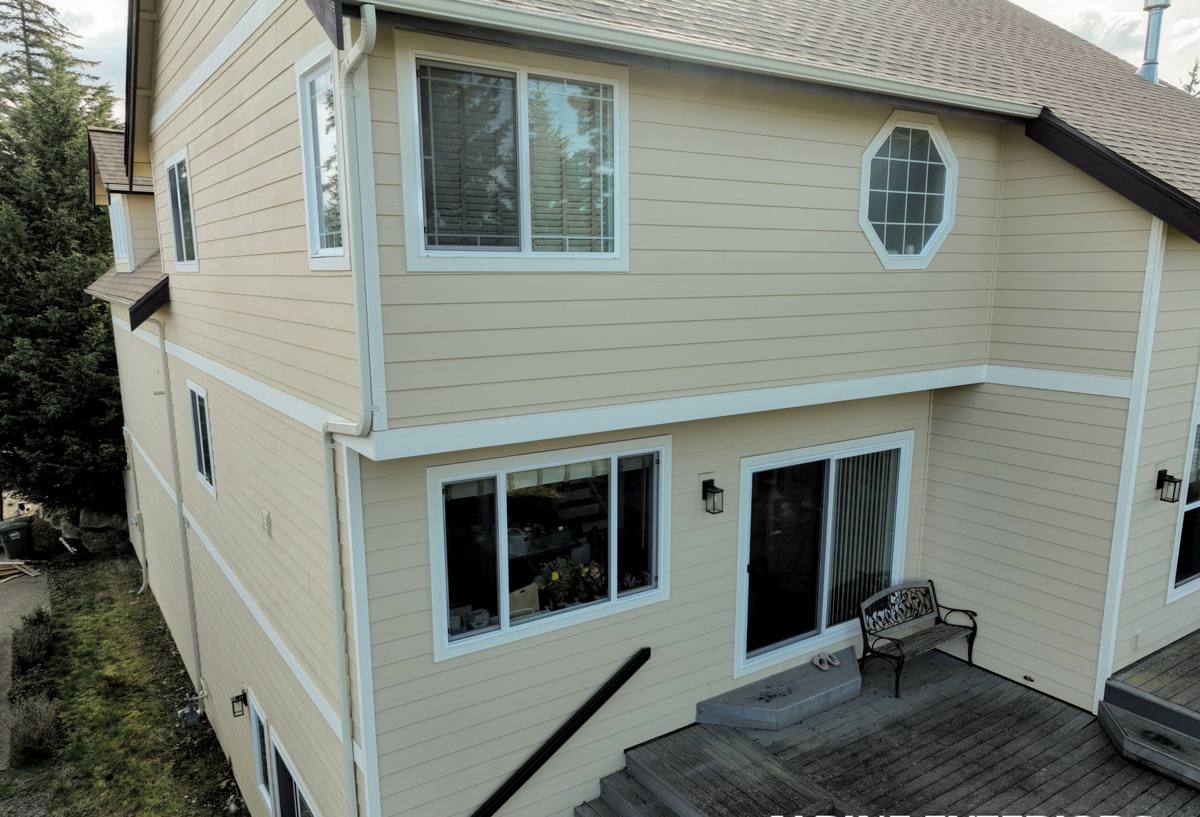
Fair is fair. SmartSide is lighter than fiber cement, which can make it easier and faster to install. It holds a nail well, it's less brittle to cut and handle on site, and the strand-based substrate resists cracking from minor impacts better than some brittle sidings. Priced correctly, it's a reasonable mid-tier option in climates where moisture exposure is moderate and maintenance gets done on schedule. If you already have SmartSide on your home and it's been maintained properly, there's no reason to panic — it's doing its job.
The Core Issue: It's Still a Wood Product
Strip away the engineering and the treatment process, and LP SmartSide is a wood-based composite. Wood strands, resin, wax, and a factory coating are a big improvement over solid lumber siding, but the underlying material is still cellulose. Cellulose absorbs and releases moisture. The entire performance of the product depends on the factory treatment and the field-applied caulking and paint staying intact for the life of the siding, with zero long-term gaps at seams, butt joints, fastener heads, and cut edges.
That's a manageable expectation in a dry climate. It's a much harder expectation to meet in Hillsborough County, where the siding sits in high humidity for most of the year and takes on wind-driven rain during tropical systems multiple times a season.
Why This Matters More Here Than Elsewhere
Every siding material has a weak point. Fiber cement's weak point is weight and brittleness during handling. Vinyl's weak point is heat distortion and impact cracking. Wood-based composite's weak point is moisture intrusion at compromised seams — and Tampa's climate is specifically the kind of environment that stresses that weak point: sustained humidity, hurricane-force wind gusts that drive rain sideways into joints and fastener penetrations, and salt air near the bay that accelerates the breakdown of caulk and factory coatings faster than it would inland.
How Tampa's Climate Interacts With Engineered Wood Siding
| Climate Factor | Effect on Engineered Wood Siding |
|---|---|
| Year-round humidity | Keeps moisture in contact with cut edges and seams longer between dry-out periods |
| Hurricane-force wind gusts | Drives rain laterally into laps, joints, and fastener holes rather than straight down |
| Wind-driven rain during named storms | Tests every caulk joint and flashing detail at once, repeatedly, over the product's life |
| Intense year-round UV | Breaks down exterior caulk and factory coatings faster, shortening the maintenance interval |
| Salt air near Tampa Bay and the Gulf | Accelerates degradation of sealants and fasteners, especially on west- and south-facing walls |
None of this means SmartSide "fails" in Tampa. It means the margin for error on installation quality and ongoing maintenance is thinner here than it is in a drier, calmer climate, and we'd rather not build a business on installing a product where the margin for error is that thin.
Installation Sensitivity
Engineered wood siding is more forgiving to cut and nail than fiber cement, but it's less forgiving of installation shortcuts once it's on the wall. Correct installation depends on details that are easy to skip and hard to inspect after the fact:
- Every cut edge field-primed and sealed before installation, not just the factory-primed faces
- Proper clearance from grade, roofing, and decking to keep the bottom edge from sitting in standing water or splash-back
- Correctly lapped and caulked butt joints, with no reliance on caulk alone to do a flashing detail's job
- Fastener placement that avoids over-driving, which can compromise the factory treatment at the nail head
- A repaint and recaulk schedule that actually gets followed by the homeowner for the life of the siding
Any one of these steps done wrong doesn't show up as a problem on day one. It shows up two, five, or eight years later, usually at a seam or a corner, and by the time it's visible from the outside there's often already moisture behind the panel. That's a hard thing to explain to a homeowner after the fact, and it's an even harder thing to warranty against, because the manufacturer's warranty leans heavily on "installed and maintained per instructions" — which is difficult to verify years after the fact.
Maintenance Burden Over the Life of the Siding
SmartSide is not a paint-once-and-forget product. It's a paint-and-recaulk-on-a-schedule product, and that schedule is not optional — it's what keeps moisture out of a wood-based substrate. In a Gulf Coast climate with intense UV and long humid stretches, that schedule tends to run tighter than the factory literature assumes for milder climates. Homeowners who bought the product expecting vinyl-style low maintenance are often surprised by what it actually takes to keep it performing as designed.
We install exteriors that we expect to still be sound decades from now with normal upkeep — not exteriors that require a disciplined recoating schedule to avoid moisture problems. That's a judgment call on our part, and it's the main reason we don't offer LP SmartSide as an option.
Warranty Structure: What's Actually Being Promised
| Factor | LP SmartSide | James Hardie Fiber Cement |
|---|---|---|
| Base material | Engineered wood strand composite | Cement, sand, and cellulose fiber — non-combustible |
| Moisture behavior | Performance depends on intact coating/caulk at every seam | Does not swell, rot, or absorb moisture the way wood does |
| Factory finish | Primed; field paint required and must be maintained | ColorPlus factory-baked finish available, reduces field painting |
| Warranty structure | Prorated over the term, conditions tied to installation and maintenance | Long-term, transferable warranty on the substrate and finish |
| Combustibility | Wood-based, treated but not non-combustible | Non-combustible material |
We're not going to tell you the SmartSide warranty is worthless — it's not. But a prorated warranty on a moisture-sensitive substrate is a different promise than a long-term warranty on a material that isn't fighting moisture intrusion as its central vulnerability in the first place. When we compared the two side by side for what we'd be comfortable standing behind on a Hillsborough County roof-to-grade exterior, fiber cement won.
Why We Standardized on James Hardie Instead
We install James Hardie fiber cement exclusively, and it's a deliberate standard, not a default. Hardie's HZ5 product line is engineered specifically for hot, humid, high-moisture climates like ours — it's formulated and tested for regions that deal with sustained humidity and storm exposure, which describes Tampa exactly. It's non-combustible, which matters in a state where wildfire risk and code requirements are both real considerations. The ColorPlus factory finish is baked on under controlled conditions and holds up to UV exposure better than field-applied paint, which cuts down on the repaint cycle that engineered wood siding depends on. And because the core material isn't cellulose-based, it isn't fighting the same moisture-absorption battle at every seam and cut edge for the next 20 years.
That doesn't mean Hardie installation is foolproof — flashing, gapping, and fastening still have to be done correctly, and we take that seriously. But the material itself gives us a wider margin for error against Tampa's climate, and after years of exterior work in this county, a wider margin for error is what we want between a homeowner's investment and the next tropical system.
What to Ask Any Contractor Before You Choose a Siding Material
- What is the base material, and how does it behave when moisture gets behind it?
- Is the warranty prorated, and what conditions would void it?
- What ongoing maintenance schedule does the manufacturer actually require to keep the warranty valid?
- Is the product rated or tested for high-wind, high-humidity coastal climates specifically?
- Who is accountable if a seam fails five years from now — the installer, the manufacturer, or you?
If you're weighing siding options for a home in Tampa or anywhere in Hillsborough County, we're happy to walk through what we install, why, and what it would look like on your house. Reach out for a free, no-pressure estimate — there's a form right below this page.