 Tampa Siding
 What New Tampa's Weather Does to an Outdoor Deck
A deck in New Tampa lives a harder life than a deck almost anywhere outside the Gulf Coast. It sits under intense, nearly year-round UV that breaks down wood fibers and fades or chalks lower-quality finishes. It gets soaked by sudden afternoon thunderstorms, then bakes dry within an hour, a cycle that repeats through most of the summer and stresses joints, fasteners, and coatings. During the active part of hurricane season, it has to survive hurricane-force wind gusts and wind-driven rain that finds its way into any gap in flashing or framing. And because New Tampa is close enough to Tampa Bay and the Gulf, the air carries a measurable amount of salt that accelerates corrosion in unprotected metal hardware.
None of that means a deck can't hold up here — it means the deck has to be designed and built for this specific climate rather than assembled from whatever a crew would use in a drier, milder part of the country. That's the difference between a deck that looks fine for two years and one that's still tight, flat, and safe after a decade of Hillsborough County summers.
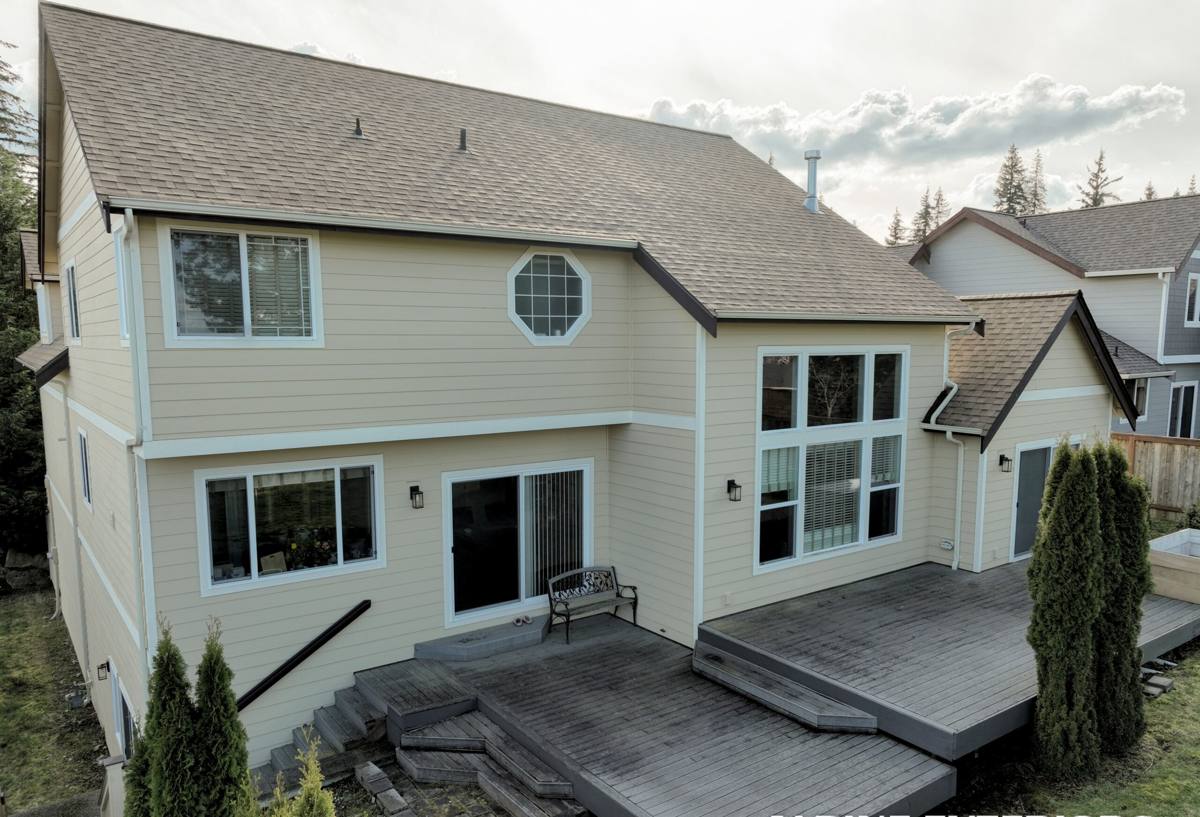
What a Correctly Built Deck Requires Here
Every deck is a system, not just a surface to walk on. In this climate, a few parts of that system matter more than they would elsewhere:
Moisture Management
Any deck attached to the house needs proper ledger board flashing that sheds water away from the structure, not into it. This is one of the most common failure points we see on older decks — water gets behind an improperly flashed ledger and rots the rim joist or sheathing behind it, hidden from view until the deck starts to feel spongy or pull away from the house.
Corrosion-Resistant Fasteners
Standard hot-dip galvanized hardware can start showing surface rust within a few seasons this close to the coast. We build with fasteners and structural connectors rated for coastal or ACQ-treated lumber exposure, which resist both the salt air and the chemicals in modern pressure-treated wood.
Wind-Rated Attachment
Railings, stair stringers, and the ledger connection all need to be attached with an eye toward wind uplift, not just gravity load. A deck that's screwed together to look right can still fail in a way that a properly through-bolted, code-anchored deck won't.
Wood, Composite, or PVC: Choosing the Right Decking Material
There's no single "best" decking material for New Tampa — there's a best material for your budget, how much upkeep you want to do, and how the deck will be used. Here's how the common options actually compare in this climate:
| Material | Upfront Cost | Maintenance in This Climate | Heat Underfoot | Realistic Lifespan |
|---|---|---|---|---|
| Pressure-treated wood | Lowest | Annual cleaning and re-sealing to fight UV and humidity | Moderate | 10-15 years with upkeep |
| Composite decking | Mid to high | Occasional washing; no staining or sealing | Can run hot in direct sun | 20-30 years |
| PVC decking | Highest | Lowest — resists moisture and staining well | Varies by product; lighter colors run cooler | 25+ years |
Wood is a reasonable choice if you're comfortable staying on top of maintenance and want the lowest entry cost. Composite and PVC cost more up front but hold up better against the sealing/re-sealing cycle wood needs to survive our UV and rain, and they don't develop the splinters or graying that untreated or under-maintained wood does within a few Florida summers. We'll walk through the honest trade-offs for your project rather than pushing whatever has the best margin — the right call depends on your budget and how hands-on you want to be with upkeep.
Footings, Framing, and Fasteners: The Parts You Don't See
The decking boards are what you notice, but the structure underneath is what determines whether the deck is still solid in ten years. In New Tampa's sandy soils and high water table, footing depth and sizing matter — undersized or shallow footings can shift over time, especially after the saturated soil conditions that follow a heavy tropical system. We size footings to the actual load and soil conditions on your property rather than using a one-size-fits-all approach.
Framing lumber should be rated for ground contact where it's close to grade or exposed to consistent moisture, and every structural connection — joist hangers, post bases, beam-to-post connections — should use hardware rated for treated lumber and coastal exposure. This is invisible once the deck is finished, which is exactly why it's worth asking about before construction starts, not after.
Permits and Hillsborough County Code
Most attached decks and any elevated deck in Hillsborough County require a building permit, and inspections typically happen at the footing stage and again at final completion. If your home is in an HOA-governed community, which describes a large share of New Tampa's neighborhoods, there's often a separate architectural review step before the county permit is even pulled — approval of railing style, decking color, or setback from property lines.
We handle the permitting and, where applicable, help prepare what's needed for HOA review as part of the job. Skipping permits on a deck project is a common shortcut some contractors take to move faster, but it leaves the homeowner exposed at resale, when unpermitted work often has to be disclosed or brought up to code before closing.
Our Deck Building Process
The process is straightforward, but we don't skip steps, because each one is where problems get caught before they're built into the structure.
- On-site assessment — we look at your yard's grade, drainage, existing structure (if attaching to the house), and how you actually want to use the space.
- Design and material selection — we go over layout, decking material, railing style, and any features like built-in seating or a pergola, along with honest cost ranges for each option.
- Permitting — we prepare and submit the permit package to Hillsborough County (and HOA documentation, if required) before any construction begins.
- Footings and framing — footings are set to proper depth, and the frame is built with treated lumber and corrosion-resistant hardware sized to the actual load.
- Decking, railing, and stairs — installed to the manufacturer's fastening specifications, which matters for warranty coverage on composite and PVC products.
- Inspection and final walkthrough — we get the required county inspection scheduled and walk the finished deck with you before calling the job done.
Designing for the Way New Tampa Families Actually Use Their Yards
A lot of New Tampa lots back up to conservation areas, ponds, or shared green space, and that changes how a deck should be designed. Shade matters more here than in most parts of the country — a deck that faces west with no cover can be nearly unusable during the hottest part of a Florida afternoon, which is worth planning for with orientation, a pergola, or a partial roof rather than discovering it after the fact.
Screening is another consideration many homeowners ask about once the deck is built rather than before — insects and afternoon rain both make an open deck less usable for a good chunk of the year. If there's a chance you'll want a screen enclosure down the road, it's worth designing the deck's footprint and railing height with that in mind from the start, since retrofitting is more expensive than planning for it up front.
Maintenance and What to Expect Over Time
Even a well-built deck needs some seasonal attention in this climate:
- Rinse off pollen, salt residue, and organic buildup a few times a year, especially after storm season
- Check railings and stair connections annually for any looseness — wind and temperature cycling can work fasteners loose over time
- Wood decks need cleaning and re-sealing roughly every one to two years to keep UV and moisture from breaking down the surface
- Composite and PVC decking need less upkeep but should still be kept clear of standing organic debris, which can trap moisture against the surface
- After any major storm, a quick visual check of the ledger connection and footings is worth the ten minutes it takes
Why Hire a Crew That Already Works in New Tampa
A deck built by a crew unfamiliar with this area's soil, HOA processes, and code requirements often ends up needing corrections — a footing that wasn't sized for local soil conditions, hardware that wasn't rated for coastal exposure, or a permit step that got missed. A local crew already knows the Hillsborough County permitting process, has already worked with the kind of HOA review common in New Tampa's planned communities, and has already seen how the region's storms and sun treat different materials over time.
That familiarity shows up in fewer surprises during the project and a deck that's built for the conditions it will actually face, not generic conditions from somewhere else.
If you're planning a new deck or replacing one that's past its prime, we're happy to walk your property, talk through material options honestly, and put together a free, no-pressure estimate. There's a form below to get started.