 Tampa Siding
 Why Riverview Homes Need Siding Built for This Climate
Riverview sits in Hillsborough County, close enough to Tampa Bay that homes here deal with the full range of what Gulf Coast weather can throw at an exterior. Summers bring months of intense, nearly direct UV exposure that breaks down weaker siding materials from the outside in. Storm season brings wind-driven rain that gets forced sideways into every seam, joint, and fastener hole a siding system has. And even though Riverview isn't right on the coast, the humid, salt-tinged air that moves inland off Tampa Bay still reaches homes here, especially on the side of a house that faces open water or takes the prevailing wind.
None of that is unusual for this part of Florida — it's just the baseline. The problem is that a lot of siding products were never engineered with this baseline in mind. They were designed for a national market and then sold into Florida anyway. James Hardie is different in one specific way that matters here: the company makes a version of its fiber cement siding, engineered for exactly this kind of climate, and rates it by region (HardieZone HZ5 and HZ10) so the product installed on a home in Riverview is built for wind, moisture, and UV exposure — not a generic average of what siding needs to survive in Ohio.
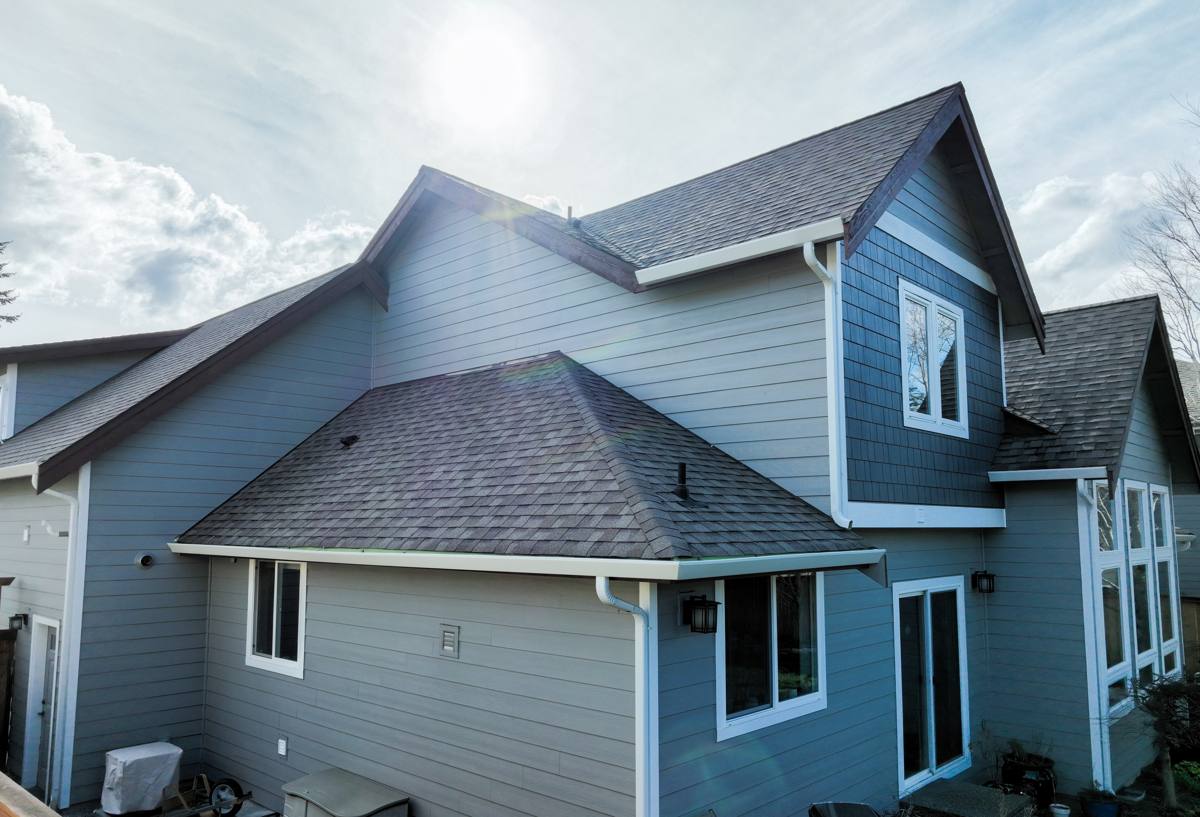
What "Correct" James Hardie Installation Actually Means
Fiber cement siding is only as good as the installation underneath it. This is the part that gets skipped or rushed on a lot of jobs, and it's also the part that decides whether a house holds up through a decade of Florida storms or starts showing problems in year three.
Flashing and moisture management come first
Before a single piece of Hardie board goes up, the wall needs a correctly lapped weather-resistant barrier, properly flashed windows and doors, and flashing at every horizontal trim board, roofline, and penetration. Wind-driven rain doesn't fall straight down in a Gulf Coast storm — it gets pushed sideways and upward under eaves and around openings. If the flashing details underneath the siding aren't right, water finds its way behind the board no matter how well the siding itself is installed.
Fastening and gapping for wind load
James Hardie publishes specific fastener types, spacing, and embedment requirements, and those requirements change depending on the HardieZone rating and the wind exposure of the house. A crew that treats every install the same way — one fastener pattern regardless of wall height, corner exposure, or elevation — is not installing to spec, even if the boards look fine from the street. Correct gapping at butt joints and around trim also matters: too tight, and the boards have nowhere to expand and contract; too loose, and you've built a path for water.
Caulking has a job — and a limit
Sealant belongs at specific transition points James Hardie's installation instructions call out, not as a substitute for flashing or as a way to hide a gap that shouldn't be there. Caulk is a maintenance item that will eventually need to be renewed; flashing is not supposed to be. A job that leans on caulk to do flashing's job is a job that will leak once that caulk ages out.
Why the Product Rating Itself Matters in Riverview
James Hardie's HardieZone system exists because siding performs differently depending on climate. HZ10 is engineered for regions with the most severe combination of moisture and temperature swings; HZ5 is engineered for the rest of the country, including most of Florida. The relevant point for a Riverview homeowner isn't the zone label itself — it's that the boards, the recommended fastening, and the moisture-management guidance are matched to the climate the house actually sits in, rather than a generic national spec. That's part of why we install James Hardie exclusively rather than mixing in other fiber cement or composite brands: the engineering and the installation instructions are built around real regional conditions, and we know exactly which spec applies to a Hillsborough County job.
ColorPlus finish versus job-site paint
Most Hardie siding on Riverview homes should go up with a factory-applied ColorPlus finish rather than being field-painted after installation. The finish is baked on under controlled conditions and backed by its own finish warranty, and it holds color and resists fading far better under year-round Florida UV than a field-applied coat that's exposed to sun and humidity before it's even fully cured. Field painting is sometimes unavoidable — for trim cuts, touch-ups, or certain profiles — but it should be the exception on a job, not the default.
Our Installation Process
- Walkthrough and measurement. We assess the existing siding, sheathing condition, trim, window and door flashing, and any problem areas — soft spots, prior water intrusion, or areas exposed to prevailing wind — before quoting anything.
- Tear-off and substrate check. Old siding comes off and we inspect the sheathing underneath. Rotted or water-damaged sheathing gets addressed before anything new goes up; covering a bad substrate with new siding just hides the problem.
- Weather barrier and flashing. A correctly lapped water-resistive barrier goes on, followed by flashing at every window, door, roofline, and penetration, installed to shed water down and out.
- Hardie installation to spec. Boards, fasteners, and gapping follow James Hardie's published installation instructions for the product line and HardieZone rating being used — not a generic pattern.
- Trim, caulk, and touch-up. Sealant goes where it belongs, and any field touch-up matches the ColorPlus finish as closely as possible.
- Final walkthrough. We go over the finished job with the homeowner before calling it done.
Signs a Previous Siding Job Wasn't Done Right
We get called out to a fair number of Riverview and greater Tampa homes where the siding is younger than it looks, or where problems show up faster than they should. These are the warning signs worth checking for:
- Visible fastener heads or fasteners driven too deep, cracking the board around them
- Butt joints installed tight with no expansion gap, especially on longer wall runs
- Caulk used at trim-to-siding transitions where flashing should have been used instead
- Staining or dark streaks below window sills or under horizontal trim boards
- Visible color fade or chalking that's uneven across the same wall — often a sign of field-applied paint rather than a factory finish
- Soft or spongy siding near the bottom courses, close to grade or hardscape
Why a Crew That Already Works in Riverview Matters
Siding installation isn't just about following a manufacturer's spec sheet — it's about applying that spec to the actual conditions on a given lot. A crew that regularly works Hillsborough County jobs already knows what a Tampa Bay-area storm season demands of flashing details, which sides of a house typically take the worst of the wind-driven rain, and how humidity affects cure times and sealant selection on a real job site, not a textbook one. That local repetition is what turns a correct installation from a one-time effort into a consistent standard across every job.
It also matters for anything involving permitting or wind-rating documentation. Florida's building code has specific wind-load and product-approval requirements, and a crew that pulls permits in this area regularly isn't learning those requirements for the first time on your house.
Maintenance and Long-Term Performance
Correctly installed James Hardie siding with a ColorPlus finish is a low-maintenance exterior, not a zero-maintenance one. In this climate, a realistic maintenance routine looks like:
| Task | Why it matters here | Rough frequency |
|---|---|---|
| Rinse siding with a garden hose | Clears salt residue and airborne grit before it builds up | Every few months |
| Inspect caulk joints at trim and penetrations | Intense UV and heat cycling age sealant faster than in milder climates | Annually, especially before storm season |
| Check for storm damage after major weather events | Wind-driven debris can chip or crack boards even when the install is sound | After any significant storm |
| Watch for staining near grade or sprinklers | Constant moisture exposure at the base of a wall shortens siding life | Ongoing visual check |
What Drives the Cost of a Siding Project
Every Riverview home is different, so we don't quote a per-square-foot number without seeing the house — but the factors that actually move the price are consistent:
| Factor | How it affects cost |
|---|---|
| Tear-off vs. new construction | Removing and disposing of old siding, plus repairing any damaged sheathing found underneath, adds labor beyond the siding install itself |
| Home size and wall complexity | More corners, dormers, and trim details mean more cutting, flashing, and labor time |
| Siding profile chosen | Lap siding, shingle-style panels, and board-and-batten each require different amounts of material and installation time |
| Story height | Second-story and multi-story walls require more scaffolding, staging, and time than single-story walls |
| Trim and accent work | Window and door trim, fascia, and accent bands add material and labor beyond the field siding |
| Existing damage | Rotted sheathing or water intrusion found during tear-off requires repair before new siding goes up |
If you're weighing a siding project on a Riverview home, we're glad to walk the property, explain what we see, and put together a straightforward, no-pressure estimate — no obligation, and no hard sell either way.