 Tampa Siding
 Brandon's Climate Is Hard on Siding — Here's Why
Brandon sits inland from Tampa Bay in Hillsborough County, but "inland" doesn't mean sheltered. Homes here still face the full weight of a Gulf Coast climate: long stretches of intense UV that bakes painted and vinyl surfaces for most of the year, humidity that hovers near saturation for months at a time, and wind-driven rain that comes sideways during summer thunderstorms and tropical systems. Add in salt-tinged air that carries well past the coastline on prevailing winds, and you have a combination that punishes siding materials that aren't built for it. A product that performs fine in a drier, milder climate can fail early here — not because it's defective, but because it was never engineered for this environment.
That's the lens we use on every siding job in Brandon: not "what's the cheapest option" or "what looks good on day one," but "what will still be doing its job in fifteen or twenty years, in this specific climate, on this specific house."
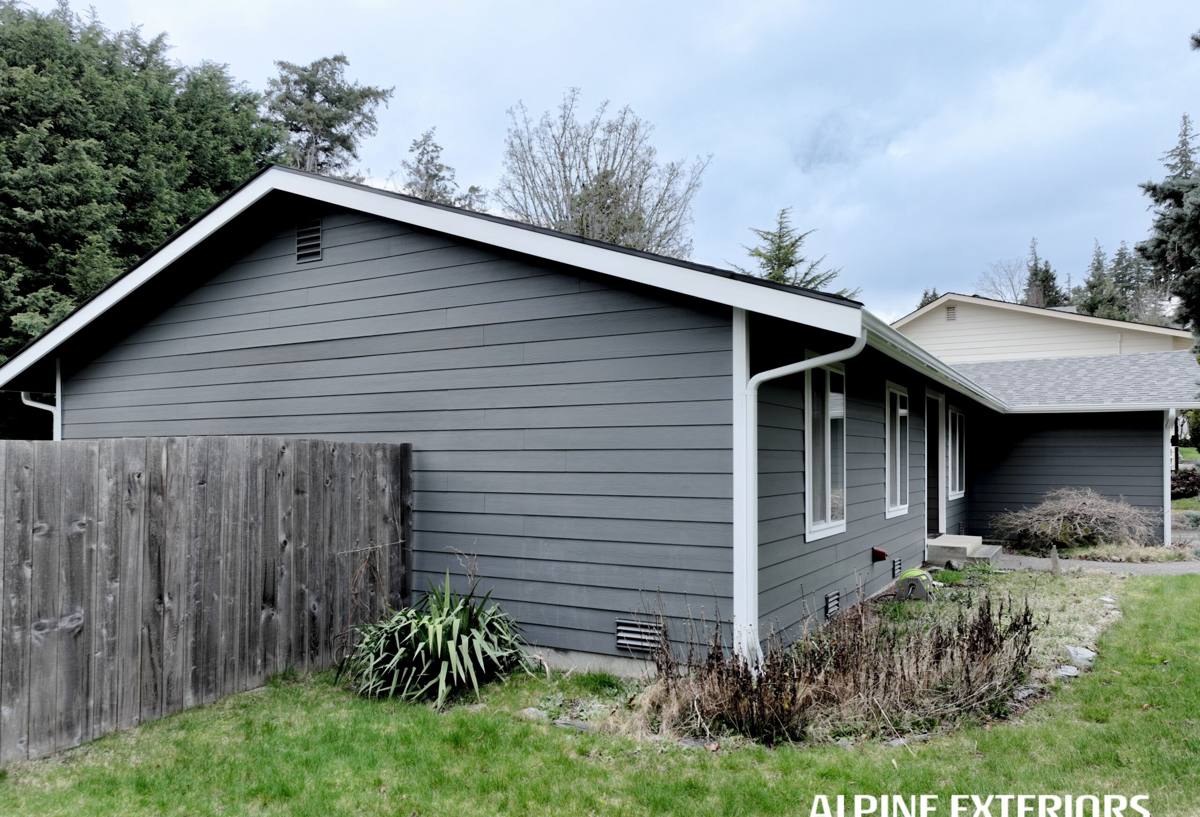
What Fiber Cement Solves That Other Siding Doesn't
Fiber cement is a mix of cement, sand, and cellulose fiber pressed and cured into dense, stable boards and panels. In a climate like Hillsborough County's, that composition matters more than it does almost anywhere else in the country:
- It doesn't rot or absorb moisture the way wood-based products can, which matters when a house sees repeated wetting and drying cycles from summer storms.
- It's non-combustible, which isn't a climate issue specifically, but it's a real, permanent advantage over engineered wood siding.
- It holds its shape in heat instead of softening, sagging, or buckling the way vinyl can during a Florida summer, when siding surface temperatures regularly climb well above the air temperature.
- The factory finish resists UV fade far better than field-applied paint, so color stays consistent through years of direct sun exposure.
None of that is marketing language — it's the practical reason fiber cement has become the standard replacement siding across Central Florida, and why we don't spend time on alternatives that ask homeowners to accept more maintenance or more risk for a lower upfront price.
Why We Install Only James Hardie — Not Vinyl, LP, or Other Fiber Cement Brands
We install James Hardie products exclusively. We don't carry vinyl siding, LP SmartSide, or other fiber cement brands like Cemplank or Allura, and we don't install primed spruce or cedar. That's a deliberate standard, not a sales pitch, and it's worth explaining honestly.
Vinyl is inexpensive and easy to install, but it's a petroleum-based product that expands, contracts, and can distort in sustained heat, and it doesn't provide meaningful impact or wind resistance on its own. LP SmartSide is a wood-strand product with a resin-saturated overlay — it performs reasonably well in many climates, but any engineered-wood product depends on unbroken caulking and flashing to keep moisture out over decades, and that's a hard standard to guarantee in a climate with Brandon's rainfall and humidity. Other fiber cement brands can be reasonable products, but we don't have the same depth of experience installing them correctly, and we're not willing to guess.
James Hardie is the product we've standardized on because it's climate-engineered for exactly this region, backed by a strong transferable warranty, and finished with a factory-applied color system that removes the weakest link in most siding failures: field paint.
James Hardie's HZ5 Line: Engineered for the Humidity Belt
What "climate-engineered" actually means
James Hardie manufactures its siding in different formulations assigned to different climate zones across the country — HZ5 for humid, high-moisture regions like Central Florida, and other formulations for drier or colder climates. The HZ5 formulation is engineered specifically to resist the moisture-related failure modes that show up in Gulf Coast humidity: swelling at cut edges, moisture wicking, and mold or mildew growth on the surface. Hillsborough County falls squarely in this zone, which is one more reason a generic, one-size-fits-all siding product is the wrong call for a Brandon home.
ColorPlus factory finish
Most Hardie products we install use the ColorPlus finishing system — a multi-coat, baked-on finish applied under factory conditions rather than painted on-site. It resists fading and chipping far better than field-applied paint, and it comes with its own finish warranty separate from the substrate warranty. In a climate that gets this much direct sun, that finish durability is not a cosmetic detail — it's the difference between siding that still looks new in year twelve and siding that needs repainting by year five.
What a Correct Fiber Cement Installation Actually Involves
Fiber cement is only as good as its installation. The material itself resists moisture and UV, but the assembly around it — flashing, fasteners, clearances, caulking — is what actually keeps water out of the wall. A rushed or undertrained install can turn a premium product into a source of future problems.
A correct installation on a Brandon home includes:
- Proper weather-resistive barrier and flashing installed and lapped correctly before a single board goes up.
- Manufacturer-specified clearances — typically a minimum gap from the siding's bottom edge to the roofline, deck, and finished grade — so water can't wick into the board.
- Corrosion-resistant fasteners driven at the correct spacing and depth; over-driven or under-driven nails are one of the most common causes of early siding failure.
- Joints and butt seams treated per Hardie's specifications, not just caulked and hoped for.
- Careful field-cutting practices, since cut edges expose the substrate and need to be sealed per manufacturer guidance to preserve the HZ5 moisture protection.
- Correct fastening patterns around windows, doors, and penetrations, where the majority of real-world leaks originate.
Every one of those steps is spelled out in James Hardie's installation manual, and skipping any of them can void warranty coverage even though the boards themselves are still on the wall. This is the part of the job that separates a siding installation that lasts twenty-plus years from one that starts showing problems in five.
Fiber Cement vs. Other Siding Options for Brandon Homes
| Factor | Vinyl | LP SmartSide | James Hardie Fiber Cement |
|---|---|---|---|
| Heat/UV stability | Can soften, warp, or distort in sustained heat | Holds shape well; finish can fade over time | Stable in heat; ColorPlus finish resists UV fade |
| Moisture behavior | Doesn't absorb water, but seams rely on drainage design | Engineered wood core is vulnerable if moisture reaches it | HZ5 formulation engineered for humid, wet climates |
| Wind performance | Rated by gauge/thickness; lighter products can flex or detach | Solid panel performance when properly fastened | Dense, heavy board holds up well to wind-driven rain and gusts |
| Fire behavior | Combustible | Combustible (wood-based) | Non-combustible |
| Finish longevity | Color molded in but can chalk/fade | Factory or field finish, repaint eventually needed | Factory-baked ColorPlus finish, separate finish warranty |
This isn't a claim that other products are junk — plenty of homes around the country carry vinyl or LP siding without issue. It's a statement about what performs best, with the least long-term risk, in Hillsborough County's specific combination of heat, humidity, salt air, and storm exposure.
Our Process, Start to Finish
- On-site assessment. We look at the existing siding, sheathing condition, trim, window and door flashing, and any signs of past moisture intrusion before quoting anything.
- Written estimate. You get a clear scope — what's being removed, what's being replaced, product line and color, and a firm price, not a rough guess.
- Tear-off and sheathing check. Old siding comes off and we inspect the sheathing underneath. Any rot or damage gets addressed before new material goes up — covering a problem is not an option.
- Weather barrier and flashing. This layer goes in correctly before any Hardie board is installed, since it's the actual water management system behind the siding.
- Installation to manufacturer spec. Boards, fasteners, clearances, and joint treatment follow James Hardie's published installation requirements, not shortcuts.
- Trim, caulking, and final detailing. The details around windows, corners, and penetrations get the same attention as the field of the wall.
- Final walkthrough. We go over the finished job with you before calling it complete.
Why Hiring a Crew That Already Works in Brandon Matters
Siding installation isn't just about the product — it's about local execution. A crew that regularly works in Brandon and the surrounding Hillsborough County communities already understands the permitting process with the county, knows what inspectors are looking for on flashing and fastening, and has a feel for the age and construction style of homes common to the area's subdivisions. That familiarity shows up in small but meaningful ways: knowing which older homes are likely to have sheathing issues under the existing siding, understanding HOA architectural review requirements that are common in many Brandon neighborhoods, and being able to source materials and schedule crews without the delays that come from working somewhere unfamiliar.
It also matters for storm readiness. A crew that works this region year-round builds jobs with an understanding of Florida Building Code's wind-load requirements as they apply locally, not as a generic national standard. That's not a small distinction when the siding on your house needs to hold up through hurricane season.
Maintenance and Long-Term Care
One of the practical advantages of correctly installed James Hardie siding is how little ongoing maintenance it needs compared to wood-based or vinyl alternatives. Still, a few habits go a long way in this climate:
- Rinse siding periodically to clear salt residue, pollen, and mildew buildup, especially on north-facing walls that stay shaded and damp longer.
- Inspect caulking at trim joints and penetrations annually, particularly after hurricane season, and have any cracked or missing caulk redone promptly.
- Keep irrigation heads and sprinklers from spraying directly on siding long-term, which can accelerate mineral staining.
- Watch for any soft spots, staining, or bubbling paint near the bottom courses, which can signal a clearance or drainage issue worth having checked.
- Keep landscaping and mulch beds from building up against the bottom edge of the siding, which compromises the clearance the installation was designed around.
Handled this way, a correctly installed Hardie system is one of the lowest-maintenance exterior investments a Brandon homeowner can make, and it's backed by a manufacturer warranty that's transferable if you sell the home.
If your Brandon home's siding is showing its age — fading, soft spots, warping, or just outdated style — we're happy to take a look and give you a straightforward, no-pressure estimate for James Hardie fiber cement siding built for this exact climate.