 Tampa Siding
 Roof Repair Built for Clearwater's Weather, Not Generic Weather
Clearwater sits right on the Gulf, which means its roofs take a different kind of beating than a roof fifty miles inland. Salt-laden air corrodes fasteners and flashing faster. Afternoon storms roll in fast and hard, driving rain sideways under shingles and tile that would stay dry in a straight-down rain. And the sun here isn't seasonal — it's a year-round UV load that breaks down roofing materials from the top layer inward, month after month, with no real off-season to let a roof recover. A repair crew that mainly works inland neighborhoods and only occasionally gets a Clearwater call doesn't always account for that combination. We do, because it's the environment we actually work in.
This page is specifically about roof repair for Clearwater properties — not a full re-roof, and not siding or windows. If your roof has a leak, storm damage, missing or lifted shingles, cracked tile, or flashing that's failed, this is what we do and how we do it.
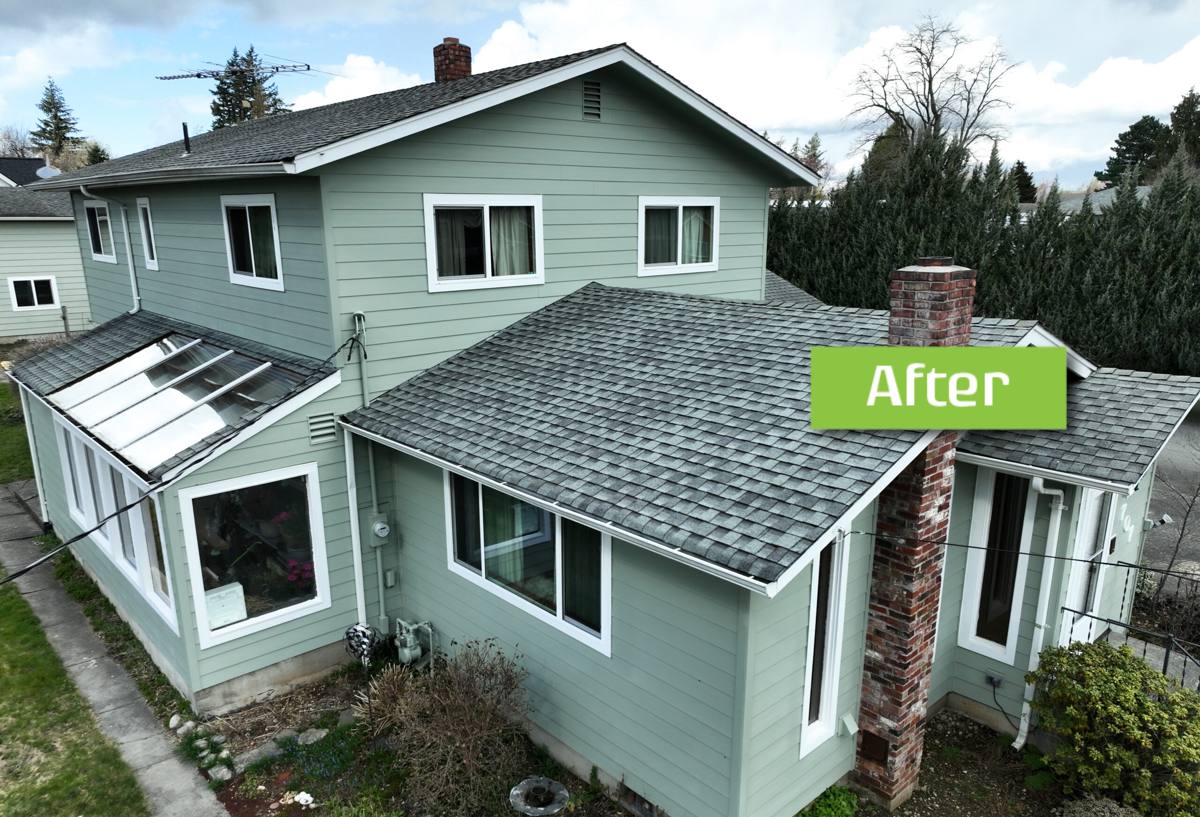
What Clearwater's Climate Actually Does to a Roof
Wind and Storm Load
Hurricane-force gusts and the more frequent strong summer storms don't just rip shingles off outright — more often they loosen the seal along the tab edges, lift a starter row, or work a ridge cap free just enough that the next storm finishes the job. By the time you see a shingle in the yard, the roof has usually been losing its wind resistance gradually for a while.
Wind-Driven Rain
Rain that comes in nearly horizontal during a Gulf storm doesn't behave like rain falling straight down. It gets pushed up under shingle edges, into valleys, and around penetrations like vent stacks and skylights — places that hold up fine in ordinary rain but were never designed to shed water moving sideways. This is the single biggest reason a roof can pass a casual visual check and still be actively leaking during a storm.
UV Exposure
Asphalt shingles are an oil-based product, and constant UV exposure dries out the asphalt, causing granule loss and brittleness over years. Tile and metal handle UV better structurally, but the sealants, underlayment, and fasteners underneath still age on the same accelerated timeline. A roof's rated lifespan on paper assumes average conditions — a roof that sits under Gulf Coast sun year-round is working harder than that average.
Salt Air
Being close to the water means airborne salt settles on every exposed surface, including roof metal — flashing, drip edge, vent caps, and exposed fasteners. Salt accelerates corrosion, and corroded flashing or fasteners are one of the most common root causes we find behind a leak that otherwise looks like "just an old roof."
Signs a Clearwater Roof Needs Repair, Not Just a Look
- A ceiling stain that appears or grows after a storm, even if it dries up between rains
- Shingles that are curling, cupping, or missing granules in patches (visible as darker or shinier spots)
- Tile that's cracked, slipped out of alignment, or missing after high wind
- Rusted or visibly lifted flashing around chimneys, skylights, or where a lower roof meets a wall
- Soft or spongy decking felt underfoot in the attic, especially near valleys or penetrations
- Granules collecting in gutters or at downspout discharge points
- Daylight visible through the roof deck from inside the attic
- A spike in attic temperature or humidity that wasn't there before
Any one of these on its own doesn't necessarily mean a full re-roof. Most of the time it means a targeted repair — but only if it's diagnosed and fixed before the next storm cycle makes it worse.
How We Diagnose a Repair Correctly
The most common mistake in roof repair isn't bad workmanship — it's fixing the visible symptom instead of the actual entry point. Water travels. A stain on a bedroom ceiling can trace back to a flashing failure ten feet away, and patching drywall or even re-sealing the spot directly above the stain can leave the real leak untouched.
Our process on a repair call:
- Interior check first. We look at the stain or damage pattern from inside, including the attic where accessible, to understand how water is moving before we ever get on the roof.
- Full roof walk, not a spot check. We inspect the whole roof plane, not just the area near the reported leak — a wind event that damaged one section usually stressed the whole roof.
- Trace to the actual entry point. Flashing, valleys, penetrations, and ridge lines get checked specifically, since that's where most Gulf Coast leaks originate.
- Written scope before work starts. You get a clear explanation of what's actually wrong and what the repair involves — no vague "we'll fix it" language.
- Repair matched to the roofing material. Shingle, tile, and metal each require different repair techniques, and mixing methods (like using shingle patching approaches on a tile roof) is a common source of repeat leaks.
What a Correct Repair Involves by Roof Type
| Roof Type | Common Clearwater Failure Point | What a Proper Repair Addresses |
|---|---|---|
| Asphalt Shingle | Wind-lifted tabs, UV-brittled edges, granule loss | Replace damaged shingles in matching profile, re-secure adjacent courses, check underlayment beneath the repair zone |
| Concrete/Clay Tile | Cracked or displaced tile after wind, broken battens | Replace individual tiles without disturbing surrounding courses, verify underlayment condition, re-secure fasteners |
| Metal | Fastener corrosion, seam separation from thermal cycling | Replace corroded fasteners with corrosion-resistant hardware, reseal or re-fasten seams, check for panel movement |
| Flat/Low-Slope | Ponding water, membrane seam failure, flashing pull-away | Patch or re-seal membrane seams, correct drainage issue if present, replace failed flashing |
The one thread across all four: a repair that only addresses the surface material without checking what's underneath (underlayment, decking, flashing) tends to fail again within a season or two, especially in this climate. That's why our repairs include checking what the visible damage is sitting on top of, not just replacing what's on top.
Why a Crew That Works Clearwater Regularly Matters
Roof repair has a lot of judgment calls in it — how much of a shingle course to pull back before you find sound material, whether a stain calls for a patch or points to a bigger flashing issue, which fastener spec actually holds up near salt air versus one that looks fine on installation day and corrodes within a couple years. Those calls get better with repetition in the specific conditions a roof lives in.
A crew that regularly works Clearwater and the broader Tampa Bay area has already seen how local roofs age — which flashing details tend to fail first, which valleys collect the most wind-driven rain, how tile roofs in this specific salt-air exposure hold up over time. That's not something you get from general roofing experience alone; it comes from doing this work, on these roofs, in this weather, repeatedly.
There's also a practical side: storm damage in this region often isn't isolated to one house. When a wind event comes through, a local crew can respond faster and prioritize based on actual severity, rather than a scheduling queue built around a service area that spans multiple counties with very different exposure levels.
Roofing Materials We Repair
We work on asphalt shingle, concrete and clay tile, and standing seam or exposed-fastener metal roofing — the systems most common on homes in this area. Each has its own repair technique, its own fastener and sealant requirements, and its own failure patterns, and we match the repair method to the material rather than applying a one-size approach.
Repair vs. Replacement: An Honest Read
Not every damaged roof needs to be replaced, and not every leak can be permanently solved with a patch. Here's how we think about the line between the two:
| Factor | Leans Toward Repair | Leans Toward Replacement |
|---|---|---|
| Age relative to material lifespan | Roof is under roughly two-thirds of its expected life | Roof is near or past its expected life for the material |
| Extent of damage | Isolated to one section or a few penetrations | Spread across multiple roof planes |
| Underlayment condition | Sound underlayment found during inspection | Underlayment is brittle, saturated, or failing broadly |
| Repair history | First or second repair in this area of the roof | Same area has needed repeated repairs |
| Decking condition | Solid, no soft spots found | Soft, delaminating, or water-stained decking |
If an inspection turns up conditions that point toward replacement, we'll say so plainly and explain why — we're not going to sell a patch we don't think will hold, and we're not going to push a replacement a roof doesn't need yet.
Preventing the Next Repair Call
A few habits go a long way for homes in this area between storm seasons:
- Have the roof looked at after any named storm or significant wind event, even if nothing looks obviously wrong from the ground
- Keep gutters and valleys clear so wind-driven rain has somewhere to go instead of backing up under the roofing material
- Check attic ventilation — poor airflow traps heat and moisture, which accelerates the UV and humidity damage already working on the roof from outside
- Address small issues (a lifted shingle, a hairline crack in a tile) before the next storm turns them into a leak
- Keep an eye on flashing around chimneys, skylights, and roof-to-wall transitions, since that's where salt-air corrosion shows up first
What to Expect When You Call Us
We'll ask what you're seeing — where the stain is, when it started, whether it correlates with storms — and get out to inspect the roof directly rather than quoting a repair sight unseen. You'll get a plain explanation of what we found, what's causing it, and what the repair involves, in writing, before any work begins. If the damage is more extensive than a repair can reasonably address, we'll tell you that too, along with why.
If you're dealing with a leak, storm damage, or a roof that just doesn't look right after a season of Clearwater weather, we're glad to come take a look. Reach out for a free, no-pressure estimate using the form below.