 Tampa Siding
 Why Davis Islands Decks Take More Punishment Than Most
Davis Islands sits right up against Tampa Bay, and that waterfront position is exactly what makes it a tough spot for outdoor decking. A deck here deals with more than the usual Florida sun. It's exposed to salt-laden air coming off the water, wind-driven rain that gets pushed sideways during storms, and the kind of sustained humidity that keeps wood and hardware wet longer than they would be a few miles inland. Add in hurricane-force wind gusts during the active season, and you've got a combination that will find every weak point in a poorly built deck within a few years instead of a couple of decades.
None of this means composite decking is a bad choice for the island — it's usually the better choice. It means the installation has to account for these conditions from the start, not as an afterthought. A deck that would hold up fine in a dry inland yard can fail early here if the substructure, fasteners, and board selection weren't chosen with this specific environment in mind.
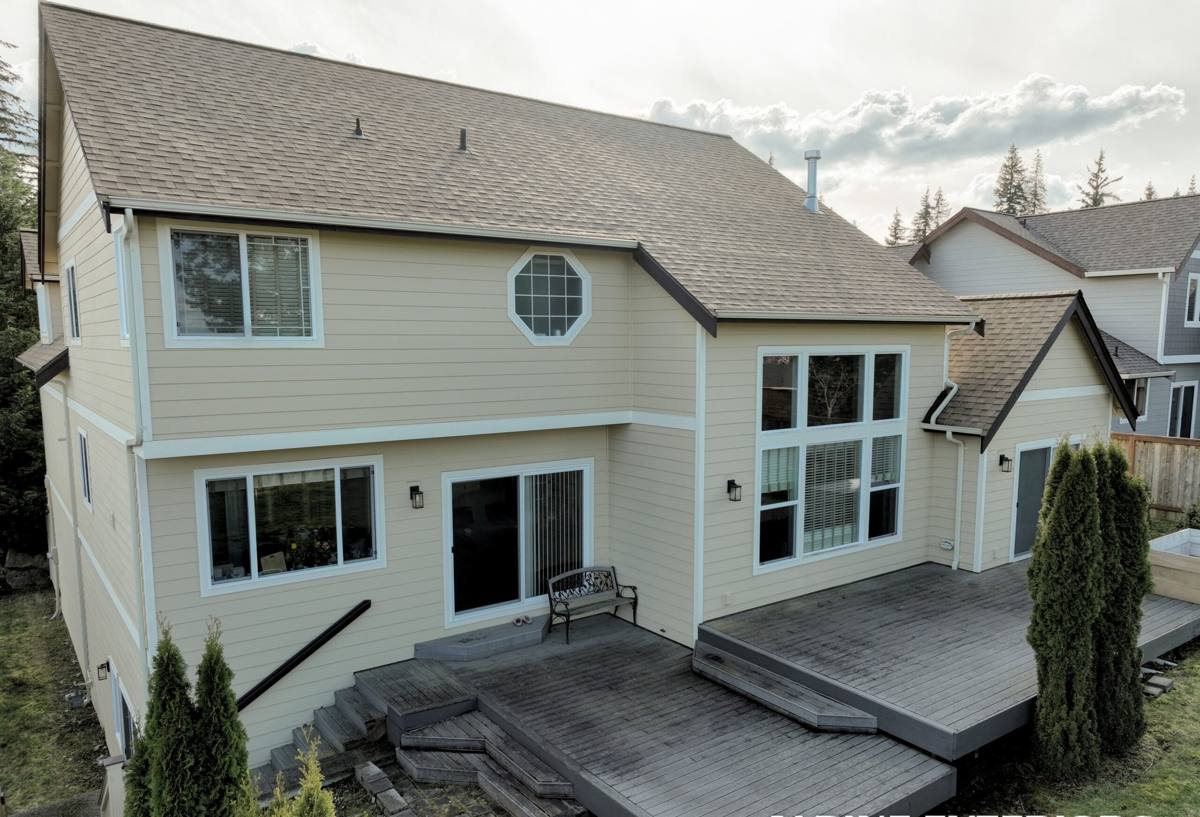
What a Correct Composite Deck Installation Requires Here
Composite decking boards themselves resist rot and insect damage far better than wood, which is a real advantage in a humid coastal setting. But the board is only one part of the system. Most of the problems we get called out to fix on existing decks aren't board failures — they're substructure, fastening, or ventilation mistakes that let moisture and wind do damage underneath a perfectly good-looking surface.
The framing underneath matters more than the boards on top
Joists, beams, and ledger attachment need to be sized and spaced for the actual span and load, not just "close enough." In a coastal, storm-exposed area, we also pay close attention to how the deck ties back to the house structure and how the substructure will shed water instead of trapping it. Trapped moisture under a deck is one of the most common causes of hidden rot in framing, even when the composite decking on top still looks brand new.
Airflow underneath prevents long-term problems
Ground-level and low-clearance decks need enough airflow beneath the boards to let humidity escape. Without it, moisture sits against the underside of the decking and the framing, which shortens the life of both — regardless of how good the composite material is rated to be.
Composite Board Options and Trade-Offs
Not all composite decking is built the same way, and the differences matter more in a salt-air, high-UV environment like this one. We walk homeowners through the realistic trade-offs rather than pushing whatever is easiest to install.
| Board Type | Strengths | Trade-Offs to Know |
|---|---|---|
| Capped composite (polymer shell over composite core) | Best fade and stain resistance, low maintenance, handles UV and humidity well | Higher upfront cost than uncapped composite |
| Uncapped composite (wood-plastic blend, no shell) | Lower material cost, still rot-resistant | More prone to surface fading and moisture absorption over time in direct sun and salt air |
| Cellular PVC decking | No wood content at all, strong moisture resistance | Can expand and contract more with heat, requires attention to gapping during install |
For a Davis Islands deck that gets direct sun most of the day and regular salt exposure, we generally steer homeowners toward capped composite or PVC products, and explain honestly when a lower-tier board would be cutting a corner that shows up in five years rather than five months.
Fasteners, Framing Hardware, and Wind Exposure
This is the part of a deck build that's invisible once the project is done, and it's also where corners get cut most often. Salt air accelerates corrosion in standard hardware faster than most homeowners expect. We use fasteners, brackets, and connectors rated for coastal or marine-grade exposure — not because it looks better, but because standard galvanized hardware can start corroding within a few years this close to the bay, long before the decking itself shows any wear.
Wind is the other piece. Hurricane-force gusts put real uplift and lateral load on a deck, especially anything attached to the house or built with railings that catch wind like a sail. Post spacing, footing depth, and the connection hardware at the ledger board all need to be built to handle that load, not just the static weight of furniture and people standing on it.
What we check on every framing inspection
- Ledger board flashing and attachment to the home's structure
- Footing depth and post spacing against expected wind and load
- Corrosion-resistant fasteners and connector hardware throughout
- Joist spacing appropriate to the specific composite board being installed
- Clearance and airflow underneath the deck surface
- Railing post attachment strength, since railings take the brunt of wind load
Our Process, Start to Finish
We keep the process straightforward because a deck project shouldn't feel like a mystery to the homeowner paying for it.
1. On-site assessment
We look at the existing structure (if there is one), the layout you want, sun exposure, and how close the deck sits to standing water or salt spray. This is where we flag anything that affects material choice or framing before we ever quote a price.
2. Honest proposal
You get a written scope covering board selection, framing work, hardware, and railing — with the trade-offs explained, not buried in fine print.
3. Permitting
Deck work typically requires a permit through the local building department, and we handle that process as part of the job rather than leaving it to the homeowner.
4. Structural work and installation
Substructure repairs or new framing come first, followed by decking, fastening, and railing installation, with attention to gapping and expansion since Florida heat causes composite and PVC boards to move seasonally.
5. Final walkthrough
We go over the finished deck with you, including basic care guidance specific to the board you chose.
Permitting and Local Code Considerations
Hillsborough County and the City of Tampa have permitting requirements for deck construction, and waterfront and flood-zone considerations can come into play for properties on Davis Islands depending on lot location and elevation. We don't guess on this — we pull the required permits and build to the applicable code requirements for wind load and structural attachment rather than treating permitting as optional paperwork. Skipping this step is one of the more common shortcuts homeowners run into with unlicensed labor, and it can create real problems at resale or insurance time.
Maintaining a Composite Deck in This Climate
Composite decking is marketed as low-maintenance, and compared to wood, it is. But "low-maintenance" doesn't mean "no maintenance," especially with salt air and heavy pollen or organic debris common near the water.
- Rinse the deck surface periodically to clear salt residue, pollen, and debris before it builds up
- Clean mildew or algae spots with a mild soap and soft-bristle brush rather than a pressure washer set too high
- Check railing hardware and fasteners annually for early signs of corrosion
- Keep gutters and downspouts nearby clear so runoff isn't dumping extra water onto or under the deck
- Trim back landscaping that keeps sections of the deck shaded and damp longer than the rest
Cost Factors to Expect
Every deck is priced around its own size, structure, and material choices, so we're not going to throw out a number that doesn't apply to your project. What we can tell you is what actually moves the price up or down.
| Factor | Why It Affects Cost |
|---|---|
| Deck size and shape | More square footage and complex angles mean more material and labor |
| Height and substructure needs | Elevated decks need deeper footings and stronger framing than ground-level decks |
| Board tier (uncapped vs. capped vs. PVC) | Material cost per square foot varies significantly between tiers |
| Railing style and material | Composite, aluminum, and glass railing systems all price differently |
| Existing structure condition | Rebuilding a rotted substructure adds cost beyond just replacing the decking surface |
| Fastener and hardware grade | Marine-grade, corrosion-resistant hardware costs more than standard fasteners but lasts far longer here |
Why Hire a Crew That Already Works on Davis Islands
A contractor who mostly builds decks in dry, inland neighborhoods isn't automatically going to think about salt-air corrosion on fasteners or wind load on an elevated deck near the bay — it's just not the environment they deal with every day. A crew that regularly works waterfront and island properties around Tampa already builds those considerations into the plan by default, from hardware selection to how the framing is detailed to handle moisture and wind together, not just one or the other.
That local familiarity also shows up in smaller ways: knowing what the permitting process here typically involves, understanding how Tampa's storm season affects project timing, and recognizing which composite products actually hold their color and finish through a full year of Gulf Coast sun instead of chalking or fading within a couple of seasons.
If you're planning a new composite deck on Davis Islands or replacing one that didn't hold up, we're happy to take a look and give you a straightforward, no-pressure estimate. Fill out the form below and we'll follow up to set up a time to assess your property.