 Tampa Siding
 Why Siding Repair Looks Different in Brandon
Brandon sits inland from Tampa Bay, but "inland" in Hillsborough County doesn't mean sheltered. Homes here still take the same tropical sun, the same humidity swings, and the same wind-driven rain that comes through with every summer thunderstorm and tropical system. The difference between a Brandon home and one sitting right on the water is usually degree, not kind — siding here fails from the same causes, just on a slightly longer timeline. That's an important distinction when you're trying to figure out whether a problem on your siding is cosmetic or something that needs attention now.
Three things do most of the damage over time in this part of Florida: intense year-round UV that breaks down paint films and some siding substrates from the outside in, wind-driven rain that gets pushed sideways into laps, seams, and trim during storms, and humidity that keeps wall assemblies damp longer than they'd stay in a drier climate. Add hurricane-force wind events, which Hillsborough County sees on a real, recurring basis, and you get siding that's stressed from multiple directions at once — UV breaking it down, moisture getting behind it, and wind physically working seams and fasteners loose.
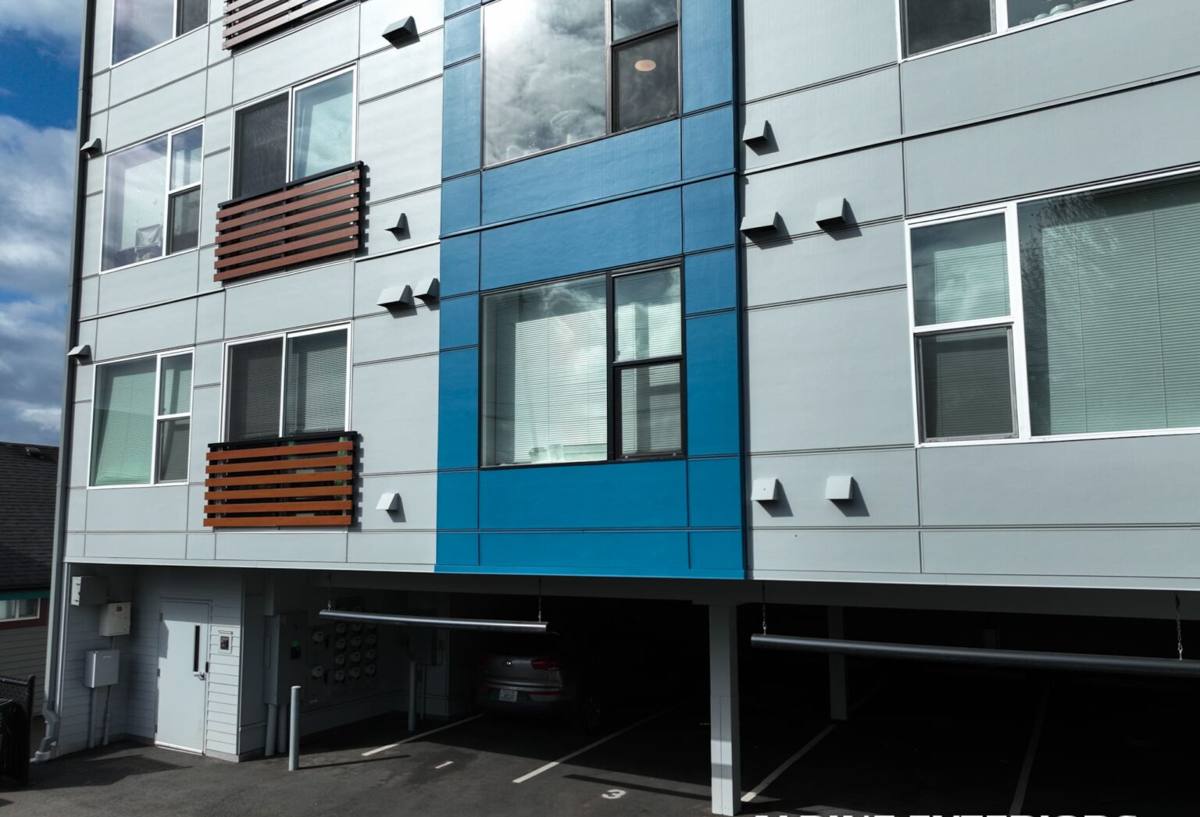
The Damage We Actually See on Brandon Homes
Most siding repair calls in this area fall into a handful of categories. Recognizing which one you're dealing with matters, because the right fix is different for each:
Storm and wind damage
Cracked or dislodged panels, boards popped loose from fasteners, and impact damage from wind-borne debris are the most common post-storm issues. Wind doesn't just crack siding directly — it also works fasteners loose over repeated events, which shows up later as boards that flap, rattle, or gap at the corners.
Moisture and rot at vulnerable points
Wherever siding meets a window, door, roofline, or the ground, water finds a way in eventually if flashing or caulking has failed. On wood-based products this shows up as soft, swollen, or visibly rotting boards. On other materials it can mean staining, bubbling paint, or a soft spot you can feel by pressing on the surface.
Sun and heat breakdown
Florida sun is hard on paint and on the siding material underneath it. Chalking, fading, cracking, and warping are all signs of UV and heat fatigue, and they tend to show up first on south- and west-facing walls that get the most direct afternoon sun.
Pest and organic growth issues
Humidity plus wood-based siding is an open invitation for wood-boring insects and fungal decay. Mold and mildew growth on the surface is common too, especially in shaded, low-airflow spots between homes.
What a Correct Repair Actually Involves
A siding repair that just patches the visible damage and stops there is a repair that's going to fail again. Doing it right means treating the visible damage as a symptom and checking what's underneath it.
Diagnose before you patch
Any competent repair starts by figuring out why the damage happened, not just what it looks like. A cracked panel from a one-time impact is a different job than a cracked panel caused by trapped moisture that's been swelling and contracting the material for months. Patching over the second one without addressing the moisture source just buys you a few months before the same spot fails again.
Check what's behind the siding
Once a section is opened up, the house wrap, flashing, and sheathing behind it need to be inspected. If water has been getting behind the siding, there's a good chance the underlying materials have some damage too, and a repair that reinstalls new siding over compromised sheathing isn't a real fix — it's a cosmetic cover-up.
Match the material and the finish
Repairs need to blend in, not just function. That means matching profile, exposure, and color as closely as possible. This is straightforward on some products and much harder on others — more on that below.
Reseal and reflash properly
Every repair is an opportunity to correct flashing and sealant details that may have been done poorly the first time. Proper flashing at penetrations, correct sealant at joints, and attention to drainage paths behind the siding are what keep the repair from becoming a repeat call.
Repair vs. Replacement: How to Tell
Not every problem calls for a full re-side, but not every problem should be patched either. A few honest questions help sort it out:
- Is the damage isolated to one or two areas, or scattered across multiple walls?
- Is the underlying sheathing sound, or has moisture already spread beyond the visible damage?
- Is the siding itself still a reasonably current product, or is it old enough that matching material is no longer realistic?
- Has this same area failed before? Repeat failures usually point to a systemic issue — bad flashing, poor drainage, a design flaw — that a spot repair won't solve.
- Is the siding nearing the end of its practical service life anyway, where a repair is really just delaying an inevitable replacement?
If the damage is contained, the structure underneath is solid, and matching material is available, a repair is the honest recommendation. If we see widespread failure, hidden rot beyond the repair area, or a material that's clearly at the end of its useful life, we'll tell you that directly instead of running up a bill on repairs that won't hold.
Our Siding Repair Process
1. On-site inspection
We look at the damage itself, but also at the walls around it — sun exposure, drainage patterns, nearby trim and flashing — to understand why the damage happened where it did.
2. Honest assessment
We tell you plainly whether you're looking at a straightforward repair, a repair with some additional work to correct an underlying cause, or a situation where replacement is the more sensible long-term move.
3. Removal and inspection behind the siding
Damaged material comes off, and we check the house wrap, flashing, and sheathing before anything new goes back on. If we find deterioration behind the siding, we address it before closing the wall back up.
4. Repair with matched material and correct detailing
New material goes in with correct fastening, flashing, and sealant — not just tucked into place to look right from the street.
5. Final check
We walk the repair with you before we consider the job done, so you know exactly what was found and what was fixed.
What You're Repairing Matters
A lot of Brandon homes have siding that isn't fiber cement — vinyl, older wood siding, or engineered wood products installed by a prior owner or builder. We'll repair what's already on your house when a repair is the right call; that's part of doing honest work for homeowners who don't need a full re-side. But it's worth understanding why, when the conversation turns to replacement, we only install James Hardie fiber cement.
Vinyl siding can crack and become brittle over time, especially under the intense, sustained UV exposure Florida delivers, and it's prone to warping in high heat. Older wood-based siding products are vulnerable to the moisture and pest issues Florida's humidity practically guarantees over time, and matching weathered wood-composite material is often difficult once a specific product line has been discontinued or changed. Neither of these trade-offs makes a product unusable — plenty of homes get by fine — but they're real, and they're why we standardized on fiber cement for anything we install new.
James Hardie's ColorPlus factory-applied finish is baked on and warranted against fading, which matters enormously for repair work down the road: a wall repaired five years from now has a much better chance of actually matching the original than a wall finished with field-applied paint that's been fading unevenly in the Florida sun the whole time. Hardie's HZ5 product line is also engineered specifically for the kind of hot, humid, storm-exposed climate Hillsborough County sits in — it resists moisture-related damage and holds up to wind-driven rain in a way that gives it a real advantage for coastal-adjacent Florida homes, Brandon included.
Cost Factors in Siding Repair
| Factor | Why It Affects Cost |
|---|---|
| Extent of damage | A single panel repair costs far less than repairs spread across multiple walls or elevations |
| Hidden moisture damage | If sheathing or house wrap needs replacement behind the siding, that adds material and labor beyond the visible repair |
| Material match availability | Matching an existing color and profile is quick and affordable when the product is current; discontinued products can require special ordering or a compromise on match |
| Access and height | Second-story and hard-to-reach sections require more setup time and equipment |
| Trim and flashing work | Repairs that also correct failed flashing or trim details cost more upfront but prevent repeat failures |
Signs Your Brandon Home Needs a Siding Repair Now
- Visible cracks, holes, or missing sections after a storm
- Boards or panels that feel loose, rattle in wind, or have visibly separated from the wall
- Soft or spongy spots when you press on the siding, especially near the bottom of walls or under windows
- Peeling, bubbling, or unevenly faded paint, particularly on south- and west-facing walls
- Visible mold, mildew, or dark staining that keeps returning after cleaning
- Warping, buckling, or waviness in the siding surface
- Water stains or damp spots on interior walls near exterior siding
- Gaps opening up at corners, trim, or window and door edges
Why a Crew That Already Works Brandon Matters
Siding repair done right depends on understanding the conditions a specific house has actually been living through, not just general climate knowledge. A crew that regularly works Brandon and the greater Tampa area has already seen how homes in this part of Hillsborough County age — which walls take the worst sun, which detailing tends to fail first under wind-driven rain, and what a normal amount of weathering looks like versus damage that needs to be addressed. That local pattern recognition is what separates a repair that actually solves the problem from one that just looks fixed until the next storm season.
It also means a crew that shows up understanding permitting and code expectations for this area, that can move quickly after a storm when a lot of homeowners are trying to get repairs scheduled at once, and that has a track record in the community you can actually check on rather than a name you found from an out-of-town lead generator.
Get an Honest Look at Your Siding
If you're dealing with storm damage, a soft spot you're not sure about, or siding that's just starting to show its age, it's worth getting an honest, no-pressure opinion before it becomes a bigger problem. We'll take a look, tell you plainly what we find, and lay out your real options — repair or replacement — without pushing you toward whichever one is more profitable for us. Fill out the form below for a free estimate.