 Tampa Siding
 Westchase homes take a specific kind of beating. The neighborhood sits inland enough to avoid direct coastal spray but close enough to Tampa Bay that salt-laden air still reaches every wall over enough years. Add Hillsborough County's full sun exposure nearly twelve months a year, a wet season that drives rain sideways into every seam and joint, and the occasional hurricane-force wind event, and you have a climate that tests siding harder than almost anywhere else in the country. This page is about one thing: what it actually takes to replace siding correctly on a Westchase home, and why the details matter more here than they would somewhere with a milder climate.
Why Westchase Siding Wears Out Faster Than People Expect
Westchase is a well-established community with a lot of homes now old enough that their original siding — whatever it was installed with — is reaching or past the point where patching stops making sense. A few climate factors specific to this part of Hillsborough County drive that timeline:
- UV load: Central Florida sun is intense and nearly year-round. Paint finishes chalk and fade faster here than in most of the country, and any siding material with weak UV resistance shows it early — cracking, warping, or color loss well ahead of its expected life.
- Wind-driven rain: Summer storms and tropical systems don't just rain down, they rain sideways. Any weakness in the water-resistive barrier, flashing, or siding overlap gets tested repeatedly every wet season, not once in a rare storm.
- Salt air: Westchase isn't beachfront, but Tampa Bay's influence reaches inland, and salt in the air accelerates corrosion of fasteners and metal trim over time.
- Hurricane-force wind events: Hillsborough County sits in a wind zone that requires siding to be installed to specific fastening schedules. A siding job that looks fine in calm weather can fail at the fasteners in a storm if it wasn't installed to that standard in the first place.
None of that means siding is a bad investment here — it means the material and the installation both have to be matched to the climate, not just to the house's appearance.
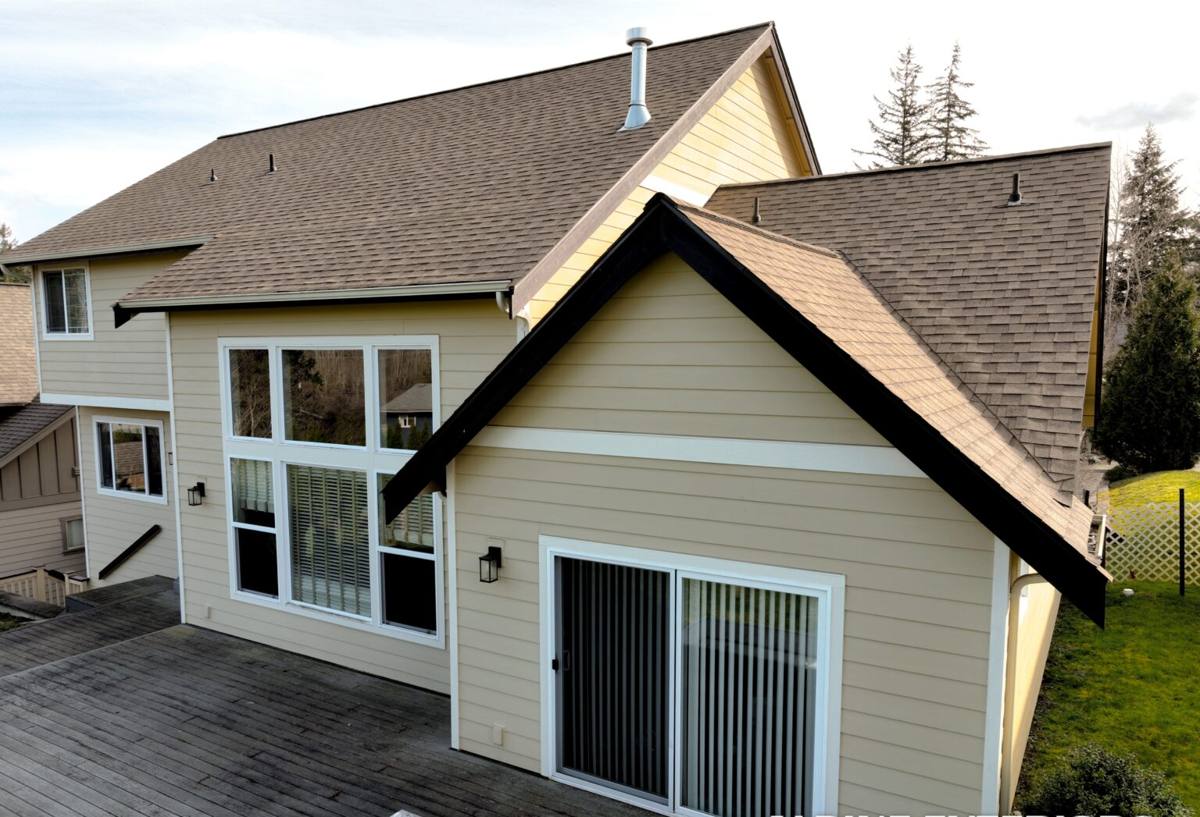
Signs a Westchase Home Needs Siding Replaced, Not Patched
Not every siding problem calls for a full tear-off. But there's a point where patching becomes false economy, and Westchase's climate tends to push homes past that point faster than drier regions. Watch for:
- Soft or spongy spots when you press on the siding, especially near the bottom courses and around window and door trim
- Visible warping, buckling, or waviness across a wall, particularly on sides that get the most afternoon sun
- Paint that's chalking heavily or peeling in sheets rather than just fading
- Gaps opening at seams, corners, or trim joints that weren't there a few years ago
- Recurring mildew or dark staining in the same spots no matter how often it's cleaned
- Rising energy bills with no other explanation, which can point to compromised siding letting conditioned air escape
One or two of these on a small area might be a repair. Several of them, or any sign of moisture actually inside the wall assembly, usually means the underlying material has failed and replacement is the honest recommendation.
What Correct Siding Replacement Involves
Siding replacement is not just removing old boards and nailing up new ones. In a climate like this, most of the long-term performance is decided in steps most homeowners never see:
Tear-Off and Sheathing Inspection
Every old course comes off so the sheathing underneath can actually be inspected — not just the visible face, but the wood behind it. This is where hidden water damage from a failing water-resistive barrier or years of small leaks shows up. Any soft or rotted sheathing gets replaced before anything new goes back up. Skipping this step is the single most common shortcut in cheap siding jobs, and it's invisible until the new siding starts failing early for no apparent reason.
Water-Resistive Barrier and Flashing
A new weather-resistant barrier goes over the sheathing, lapped correctly from bottom to top so water sheds down and out rather than behind the wall. Windows, doors, and every roof-to-wall intersection get properly flashed, including kick-out flashing where a roofline meets a sidewall — a detail that's easy to skip and is one of the most common sources of hidden rot when it's missed. This layer is what actually keeps wind-driven rain out of the wall; the siding itself is the second line of defense, not the first.
Fastening to the Local Wind Standard
Hillsborough County's wind zone requirements set specific fastener spacing and type requirements for siding. Following that schedule — not just "close enough" — is what keeps siding attached in a serious wind event instead of peeling off in sheets. This is also documented and inspected work, not a step that can be eyeballed.
Trim, Caulking, and Finish Details
Corners, trim boards, and every penetration (hose bibs, light fixtures, vents) need to be sealed with a caulk rated for exterior exposure and finished cleanly. In a climate this humid, a poorly sealed joint doesn't just look bad — it becomes a wicking point for moisture that works its way behind the siding over time.
Material Matters as Much as Installation
We install James Hardie fiber cement siding exclusively, and Westchase's climate is a big part of why. Fiber cement is non-combustible, doesn't absorb and swell with humidity the way engineered wood products can, and doesn't expand and contract with heat the way vinyl does — which matters when a wall spends the summer in direct Florida sun. James Hardie also builds a version of its product specifically for this climate, the HZ5 line, engineered for high heat and humidity rather than northern freeze-thaw conditions. We don't install vinyl, LP SmartSide, or primed wood siding, not because they can't work anywhere, but because we've made a professional call that fiber cement is the material we can stand behind on homes that face what Westchase homes face year after year.
The factory-applied ColorPlus finish is part of that case too: it's cured and quality-controlled before the boards ever leave the plant, which means the finish isn't relying on field conditions — humidity, temperature, rain timing — the way a job-site paint job does. In a region where those conditions are unpredictable for a good chunk of the year, that consistency is worth something real.
Comparing Approaches: What Separates a Correct Job From a Cut-Rate One
| Factor | Cut-Rate Approach | Correct Approach |
|---|---|---|
| Sheathing | Covered without inspection | Fully exposed, inspected, damaged sections replaced |
| Water barrier | Reused or minimally lapped | New barrier, properly lapped top to bottom |
| Flashing | Skipped or minimal at roof-wall joints | Kick-out and window/door flashing at every joint |
| Fastening | Generic spacing, not verified against wind zone | Fastened to the applicable Hillsborough wind standard |
| Trim and caulking | Caulked over gaps as a finish step | Trim fitted correctly first, caulk as a seal, not a fix |
| Warranty | Limited or installer-only | Manufacturer material warranty plus workmanship warranty |
The visual difference between these two approaches is minimal on install day. The difference shows up three, five, and ten years later — which is exactly why it's worth asking pointed questions before signing a contract, not just comparing bottom-line numbers.
Cost Factors for a Westchase Siding Replacement
Every home is different, so we won't put a number on your project without seeing it, but the real cost drivers are consistent:
| Factor | Why It Affects Cost |
|---|---|
| Home size and wall complexity | More square footage and more corners, gables, and dormers mean more material and labor |
| Sheathing condition | Hidden rot found during tear-off adds material and labor to replace it properly |
| Siding profile and finish | Plank width, texture, and ColorPlus versus field-painted affect material pricing |
| Trim scope | Full trim replacement costs more up front but avoids mismatched old trim against new siding |
| Story count and access | Two-story sections and difficult access add labor time |
| HOA or architectural review | Many Westchase sections carry deed restrictions on colors and styles, which can affect material selection and timeline |
A written estimate should break these out clearly enough that you can see what's driving the price, not just a single lump number.
Why It Matters That a Crew Already Works in Westchase
A contractor who regularly works in this community already understands things that take other crews time to learn: what deed-restricted communities in the area typically expect for approval documentation, how the local wind zone and permitting requirements apply in practice, and what the housing stock in this part of Hillsborough County tends to need after years of sun and storm exposure. That familiarity shortens the guesswork on your project — fewer surprises mid-job, and a realistic timeline going in rather than one that assumes ideal conditions.
It also means accountability doesn't end when the crew packs up. A company with an ongoing presence in Tampa and Hillsborough County has a reputation to protect in the neighborhoods it works in, which is a different incentive than a crew passing through for a single job.
Our Process for a Westchase Siding Replacement
- On-site assessment: We walk the exterior with you, look at the current siding's condition, and identify likely problem areas before any tear-off begins.
- Written estimate: A clear, itemized proposal covering material, tear-off, sheathing contingency, and finish options — no vague lump sums.
- Material and color selection: We review James Hardie profiles and ColorPlus colors with you, including any HOA approval steps your section of Westchase requires.
- Tear-off and inspection: Old siding comes off, sheathing is inspected, and any needed repairs are addressed before new material goes up.
- Installation to spec: New water-resistive barrier, flashing, and James Hardie siding installed and fastened to the applicable local wind standard.
- Final walkthrough: We review the finished job with you, including warranty paperwork for both the material and our workmanship.
Questions Worth Asking Before You Hire
- Will you inspect and replace damaged sheathing before installing new siding, or just cover what's there?
- What water-resistive barrier and flashing details will you use, and will you show me the flashing plan for roof-to-wall joints?
- What fastening schedule will you follow, and is it matched to Hillsborough County's wind requirements?
- Is this James Hardie fiber cement, and if not, what material is it and why?
- What does the warranty cover — material, finish, and labor — and for how long?
- Have you worked in Westchase or nearby Hillsborough County communities before, and can I see recent work?
What to Expect After Installation
Fiber cement siding installed correctly is a low-maintenance exterior, not a zero-maintenance one. A yearly rinse to clear pollen, dust, and the mildew film our humidity encourages keeps the finish looking sharp. Keep sprinklers from hitting the walls directly, keep mulch and shrubs from piling against the bottom courses, and have caulked joints checked every few years. None of that is heavy upkeep — it's the kind of routine care that lets a correctly installed fiber cement exterior go decades before it needs attention again, which is the whole point of doing the job right the first time.
If your Westchase home needs siding replaced — or you're just not sure yet whether it's a repair or a full reside — we're glad to take a look and give you a straight answer. Reach out for a free, no-pressure estimate using the form below.