 Tampa Siding
 Why South Tampa Decks Wear Out Faster Than People Expect
A deck in South Tampa lives a harder life than the same deck would in most of the country. The combination of intense year-round UV exposure, wind-driven rain off Tampa Bay, salt-laden air, and periodic hurricane-force winds attacks a deck from every angle at once. Sun bakes and dries out wood fibers and fades finishes. Humidity and driving rain get pushed into joints, fastener holes, and end grain that a straight-down rain never would reach. Salt air accelerates corrosion in anything metal, from nails and screws to structural brackets. None of this is dramatic on its own, but stacked together year after year, it's why a deck that would last two or three decades inland can start failing structurally in South Tampa well before that, especially if it was built with the wrong materials or fasteners in the first place.
This page is specifically about replacing a deck in South Tampa — not general deck repair advice. If your deck is still structurally sound and just needs boards, railings, or fasteners addressed, replacement may be overkill. But when the frame itself is compromised, patch jobs stop making sense and full replacement becomes the honest recommendation.
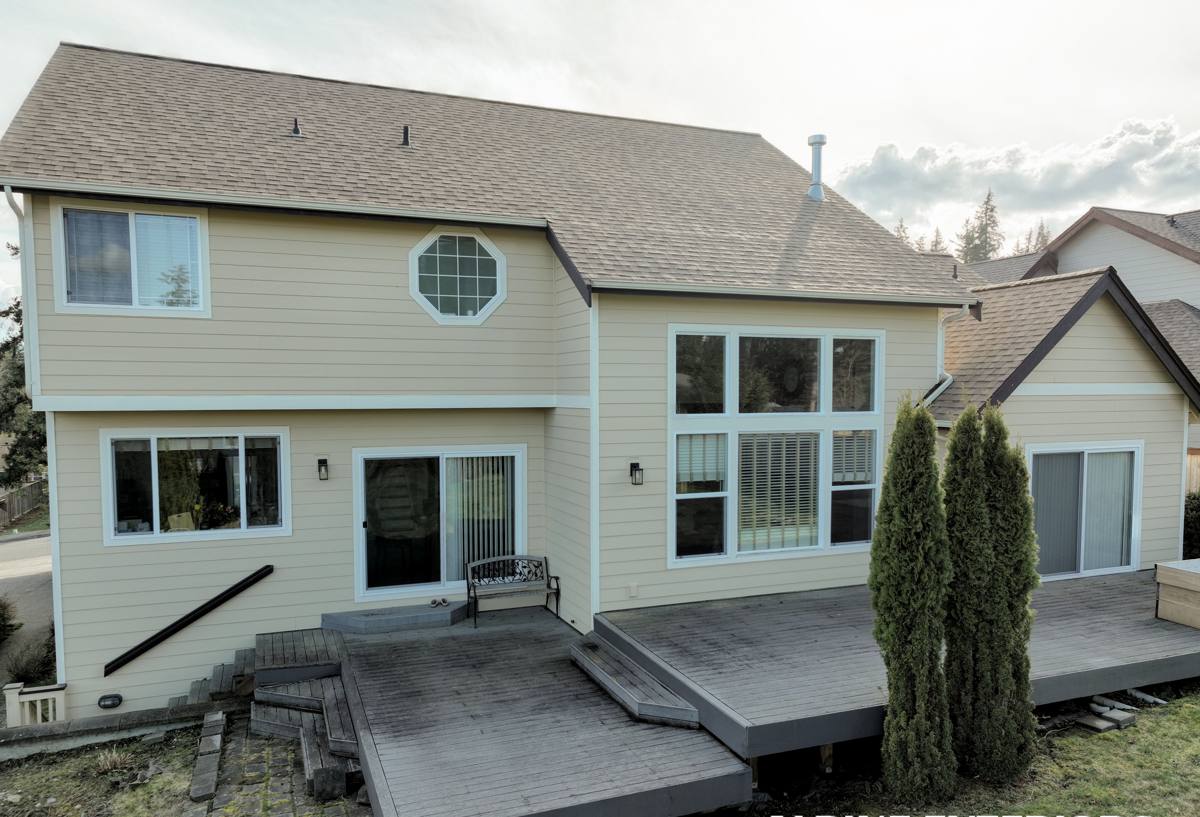
Signs Your Deck Needs Replacement, Not Just Repair
Homeowners often ask us to "fix a few boards" and end up needing a full rebuild once we get underneath the surface. A few signs point clearly toward replacement rather than repair:
- Soft, spongy, or springy spots when you walk across the deck, especially near the house
- Visible rot, splitting, or crumbling wood at the ledger board (where the deck attaches to the house)
- Rust streaking or corroded fasteners and connectors, common after years of salt air exposure
- Posts or footings that have shifted, settled, or show cracking at the base
- Railings that wobble or flex under normal pressure — a safety issue, not a cosmetic one
- A deck older than 15-20 years that has never had its structural framing inspected
If any of these show up at the ledger board or the main support framing, that's a structural problem, not a surface one, and it's usually more cost-effective and safer to replace than to keep patching around it.
What a Correct Deck Replacement Actually Involves
It Starts With the Frame, Not the Boards
The decking boards are what you see and walk on, but the framing underneath is what actually determines whether the deck is safe and how long it lasts. A correct replacement means removing the old structure down to (or past) the ledger board and support posts, inspecting the ledger attachment to the house, and rebuilding with framing sized and spaced to current code — not just matching whatever spacing happened to be there before.
Ledger Board Flashing Is Where Most Failures Start
In this climate, the ledger board connection is the single most common point of failure we see. If it isn't properly flashed to shed water away from the house structure, wind-driven rain will find its way behind it over time, leading to rot in both the deck framing and, in worse cases, the rim joist of the house itself. A correct replacement always includes proper ledger flashing, not just bolts through the siding.
Fasteners and Hardware Matter More Here Than Almost Anywhere
Standard galvanized fasteners corrode faster in salt air than most homeowners expect. We use fasteners and structural connectors rated for coastal and treated-lumber exposure, because a deck is only as strong as the hardware holding it together, and replacing a rusted-out joist hanger five years down the road is a much bigger job than getting the hardware right the first time.
Post-Replacement Checklist We Work Through
- Ledger board removed, inspected, and re-flashed correctly against the house
- Footings and posts checked for proper depth and set below frost/settlement concerns for our soil conditions
- Joists spaced and sized to current code, not just matched to the old deck
- Corrosion-resistant structural connectors and fasteners used throughout
- Proper spacing between decking boards for drainage and expansion
- Railings and stairs meeting current safety and code requirements
Choosing the Right Decking Material for South Tampa
There's no single "best" decking material — there's a best material for your budget, your maintenance tolerance, and how much sun and moisture your specific deck location gets. Here's how the common options actually compare in this climate:
| Material | How It Handles This Climate | Maintenance | Typical Lifespan Here |
|---|---|---|---|
| Pressure-treated wood | Affordable, but UV and humidity cause fading, splintering, and checking faster than in drier climates | Needs re-sealing every 1-2 years to hold up | 10-15 years with upkeep |
| Composite decking | Resists rot and doesn't need sealing; quality varies a lot by product line and installation | Occasional cleaning; no sealing/staining | 20-25+ years for well-installed capped composite |
| Tropical hardwoods (e.g., ipe) | Naturally dense and rot-resistant, handles moisture well | Needs periodic oiling to maintain color; will gray without it | 25+ years structurally |
| Uncapped composite | More prone to moisture absorption and fading in intense UV than capped composite | Lower but not maintenance-free | Shorter than capped composite |
Our standard is to steer homeowners toward capped composite or properly maintained hardwood for most South Tampa applications, simply because the maintenance burden of standard pressure-treated wood in this climate is real — it's not that treated wood is a bad product, it's that it demands more upkeep here than most homeowners are prepared to keep up with year after year. We'll walk through the trade-offs honestly based on your budget and how the deck will be used.
Permits and Codes in Hillsborough County
Deck replacement in Hillsborough County typically requires a permit, especially for anything involving structural framing, footings, or attachment to the house — which a full replacement almost always does. Permitted work also means the framing gets inspected before the decking goes on top of it, which is exactly the point in the process where problems like undersized joists or a poorly flashed ledger board get caught. A contractor who skips the permit isn't saving you money — they're skipping the one step that verifies the structure underneath is actually safe. We handle the permitting and inspections as part of the job, not as an add-on.
Our Deck Replacement Process
- On-site assessment — We evaluate the existing deck's framing, ledger connection, posts, and footings to confirm replacement is the right call.
- Material and design conversation — We go over decking material options, railing style, and layout based on your budget and how the deck gets used.
- Permitting — We pull the required Hillsborough County permits before demolition begins.
- Demolition and removal — Old decking, framing, and hardware are removed and hauled off.
- Framing and ledger rebuild — New framing is built to code, with proper ledger flashing and corrosion-resistant hardware throughout.
- Inspection — Framing is inspected before decking goes down, per permit requirements.
- Decking, railing, and finish work — Final surface material and railings are installed and detailed.
- Final walkthrough — We go over the finished deck with you before calling the job done.
What Affects the Cost of a Deck Replacement
| Factor | Why It Matters |
|---|---|
| Deck size and layout | More square footage and multiple levels or angles increase material and labor |
| Decking material chosen | Composite and hardwood cost more upfront than pressure-treated wood but reduce long-term maintenance |
| Height and stairs | Elevated decks with stairs and additional railing require more structural work |
| Condition of existing footings/posts | Reusable footings save cost; failed or undersized ones need to be replaced, adding to the scope |
| Ledger board and house-side condition | Rot found at the point of attachment can add repair scope beyond the deck itself |
| Railing and finish details | Custom railing styles and finish work add labor time |
We give a firm, itemized estimate after seeing the deck in person — not a phone-quote guess — because the framing condition underneath is usually what determines the real cost, and that's not something we can judge accurately without looking at it.
Why a Local South Tampa Crew Matters for This Job
Deck replacement done right depends on understanding how this specific climate attacks a structure over time — the ledger flashing detail that matters here, the fastener grade that holds up against salt air, the framing choices that account for our humidity and UV exposure. A crew that works South Tampa regularly has seen how decks in this area actually fail, not just how they're built on paper. That translates into fewer surprises during the job and a deck that's built to hold up to the conditions it will actually face, rather than a generic build that happens to be installed here.
It also means being reachable and accountable after the job is done. A local crew isn't driving in from out of the area for a one-off job — we're working in South Tampa and the surrounding Tampa area on an ongoing basis, which matters if you ever have a question or an issue down the road.
Keeping a New Deck Healthy in This Climate
- Rinse off salt residue and debris periodically, especially after storms
- Keep gutters and downspouts near the deck clear so water isn't dumping onto or under it
- Check railings and stair connections for looseness once or twice a year
- Reapply sealant or oil on wood or hardwood decking on the schedule the manufacturer recommends
- Watch the ledger board area closely — it's the first place moisture problems tend to show up
- Address small issues (a loose board, a hairline crack) before the next hurricane season, not after
If your deck is showing its age, or you're just not sure whether it needs repair or full replacement, we're happy to take a look and give you a straight answer along with a free, no-pressure estimate — use the form below to get started.