 Tampa Siding
 Temple Terrace Siding Has to Work Harder Than Siding Almost Anywhere Else
Temple Terrace sits inside the Tampa Bay climate belt, which means every exterior surface on a home here is dealing with four stresses at once: long stretches of intense UV exposure, high year-round humidity, wind-driven rain during summer storm season, and the structural demands of hurricane-strength wind events. Being a few miles inland from open water doesn't exempt a home from this — it just changes the mix. Homes here see less direct salt spray than beachfront properties, but they still sit inside the same humid, storm-prone air mass, and they still take wind loads from the same tropical systems that move through Hillsborough County.
Siding is the single largest surface on most homes, and it's the first line of defense against all of that. When it's the wrong material, or the right material installed the wrong way, the failures show up as swelling, cracking, color fade, moisture intrusion behind the wall, or panels that simply don't hold up through a bad wind season. This page is specifically about doing fiber cement siding correctly on Temple Terrace homes — not a generic overview of siding in general.
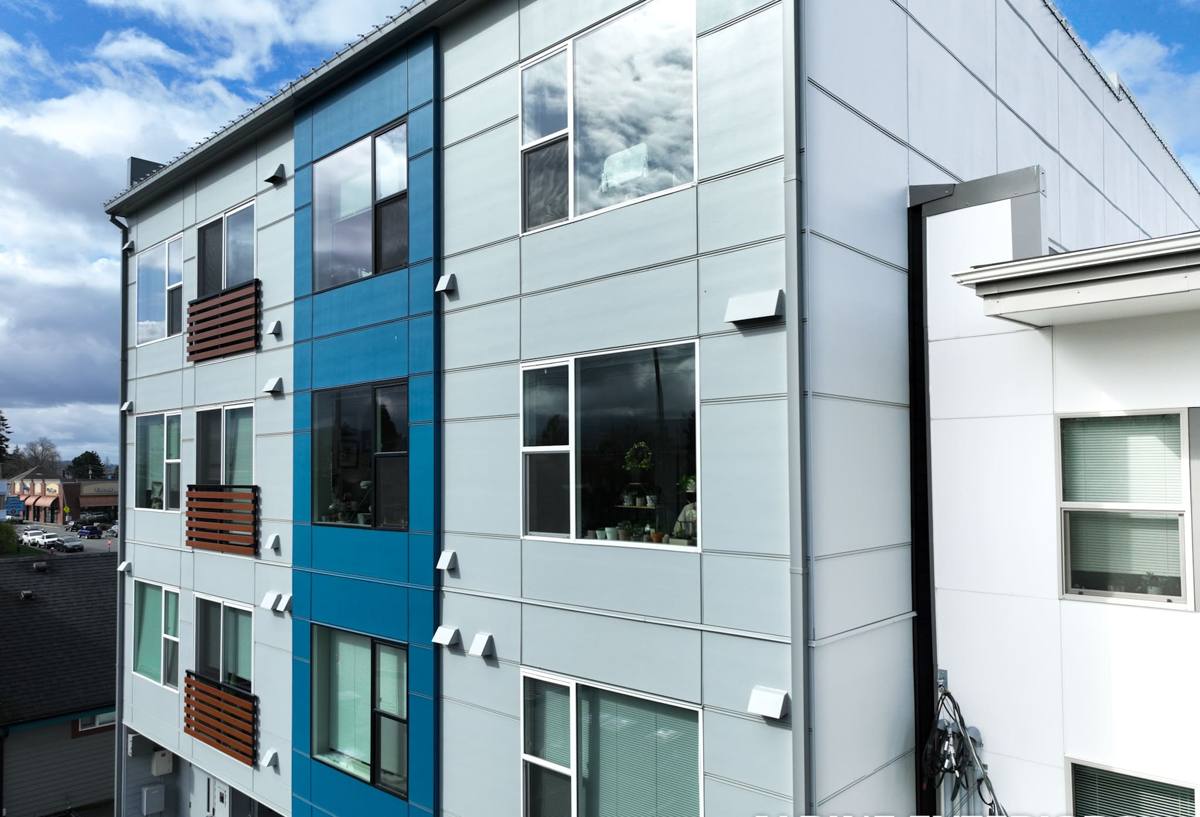
Why Fiber Cement Is the Right Category for This Climate
Fiber cement is cement, sand, and cellulose fiber formed into a dense, stable board. Unlike wood-based siding, it doesn't absorb moisture and swell. Unlike vinyl, it doesn't soften or warp under sustained heat, and it holds paint and color far more consistently over time. In a climate that alternates between intense sun and heavy rain almost daily for months at a stretch, that dimensional stability matters more than almost anywhere else in the country.
We install James Hardie fiber cement exclusively — not LP SmartSide, not vinyl, not Cemplank, not Allura, not primed wood. That's a deliberate standard, not a sales preference. Hardie's ColorPlus factory-applied finish is baked on and warranted against fading and peeling in a way field-applied paint systems are not, which matters directly in a market where UV exposure is relentless nine months of the year. Hardie also engineers specific product lines for humid climates like ours, which we cover below. We've made the call that installing anything else on a Tampa-area home means accepting trade-offs we're not willing to put our name on.
The HZ5 Distinction
James Hardie makes climate-specific versions of its siding under what it calls the HZ (HardieZone) system. HZ5 is engineered for hot, humid climates prone to moisture and mildew exposure — exactly the Tampa Bay profile. Using the correct HZ product for our zone, rather than a generic or northern-climate formulation, is one of the most overlooked details in a siding job. It's not something a homeowner can verify by looking at the finished wall, which is exactly why it matters who's ordering the material.
What a Correct Fiber Cement Install Actually Involves Here
Fiber cement siding is only as good as the water management system behind it. In a climate with as much wind-driven rain as ours, the parts nobody sees after the job is done are the parts that determine whether the siding lasts 30 years or fails in five.
- Weather-resistant barrier: A correctly lapped and sealed house wrap or building paper behind the siding, with all penetrations properly flashed.
- Flashing at every transition: Windows, doors, rooflines, and any place two planes meet need step flashing or kick-out flashing so water is directed out and away from the wall assembly, not trapped behind it.
- Proper clearances: Hardie specifies minimum gaps between siding and roof lines, decks, and grade. Skipping these clearances is one of the most common shortcuts we see on older installs in this area, and it's usually why a home develops rot or staining at those exact points first.
- Correct fastener pattern and spacing: Hurricane-prone counties require siding to be fastened to a wind-load standard, not just "nailed on." Fastener type, spacing, and placement all affect how the wall performs in a wind event.
- Caulking discipline: Hardie's own installation guidance is specific about where caulk should and shouldn't be used. Over-caulking traps moisture; under-caulking lets it in. Both are common mistakes from crews that don't install fiber cement full-time.
None of this is exotic. It's manufacturer specification, followed correctly, every time. The reason it doesn't always happen is that fiber cement is heavier and less forgiving to install than vinyl, and crews that mostly do other materials tend to treat it the same way — which is where problems start.
Signs Temple Terrace Homeowners Should Watch For
Before assuming a full replacement is needed, it's worth knowing what climate-driven siding failure actually looks like in this area, so you can tell the difference between a cosmetic issue and a structural one.
| What You See | Likely Cause | Urgency |
|---|---|---|
| Chalky, faded color on sun-facing walls | Field-applied paint breaking down under UV | Cosmetic, but worth addressing before it worsens |
| Soft or swollen spots, especially low on the wall | Wood-based or non-fiber-cement siding absorbing moisture | Moderate to urgent — often signals wall damage behind it |
| Dark streaking or staining near roof lines | Missing or failed flashing at a transition point | Urgent — active water intrusion |
| Panels that flex, rattle, or have visibly lifted | Fastener failure or improper original installation | Urgent — wind vulnerability |
| Small hairline cracks at panel joints | Caulk failure or thermal movement | Moderate — address before rainy season |
Why a Crew That Already Works Temple Terrace Matters
Fiber cement installation isn't regionally different in its basic mechanics, but the conditions it has to survive are. A crew that installs across a range of Tampa Bay neighborhoods, including Temple Terrace, already knows the local permitting requirements through Hillsborough County and the City of Temple Terrace, understands the mix of home ages and construction styles common in the area, and has already seen how the previous generation of siding on these homes tends to fail. That experience shows up in small decisions — where extra flashing gets added even when it's not strictly required, how trim is detailed around older window openings, how a color choice will actually look after a few years of Florida sun rather than on day one.
It also matters for scheduling and follow-through. Hurricane season shapes when siding work can safely happen and how urgently repairs need to move. A local crew plans around that reality instead of treating it as an afterthought.
Our Process
- On-site assessment. We walk the exterior, check for existing moisture damage, flashing condition, and substrate integrity before quoting anything.
- Material and color selection. We help you choose the right Hardie profile (lap, shingle-style, panel) and ColorPlus color, factoring in sun exposure on each elevation.
- Tear-off and substrate check. Old siding comes off and the sheathing underneath gets inspected and repaired if needed — this step gets skipped by crews trying to move fast, and it's where hidden problems are found.
- Weather barrier and flashing installation. This is the step that determines long-term performance, done to Hardie's written specifications for our climate zone.
- Siding installation. Correct fastener spacing, clearances, and joint treatment throughout.
- Final inspection and walkthrough. We review the finished work with you directly before considering the job complete.
Maintenance Checklist Once It's Installed
- Rinse siding annually to remove salt, pollen, and mildew buildup common in Tampa Bay's humidity.
- Inspect caulking at trim and window joints each spring, before summer storm season.
- Watch for any staining near roof-to-wall transitions after heavy rain events.
- Avoid pressure-washing at close range or high PSI, which can force water behind panels.
- Repaint only if needed — ColorPlus finishes are designed to outlast field-applied paint by years.
How Fiber Cement Compares to Other Common Choices
Homeowners weighing siding options in this area typically compare fiber cement against vinyl and engineered wood products. Here's the honest trade-off picture:
| Factor | James Hardie Fiber Cement | Vinyl | Engineered Wood (e.g. LP SmartSide) |
|---|---|---|---|
| Heat/UV stability | High — factory finish resists fade | Can soften and warp in extreme heat | Moderate — paint film breaks down over time |
| Moisture resistance | Non-combustible, does not swell or rot | Good, but can trap moisture behind panels | Wood-based core is more moisture-sensitive |
| Wind performance | Heavy, rigid, engineered fastening standard | Lighter, can be prone to wind damage in gusts | Comparable if installed correctly |
| Finish longevity | Factory ColorPlus, long warranty | Color molded in, can chalk over time | Field or factory paint, shorter repaint cycle typical |
| Typical lifespan when installed to spec | Multiple decades | Moderate, varies with climate exposure | Moderate, sensitive to installation quality |
Every one of these products has legitimate use cases elsewhere in the country. Our decision to install only James Hardie fiber cement is specific to what holds up best against this region's combination of sun, humidity, and storm wind, not a blanket judgment on the products themselves.
What Drives Cost on a Temple Terrace Fiber Cement Job
| Cost Factor | Why It Matters |
|---|---|
| Home size and wall complexity | More elevations, gables, and cutouts mean more labor and material |
| Existing siding removal | Tear-off of old material and any substrate repair adds time and cost |
| Product line and profile | HZ5 lap siding, shingle-style panels, and trim boards vary in material cost |
| Color selection | Standard ColorPlus colors versus custom or premium finishes |
| Accessibility | Multi-story sections, tight lot lines, or landscaping obstacles affect labor time |
We give a firm number after walking the specific property — broad national averages don't account for the tear-off condition or elevation complexity that actually drives the cost on your home.
If you're weighing a siding replacement or repair in Temple Terrace, we're happy to walk the property, look at what's actually going on with your current siding, and give you a straightforward, no-pressure estimate. Use the form below to get started.