 Tampa Siding
 Why Siding in Town 'n' Country Has to Work Harder
Town 'n' Country sits in a part of Hillsborough County that gets the full range of what Tampa Bay weather can throw at a house. Homes here are close enough to the water to pick up salt-laden air, exposed to the same hurricane-season wind events as the rest of the Tampa area, and baked by strong, nearly year-round Florida sun. Add in the wind-driven rain that comes sideways during summer storms, and you have a set of conditions that will find every weak point in a home's exterior. Siding in this neighborhood isn't just a cosmetic layer — it's the first line of defense between that climate and the wood framing underneath it.
A lot of the housing stock in Town 'n' Country dates back several decades, which means a large share of homes are on their second or third siding surface by now. Whatever went up originally was chosen for a different era of building codes and, often, a different budget. When it's time to replace it, the goal isn't just to match what was there — it's to put up something actually built for this climate.
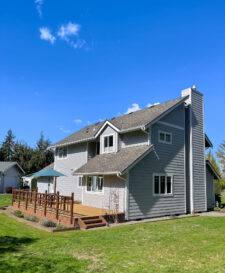
What This Climate Does to Siding Over Time
Every siding material eventually shows wear, but the way it fails tells you a lot about whether it was the right choice for this area in the first place.
- UV exposure breaks down pigments and surface coatings, leading to fading, chalking, or brittleness — especially on south- and west-facing walls that catch the most sun.
- Wind-driven rain doesn't fall straight down here during a storm; it gets pushed sideways and upward under eaves and around trim, which means any gap in flashing or house wrap becomes a water path.
- Humidity and trapped moisture behind siding is what actually causes rot and mold — not the rain itself, but rain that gets in and has nowhere to dry out.
- Salt air, even well inland from the coast, accelerates corrosion on fasteners and metal trim and speeds up the breakdown of lower-grade materials.
- High wind loads during tropical storms and hurricanes put direct pressure on how well siding is fastened — this is where installation quality matters as much as the product itself.
Why This Matters More in Town 'n' Country Specifically
Because this is an established, largely built-out community, a lot of siding replacement work here is happening on homes with original sheathing, older window and door detailing, and sometimes prior repairs that weren't done to current standards. That combination means a contractor needs to actually inspect what's underneath, not just install new panels over old problems.
Signs Your Home's Siding Is Past Its Useful Life
Most homeowners don't replace siding on a schedule — they replace it when it starts costing them money or causing problems. Watch for:
- Panels that are warped, bowed, or visibly buckled, especially after a hot stretch of weather
- Soft or spongy spots when you press on the siding, which usually means moisture has reached the wood behind it
- Paint that needs redoing every few years no matter what product was used last time
- Persistent mold or mildew staining that comes back shortly after cleaning
- Visible gaps or separation at seams, corners, and trim boards
- A noticeable jump in cooling costs, which can point to a siding and insulation system that's no longer doing its job
What a Correct Siding Installation Actually Involves
Siding failures are rarely about the product alone — they're almost always about what happened (or didn't happen) during installation. A correct job includes several steps that aren't visible once the siding is up, which is exactly why they get skipped by contractors trying to move fast.
Weather-Resistive Barrier and Sheathing Check
Before anything new goes up, the old siding comes off and the sheathing underneath gets inspected for rot, soft spots, or existing water damage. Any compromised sheathing gets repaired or replaced. A weather-resistive barrier is then installed as the actual moisture management layer — the siding on top of it is the second line of defense, not the only one.
Flashing at Every Penetration
Windows, doors, hose bibs, light fixtures, and any other penetration in the wall need proper flashing so water is directed out and away rather than behind the siding. This is one of the most common places corner-cutting happens, and it's usually the first place a wind-driven rain event exposes bad work.
Manufacturer-Specified Fastening
Fiber cement siding has a documented fastening schedule — nail type, spacing, and placement — that's engineered to hold up in high-wind regions when followed correctly. Installing it with the wrong fasteners, the wrong spacing, or face-nailing where it isn't called for is a common shortcut that shows up later as loose or blown-off panels during storm season.
Why We Install Only James Hardie Fiber Cement
We don't install vinyl siding, engineered wood products like LP SmartSide, or untreated wood and cedar siding — and we think homeowners deserve a straight answer about why.
Vinyl is inexpensive and low-maintenance in mild climates, but it softens and can warp in sustained heat, and it's not built to handle direct hurricane-force wind loads the way a heavier material can. Engineered wood products like LP SmartSide use a wood-strand core, which means their long-term performance depends heavily on the caulking and paint seal staying intact — if moisture gets past that seal in a humid climate, the core is still wood-based and can swell or deteriorate. Untreated wood and cedar siding can look great, but they demand a repainting and sealing schedule that most homeowners underestimate, and that maintenance burden only gets heavier in a climate this hot and humid.
James Hardie fiber cement is a non-combustible material engineered specifically to resist moisture, hold paint and factory finish far longer than wood-based products, and stand up to wind-driven rain without the core-swelling risk that comes with wood-strand construction. Hardie's HZ10 product line is engineered specifically for hot, humid climates like ours, and the ColorPlus factory finish is baked on and warranted against fading and chipping — which matters a great deal under Florida sun. It's why we standardized on it and why it's the only siding we put on homes.
Siding Material Comparison for Hillsborough County Homes
| Factor | Vinyl | Engineered Wood (LP-type) | Untreated Wood/Cedar | James Hardie Fiber Cement |
|---|---|---|---|---|
| Wind resistance | Lower — can flex, crack, or blow off in high gusts | Moderate | Moderate, depends on installation | Engineered and rated for high-wind installation |
| Moisture/rot resistance | Doesn't rot, but seams can trap water | Vulnerable if seal fails | Vulnerable without constant upkeep | Resists moisture intrusion and won't rot |
| UV/color retention | Fades and chalks over time | Depends entirely on paint upkeep | Fades, needs repainting/sealing | Factory ColorPlus finish resists fading |
| Salt air durability | Fair | Fair, if maintained | Poor without frequent maintenance | Strong |
| Ongoing maintenance | Low but not repairable — usually replaced in sections | Regular paint/caulk upkeep required | High — repainting/sealing on a recurring cycle | Low — occasional recaulk and inspection |
| Typical lifespan/warranty | Moderate | Moderate | Shorter without diligent upkeep | Long-term, with a strong transferable warranty |
Our Installation Process for Town 'n' Country Homeowners
- On-site inspection — we look at existing siding, sheathing condition, trim, and any moisture history before quoting anything
- Product and finish selection — choosing the right Hardie plank profile, exposure, and ColorPlus color for the home
- Permitting — pulling the required permit before work starts, in line with Hillsborough County and local code requirements
- Tear-off and sheathing repair — removing old siding and fixing any damage found underneath before covering it up again
- Weather barrier, flashing, and fastening — installed to manufacturer spec and wind-zone requirements, not shortcuts
- Trim, caulking, and final finish — the details that determine how clean the job looks and how well it seals
- Walkthrough — going over the finished work with the homeowner before calling the job done
Why Hiring a Crew That Already Works This Neighborhood Matters
A contractor who regularly works in Town 'n' Country already understands the age and construction patterns common to homes here, has a working relationship with Hillsborough County permitting, and knows what's typically hiding under the existing siding before the tear-off even starts. That familiarity translates into fewer surprises, more accurate quotes, and a crew that isn't guessing at what a 1960s- or 1970s-era Tampa home needs versus new construction.
It also matters for accountability. A contractor with an ongoing presence in the area has a reputation to protect in that community — not just a one-time job to finish and move on from.
Before You Hire: A Practical Checklist
- Ask for proof of current licensing and insurance, and verify it independently
- Ask specifically what weather-resistive barrier and flashing details they use, not just what siding brand
- Get the fastening schedule in writing — spacing and fastener type matter for wind performance
- Confirm whether sheathing repair is included if rot is found, or billed separately
- Ask how they handle permitting, and confirm it's pulled before work begins
- Get manufacturer warranty documentation, not just a verbal promise
- Ask for a clear, written scope of work — not just a total price
If your Town 'n' Country home's siding is showing its age, or you just want an honest read on whether repair or replacement makes more sense, we're happy to take a look. The estimate is free, there's no pressure, and you'll get a straight answer either way — use the form below to get started.