 Tampa Siding
 Siding Built for What Town 'n' Country Actually Deals With
Town 'n' Country sits inland from Tampa Bay but not far enough to escape what the bay sends its way. Homes here still take the full brunt of a Gulf Coast climate: hurricane-force wind gusts during tropical systems, wind-driven rain that gets pushed sideways into every seam and lap joint, salt-laden air that rides in on the sea breeze most afternoons, and some of the most intense, sustained UV exposure of any market in the country. None of that is occasional weather — it's the daily operating condition for every piece of siding on every house in this neighborhood.
That combination is hard on building materials in specific, predictable ways. UV breaks down surface coatings and dries out anything with organic content. Wind-driven rain finds every gap in flashing and caulk and pushes moisture behind the cladding, not just against it. Salt air accelerates corrosion on fasteners and trim and leaves a fine residue that holds moisture against the wall longer than plain rain would. A siding replacement in Town 'n' Country has to be specified and installed with all three of those forces in mind at once, not just picked for looks.
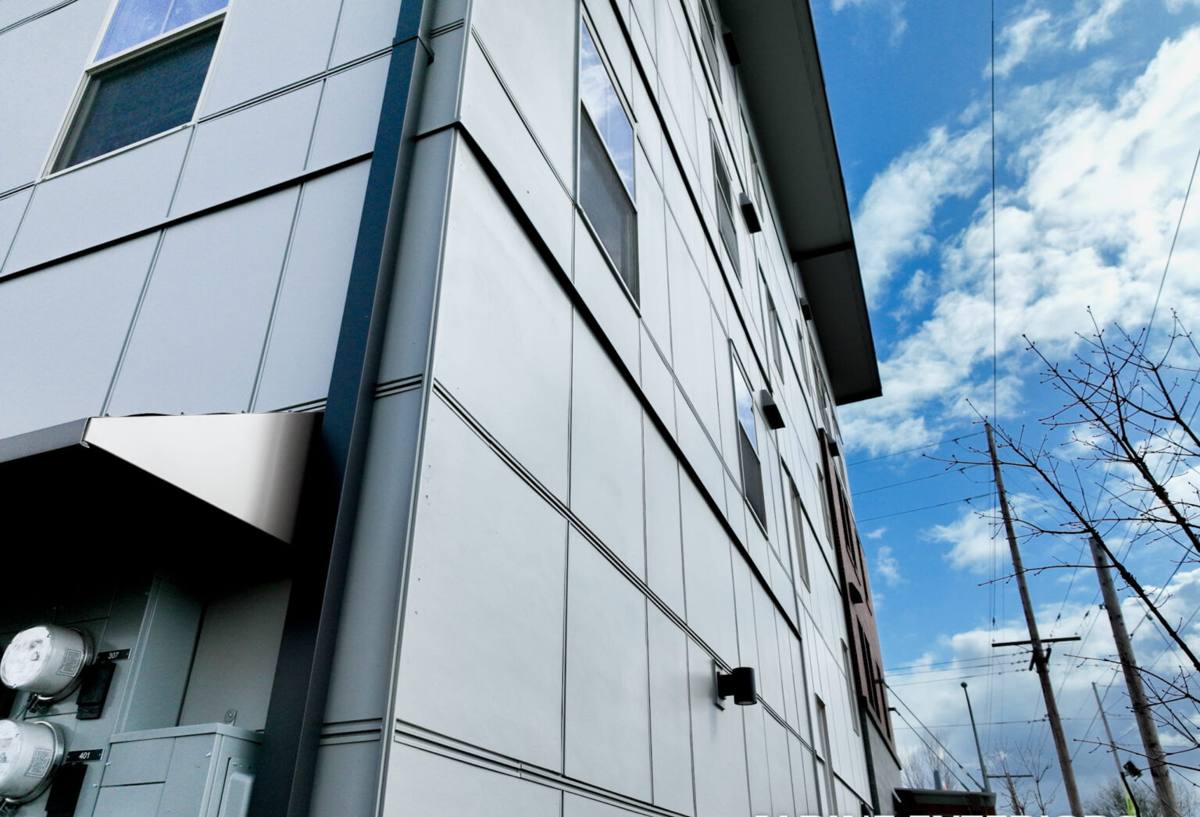
Signs a Town 'n' Country Home Needs Siding Replacement, Not Another Repair
Older homes in this part of Hillsborough County were sided with a mix of materials over the decades — original wood lap, vinyl retrofits, and in some cases early fiber cement that's now reaching the end of its service life. Repair makes sense when the damage is isolated. Replacement is the right call once the underlying material itself is failing, because patching a wall that's already compromised just buys a little time before the same problems resurface.
- Visible warping, buckling, or waviness across a section of wall, usually a sign of moisture trapped behind the siding
- Soft or spongy spots when you press on the siding near the bottom courses or around windows and doors
- Paint that won't hold — recurring peeling or blistering even after repainting, usually pointing to moisture movement, not a paint problem
- Cracked, delaminating, or swelling panels, common on older wood-based or lower-grade composite products after years of Florida sun and rain
- Rust streaking from fasteners or trim, a sign the salt air has already gotten to the metal underneath
- Rising energy bills or noticeably drafty rooms, which can mean the siding and the moisture barrier behind it are no longer doing their job
- Visible gaps opening up at seams, corners, or where siding meets trim, window frames, or the roofline
If you're seeing two or more of these at once, it's usually more cost-effective to replace the affected elevations properly than to keep chasing individual repairs.
What a Correct Siding Replacement Involves
Siding replacement is not just pulling off the old material and nailing up new panels in the same spots. Done right, it's a full assessment and rebuild of the wall system:
Tear-off and inspection
Once the old siding is off, the sheathing underneath gets inspected for water damage, soft spots, and rot — problems that are invisible until the wall is opened up. Any compromised sheathing gets replaced before anything new goes back on. Skipping this step is the single most common shortcut that leads to problems five or ten years down the road.
Moisture barrier and flashing
A new weather-resistant barrier goes over the sheathing, with flashing detailed correctly around every window, door, and penetration. In a climate that gets wind-driven rain, this layer is what actually keeps water out of the wall cavity — the siding itself is the first line of defense, not the only one.
Fastening to spec
Fastener type, spacing, and placement all matter more in a high-wind coastal climate than they do in milder parts of the country. Manufacturer installation instructions specify fastener patterns for a reason, and in Hillsborough County that installation has to meet Florida Building Code wind-load requirements for the applicable wind zone — not a generic national standard.
Trim, caulking, and paint match
Corner boards, window and door trim, and the transitions where siding meets the roofline or foundation are where most long-term failures start if they're rushed. Correct sealant selection and placement, plus a finish that matches or complements the home, finish the job.
Why We Only Install James Hardie Fiber Cement
We don't offer vinyl, LP SmartSide, Cemplank, Allura, or primed wood siding — not because those products don't have a place in the industry, but because we've made a standard for what we're willing to put our name behind on a Florida coastal home. James Hardie fiber cement is non-combustible, holds a factory-applied ColorPlus finish formulated to resist Florida UV fading, and is engineered in HZ product lines specifically for high-moisture, high-humidity climates like ours. It doesn't absorb water the way wood-based products can, doesn't soften or delaminate in sustained humidity, and comes with a strong transferable warranty when installed to Hardie's specifications.
That's the whole reason we standardized on one manufacturer instead of offering several: it lets us install one system correctly and consistently, rather than being generalists across products that behave very differently once they're facing a Tampa summer.
How the Common Options Compare in This Climate
| Material | Moisture Behavior | UV / Fade Resistance | Wind & Impact Durability | Typical Maintenance |
|---|---|---|---|---|
| Vinyl | Doesn't rot, but can warp or deform under heat and reflected sunlight | Color fades over time; not repaintable in most cases | Can crack or blow off in high wind if not rated for the zone | Low, but limited repair options once damaged |
| LP SmartSide (engineered wood) | Treated against rot, but still wood-based; vulnerable if the finish is breached | Requires factory or field finish upkeep | Good when installed correctly | Moderate — finish and seams need monitoring |
| Primed wood / cedar | Absorbs moisture readily; highest risk in humid, rainy climates | Finish breaks down fastest under intense UV | Fair, but softens over time | High — regular repainting and sealing |
| James Hardie fiber cement | Does not absorb water or rot; engineered HZ lines for humid climates | ColorPlus factory finish resists fading | Non-combustible, rated for high-wind installation | Low — occasional wash, no repainting for years |
Our Process for a Town 'n' Country Siding Replacement
- On-site assessment — we walk the exterior, check for moisture intrusion, and evaluate what's driving the current siding's condition before recommending a full replacement.
- Written scope and estimate — a clear breakdown of materials, labor, and any sheathing or repair work we expect to find, so there are no surprises once tear-off starts.
- Permitting — we handle the Hillsborough County permit for the job, pulled to the applicable wind-load requirements for your address.
- Tear-off and sheathing repair — old siding comes off, damaged sheathing gets replaced, and the wall is inspected before anything new goes on.
- Weather barrier and flashing installation — installed to manufacturer spec around every window, door, and penetration.
- Hardie installation — fastened to Hardie's specifications and Florida Building Code wind requirements, with correct trim and joint treatment.
- Final walkthrough — we go over the finished work with you before calling the job complete.
Permitting and Code Considerations in Hillsborough County
Siding replacement in unincorporated Hillsborough County, including Town 'n' Country, requires a permit, and the installation has to meet the wind-load provisions of the Florida Building Code for the applicable wind zone. This isn't a formality — it directly affects what fastening pattern and installation method are acceptable, and it's part of why we don't treat siding installation as interchangeable across products. A crew that pulls permits and passes inspection in this specific county regularly knows what the inspector is going to look for, which keeps the job moving instead of stalling on a callback.
What Drives Cost on a Siding Replacement Here
Every home is different, but the same handful of factors move the price up or down on most Town 'n' Country projects:
- Square footage and home shape — more corners, dormers, and cutouts mean more trim work and labor per square foot.
- Condition of the sheathing underneath — hidden water damage found during tear-off adds material and labor that couldn't be quoted sight-unseen.
- Siding profile and accessories — lap width, shingle-style accents, and trim details all affect material cost.
- Number of stories and access — second-story work and tight lot lines add time.
- Full-house versus partial replacement — replacing one elevation costs less than the whole exterior, but color and profile matching become a bigger factor.
We give a written estimate after seeing the home in person — not a phone quote — because these variables matter too much to guess at from a description.
Why It Matters That We Already Work in Town 'n' Country
A crew that regularly works this neighborhood already knows the common home styles, the typical siding conditions we run into on houses of a given age, and how to move a Hillsborough County permit through without delays. That familiarity shows up in fewer surprises during tear-off, a more accurate estimate up front, and a crew that isn't learning the local permitting process on your job. It also means we're a known quantity if you want to talk to us again in a few years about a gutter, paint, or trim question — we're not a name that disappears once the invoice is paid.
If your siding is showing its age or you just want an honest opinion on whether repair or full replacement makes more sense for your home, we're happy to take a look. Fill out the form below for a free, no-pressure estimate.