 Tampa Siding
 Deck Repair Built for Westchase's Climate, Not a Generic Fix
A deck in Westchase takes a beating that decks in drier, cooler climates never see. Between the long stretch of intense Florida sun, the humidity that never really lets up, the heavy wind-driven rain that comes with our summer storm pattern, and the occasional hurricane-strength gusts, a deck here ages differently than one up north. Repairs that don't account for that climate tend to fail again within a season or two. Ours are built to hold up through another decade of Hillsborough County weather, not just to look fixed on the day we leave.
Westchase is a well-established, heavily landscaped community with a lot of pool decks, screened lanai transitions, and wood or composite decking installed years ago under different code and different materials than what's available today. That mix of age and exposure is exactly why deck repair here needs a contractor who understands both the structure and the coastal-adjacent climate it's sitting in.
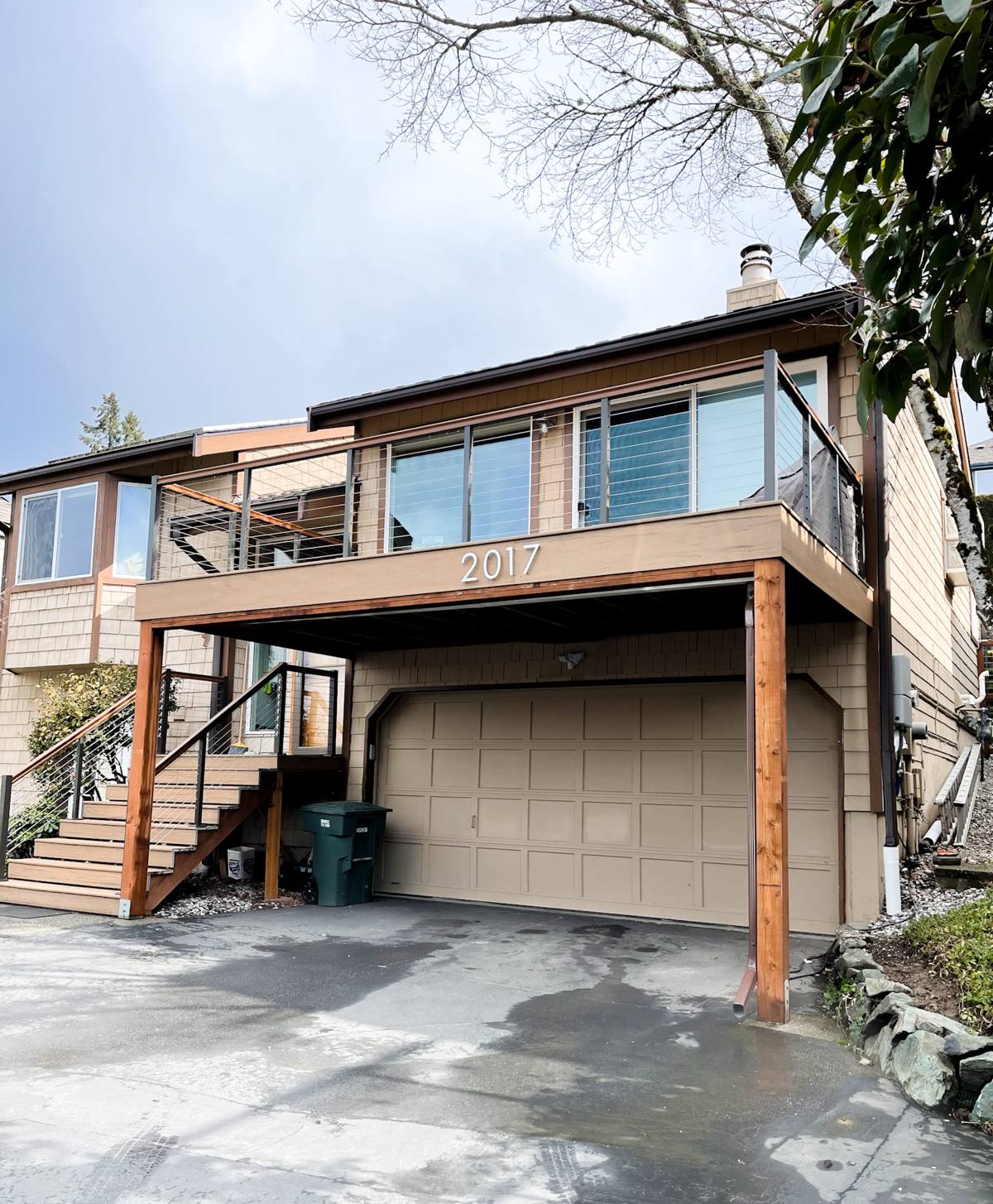
Why Decks Fail Faster in This Part of Tampa
Sun and UV Exposure
Florida sun is relentless almost year-round. UV breaks down the lignin in wood fibers, causing graying, splintering, and surface checking on top surfaces long before the structural wood underneath shows a problem. On composite decking, UV exposure combined with heat cycling can cause fading and, on lower-quality boards, surface degradation that traps moisture in ways the original product wasn't designed to handle.
Wind-Driven Rain and Humidity
It's rarely just rain here — it's rain pushed sideways by wind, driven into joints, under railings, and along ledger board connections where the deck meets the house. That moisture works into end grain, fastener holes, and any spot where a previous repair wasn' sealed correctly. Combined with Tampa's humidity, wood that isn't drying out fully between storms becomes a long-term rot risk, especially in shaded areas of the yard where airflow is limited.
Salt Air
Westchase sits inland from the bay, but salt-laden air still travels with onshore winds, especially during storm season. Salt accelerates corrosion on fasteners, joist hangers, and any exposed metal hardware — which is often the real point of failure on an older deck, even when the boards themselves still look fine.
Storm and Wind Load
Hurricane-force wind events put real lateral load on railings, stair stringers, and ledger connections. A deck that was structurally sound five years ago can develop loosened connections after repeated storm seasons, even without a single dramatic failure event — it's cumulative fatigue, not one big hit.
What a Correct Deck Repair Actually Involves
A lot of "deck repair" in this market is really just cosmetic — pressure washing, a coat of stain, maybe swapping a board that's visibly cracked. That's not a repair, it's a delay. A correct repair starts underneath the surface.
- Inspection of the ledger board connection to the house — this is the single most common source of catastrophic deck failure nationwide, and it's worse in humid climates
- Probing joists, beams, and posts for soft spots, not just visual inspection — rot often hides under paint or stain
- Checking every joist hanger and fastener for corrosion, not just the ones that are visible from below
- Testing railing posts for lateral movement, since loose railings are a liability issue as much as a durability one
- Assessing drainage under and around the deck — standing water after storms accelerates every other problem on this list
- Matching replacement boards and hardware to the existing structure's fastening pattern, not just swapping in whatever is on the shelf
Skipping any of these steps means the new boards you see on top are sitting on a structure that hasn't actually been fixed.
Our Process for Westchase Deck Repairs
1. On-Site Assessment
We walk the full deck, not just the area you called about. Problems on one side of a deck are frequently connected to something happening structurally elsewhere — a soft board near the stairs is often related to a drainage issue at the opposite end.
2. Structural Diagnosis
We probe suspect wood with an awl or similar tool rather than relying on visual inspection alone. Rot can travel inside a board while the surface still looks intact, especially under old stain or paint layers.
3. Written Scope and Honest Options
We tell you plainly whether you're looking at a board-level repair, a hardware and connection repair, or something that's crossed into full section replacement territory. We won't recommend replacing an entire deck when a targeted structural repair will genuinely hold — and we won't patch over something that needs to come out.
4. Repair or Replacement
Depending on scope, this means sistering a damaged joist, replacing a ledger board and re-flashing the connection to the house, swapping corroded hardware for stainless or hot-dip galvanized fasteners rated for coastal-adjacent exposure, or replacing decking boards with proper gapping for drainage and expansion.
5. Final Walkthrough
Before we leave, we walk the deck with you, point out what was done, and explain what maintenance (if any) will extend the life of the repair.
Wood vs. Composite: What We Recommend and Why
| Factor | Pressure-Treated Wood | Composite Decking |
|---|---|---|
| Upfront cost | Lower | Higher |
| UV/fading resistance | Requires periodic re-staining | Better, though lower-grade composites can still fade |
| Moisture behavior | Can rot if seal/finish fails | Won't rot, but poor-quality cores can absorb moisture at cut edges |
| Maintenance | Annual/biannual sealing recommended in this climate | Occasional cleaning, no sealing needed |
| Repair approach | Board-by-board replacement is straightforward | Must match existing color/profile; older lines get discontinued |
For repairs on an existing wood deck, we typically stay in wood to keep the structure consistent and avoid mismatched expansion rates between materials. For homeowners doing a larger repair or partial rebuild, composite is worth discussing — but we'll walk you through the tradeoffs honestly rather than pushing whatever has the best margin. Some composite lines have had well-publicized moisture and warranty issues industry-wide, which is why we're selective about which products we install and stand behind.
What Deck Repair Typically Costs
Every deck is different, so treat these as broad ranges, not a quote:
| Repair Type | Typical Range |
|---|---|
| Board replacement (a few boards) | Few hundred dollars |
| Railing repair or partial replacement | Several hundred to low thousands |
| Ledger board repair/re-flashing | Low to mid thousands |
| Joist/beam structural repair | Mid thousands, depending on extent |
| Full deck surface replacement (structure sound) | Several thousand and up, size-dependent |
The actual number depends on square footage, how much of the substructure is affected, and whether we're matching existing materials or replacing them outright. We give a firm, written number after the on-site assessment — not a phone estimate.
Signs Your Westchase Deck Needs Attention Now
- Boards that feel spongy or flex noticeably underfoot
- Railings that wobble or shift when leaned on
- Visible gaps or rust streaks at fastener locations
- Stair stringers that feel loose or bounce when climbed
- Discoloration or dark staining near the ledger board where the deck meets the house
- Standing water underneath the deck after normal rain
- Peeling or bubbling finish that hasn't been resealed in several years
None of these mean the whole deck is a loss — but all of them are worth a professional look before the next storm season, not after.
Why a Crew That Already Works Westchase Matters
Westchase's mix of home ages, HOA aesthetic standards, and pool-adjacent deck layouts means a repair here isn't quite like a repair in a newer subdivision or an older Tampa neighborhood. A crew already familiar with the area knows what fastener corrosion typically looks like on decks that have been through several hurricane seasons here, understands common HOA expectations around railing style and stain color, and can usually get eyes on your deck faster because we're already working in the neighborhood. That familiarity also means fewer surprises mid-repair — we've seen how these decks age in this specific stretch of Hillsborough County, and we plan the job accordingly.
Maintenance That Extends the Life of a Repair
A repair is only as good as what happens to it afterward. A few habits make a real difference in this climate:
- Reseal or re-stain wood decking on a schedule appropriate to sun exposure — heavily shaded areas need it less often than full-sun sections
- Keep gutters and downspouts directing water away from the deck footprint, not onto it
- Sweep debris out from between boards regularly so moisture doesn't sit trapped against the wood
- Have railings and stair connections checked after any major storm, not just when something feels obviously wrong
- Address small issues — a single soft board, a slightly loose baluster — before the next rainy season, not after
If your Westchase deck has soft spots, loose railings, or just needs an honest structural once-over before storm season, we're glad to take a look. The estimate is free, there's no pressure to move forward, and you'll get a straight answer about what actually needs fixing.