 Tampa Siding
 What Westchase Homes Need From Their Siding
Westchase sits in northwest Hillsborough County, close enough to Tampa Bay and the Gulf that homes here take the full brunt of Florida's exterior-siding stress test: hurricane-force wind gusts, wind-driven rain that gets pushed sideways into wall assemblies, UV exposure that runs nearly twelve months a year, and a steady dose of salt-laden air. Any siding product installed on a Westchase home has to survive all four of those conditions at once, year after year, not just look good in the driveway on installation day.
This is a big part of why we only install James Hardie fiber cement siding. It's not the only siding product on the market, but it's the one we've found actually holds up to Tampa Bay conditions without turning into a maintenance project for the homeowner. This page covers what correct James Hardie installation looks like specifically for Westchase, what the climate does to siding over time, and what our process involves from first estimate to final walkthrough.
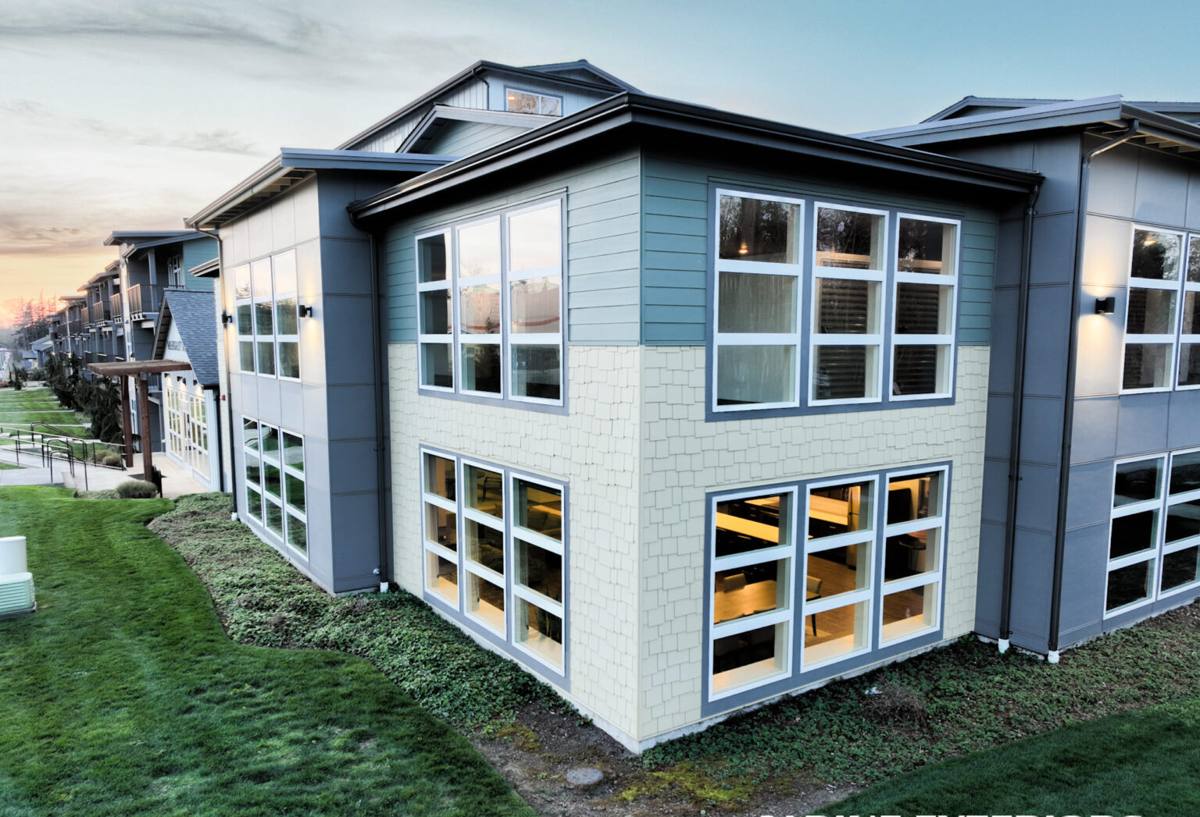
Why James Hardie Fits This Climate
James Hardie fiber cement is a blend of cement, sand, and cellulose fibers, engineered to resist moisture, fire, and pests in a way that wood-based and foam-core products can't match. A few things matter specifically for a Hillsborough County home:
Non-Combustible Core
Fiber cement doesn't burn. That matters less for hurricane season directly, but it's a real advantage for insurance underwriting and for homeowners who simply want one less thing to worry about on the exterior of the house.
Moisture and Humidity Behavior
Tampa's humidity doesn't let up for long stretches of the year, and wind-driven rain during storms pushes water sideways against exterior walls in a way that gentler rain never does. Fiber cement doesn't swell, rot, or delaminate the way engineered wood products can when moisture gets past the surface. It's dimensionally stable in a way that matters when a wall assembly gets soaked during a tropical system and then has to dry out again.
UV and Color Stability
James Hardie's ColorPlus factory-applied finish is baked on and cured under controlled conditions, which gives it noticeably better fade resistance than field-applied paint under constant Florida sun. Field-painted siding in this climate typically needs repainting well before ColorPlus needs any attention.
Engineered for High-Wind, High-Moisture Regions
James Hardie makes climate-specific product formulations, including HZ10 versions engineered for hot, humid, coastal-adjacent regions like ours. Installed to spec, the product line and the fastening pattern are both rated to hold up under Hillsborough County's wind-load requirements.
James Hardie Product Lines We Install
Not every Westchase home should get the same siding profile. Part of a correct job is matching the product line to the house — its architecture, its exposure, and the look the homeowner actually wants.
| Product | Best Use | Look |
|---|---|---|
| HardiePlank Lap Siding | Most common choice for full-house siding replacement | Traditional horizontal lap, several width and texture options |
| HardieShingle | Accent gables, dormers, or full-shingle-style homes | Staggered or straight-edge shingle profile |
| HardiePanel (Vertical/Board & Batten) | Modern or Florida-vernacular exteriors, porch and gable accents | Clean vertical lines with visible battens |
| HardieTrim | Window and door casings, corner boards, fascia | Smooth or textured trim that matches the field siding |
Many Westchase homes mix two of these — lap siding across the main body with a shingle or board-and-batten accent on a gable or entry feature. That mix has to be planned before ordering material, not improvised mid-job.
What a Correct Installation Actually Involves
James Hardie siding is only as good as the installation behind it. The product is engineered to perform, but almost every real-world failure traces back to shortcuts during install, not a flaw in the material itself. A correct job in this climate includes:
- Proper water-resistive barrier installed and lapped correctly before any siding goes up
- Flashing at every window, door, and roof-to-wall intersection, installed to shed water outward, not trap it behind the siding
- Manufacturer-specified fastener type, length, and spacing — not whatever happens to be on the truck
- Correct clearance between the bottom of the siding and grade, roofing, decks, and patios so water can't wick up into the material
- Proper joint and butt-seam treatment, including factory-primed cut edges recoated in the field
- Caulking only where James Hardie specifies it — not as a substitute for proper flashing
- Correct nailing pattern and fastener depth, since overdriven or underdriven fasteners are one of the most common causes of early siding problems
Every one of these steps matters more here than in a drier, calmer climate, because a mistake that might sit dormant for years somewhere else gets tested by the next tropical storm or the next humid summer.
Wind and Fastening Requirements
Hillsborough County's building code reflects the region's wind-load requirements, and James Hardie's installation instructions include fastening schedules tied to wind zones. A crew that treats every job the same regardless of exposure — corner lots, open yards, second-story walls facing prevailing wind — isn't installing to the standard the product is rated for. Fastening pattern, not just fastener count, is what determines whether the siding performs the way it's engineered to in a real storm.
How Our Process Works
Because we work James Hardie exclusively, our process is built around one product system rather than trying to accommodate several different materials with different rules.
- On-site assessment. We look at the home's current siding condition, the substrate underneath, moisture history, and any problem areas — around windows, at roof lines, near ground contact.
- Product and color selection. We walk through the relevant HardiePlank, HardieShingle, and HardiePanel options and ColorPlus finishes, matched to the home's architecture and HOA or neighborhood expectations where applicable.
- Written estimate. Scope, product lines, square footage, trim work, and timeline, laid out in writing before any work starts.
- Removal and substrate inspection. Old siding comes off and we inspect sheathing for rot or moisture damage before anything new goes up. Problems found here get addressed, not covered over.
- Weather barrier and flashing. This is the step that determines how the house performs during the next heavy rain event, and it's the step that's invisible once siding is installed — which is exactly why it has to be done right the first time.
- Siding installation. Installed to James Hardie's fastening and clearance specifications for our wind zone.
- Trim, caulking, and touch-up. Cut edges sealed, joints finished, final ColorPlus touch-up where needed.
- Final walkthrough. We go over the finished job with the homeowner before calling it complete.
Westchase Architecture and Siding Fit
Westchase is a planned community in northwest Hillsborough County with a mix of architectural styles — many homes lean Mediterranean or Florida-traditional, with stucco-adjacent color palettes, tile roofs, and a fair amount of trim and gable detail. Where siding is used as an accent or full exterior on these homes, matching board width, texture, and ColorPlus color to the rest of the home's palette matters for resale value and neighborhood consistency. We factor that into product selection rather than defaulting to whatever's easiest to install.
Homes closer to open water or with more direct west/southwest exposure tend to take more UV and wind-driven rain over time. That's worth flagging during the estimate, because it can affect which HardiePlank texture and fastening approach makes the most sense.
Cost Factors for James Hardie Siding in Westchase
Every home is different, so we don't quote firm numbers without seeing the house, but these are the main variables that move a Westchase estimate:
| Factor | How It Affects the Estimate |
|---|---|
| Home size and wall area | Larger square footage means more material and labor hours |
| Current siding removal | Tear-off and disposal of old material adds labor and hauling cost |
| Substrate condition | Rotted or damaged sheathing found during removal requires repair before new siding goes on |
| Product line and profile | HardiePlank, HardieShingle, and HardiePanel carry different material and labor costs |
| Trim and detail work | Gables, dormers, and mixed-material accents add labor time |
| Number of stories | Second-story work requires more scaffolding, staging, and time |
| Color | Standard ColorPlus colors versus custom or premium finishes can shift cost |
Maintenance and Warranty
One of the practical advantages of James Hardie in this climate is how little ongoing maintenance it needs compared to wood-based or vinyl alternatives. A rinse to clear off salt air residue and pollen, and an occasional check of caulking at trim joints, covers most of what a homeowner needs to do. It doesn't need repainting on the schedule that field-painted wood trim does, since the ColorPlus finish is engineered to hold color far longer under constant sun exposure.
James Hardie backs its products with a transferable limited warranty, and ColorPlus finishes carry their own finish warranty separate from the product warranty. Installation quality is part of what keeps a warranty claim valid, which is another reason correct installation isn't optional — it's the difference between a warranty that actually protects the homeowner and one that gets denied over an installation defect.
Why a Crew That Already Works Westchase Matters
Siding installation quality depends heavily on details that are specific to a region: knowing the wind-load fastening requirements that apply locally, knowing how Hillsborough County permitting and inspection works, and having already seen how homes in this specific area take on moisture and UV damage over time. A crew that's worked other Westchase homes has already dealt with the substrate conditions common to the area's age and construction style, and already knows which ColorPlus palettes read well against the neighborhood's typical rooflines and stucco tones.
Because we install James Hardie exclusively, every job we run uses the same fastening standards, the same flashing details, and the same attention to substrate condition — there's no guessing which rules apply because we're not switching between five different siding systems from one job to the next.
Questions Worth Asking Before You Hire
- Is the crew installing to James Hardie's published fastening and clearance specifications, or improvising?
- Will they inspect and repair damaged sheathing before installing new siding, or cover it up?
- Do they pull the required Hillsborough County permits for the scope of work?
- Is the weather-resistive barrier and flashing detail included in the written scope, or assumed?
- Does the estimate specify product line, profile, and ColorPlus color, or just "siding"?
If you're weighing a siding project for a Westchase home, we're happy to walk the exterior with you, point out anything we see, and put together a straightforward written estimate — no pressure, no obligation. The form below is the easiest way to get that started.