 Tampa Siding
 Decking in Seminole Heights Has to Work Harder Than a Catalog Photo Suggests
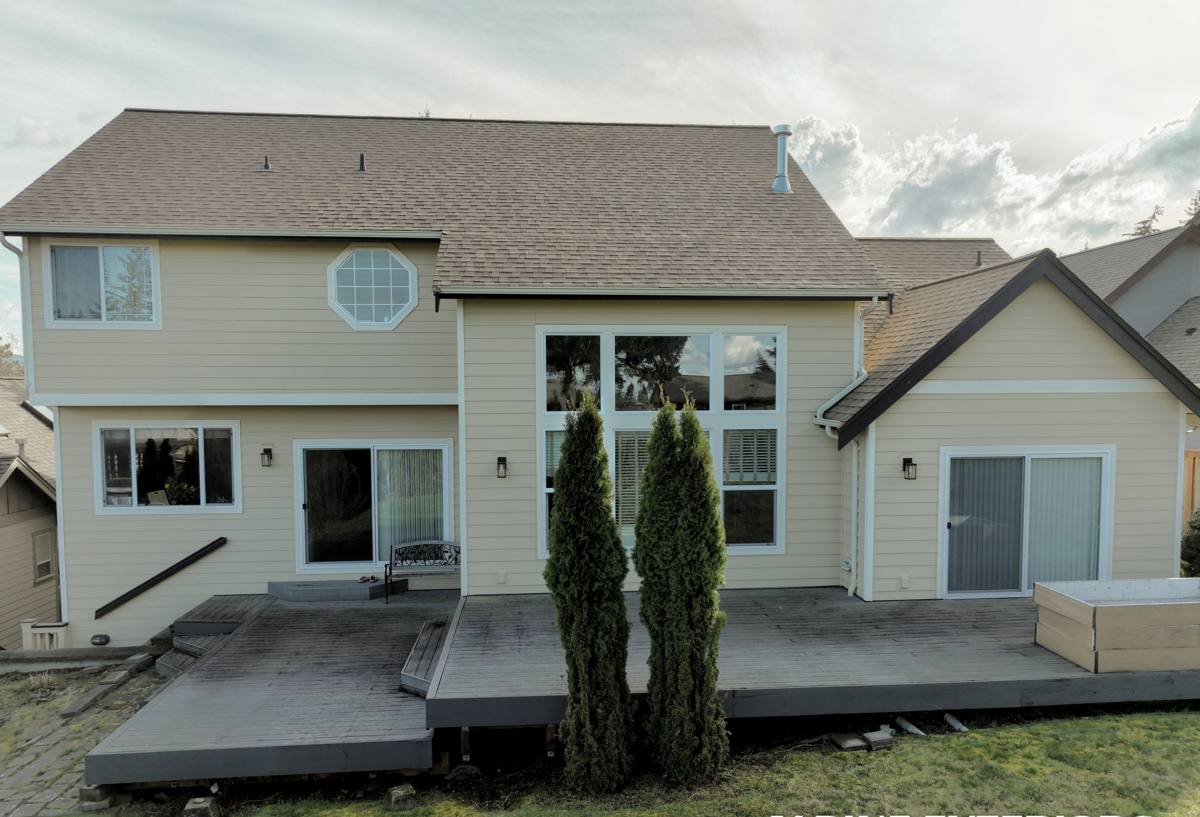
Seminole Heights is one of Tampa's older, more established neighborhoods, and that shows up in the housing stock: a lot of bungalow-style homes, mature tree cover, and yards that were laid out decades before "composite decking" was a category anyone shopped for. A deck out here isn't just a place to put a grill. It sits under heavy shade part of the day and full Florida sun the rest, it takes on afternoon storm runoff, and it has to survive a hurricane season that runs half the year. Any decking material you put down needs to hold up to that combination, not just look good in a showroom.
We install composite decking specifically with Hillsborough County's climate in mind — not a generic spec sheet. That means thinking through drainage, fastener choice, structural bracing, and board selection before the first joist goes down, not after the deck starts cupping or the boards start showing chalky fade in year two.
What Tampa's Climate Actually Does to a Deck
It helps to be specific about what a deck in this part of Florida is up against, because it changes how the job should be built:
- Intense, year-round UV fades and can chalk lower-grade decking surfaces faster than in most of the country — capped composite boards resist this far better than uncapped boards.
- Wind-driven rain during summer storms pushes moisture sideways and up under boards, not just straight down, so drainage gaps and proper slope at the ledger matter more here than in drier climates.
- Hurricane-force wind events put real load on railings, post connections, and ledger attachment — this is a structural issue, not a cosmetic one.
- Humidity and shade from Seminole Heights' mature tree canopy encourage mold and mildew growth on any surface that doesn't drain and dry quickly, composite included.
- Salt-bearing air is a bigger factor for homes closer to Tampa Bay, but even inland neighborhoods like Seminole Heights benefit from corrosion-resistant fasteners and hardware — it's cheap insurance against hidden rust at connection points over the life of the deck.
None of this means composite decking is a bad fit for the area — it's actually one of the better options for this climate. It means the installation details matter more here than they do in a mild, dry climate where almost any approach holds up fine.
Why Composite Makes Sense for Older Seminole Heights Homes
Working With What's Already There
A lot of homes in this part of Tampa have older framing, uneven grade, or additions that weren't part of the original build. Before we talk board selection, we look at what the deck is actually attaching to — the house's rim joist, the foundation type, and how water currently moves through the yard. Composite decking doesn't fix a bad substructure. If the ledger attachment or the support framing is compromised, that gets addressed first, regardless of what decking material goes on top.
Shade, Moisture, and Mildew
Homes with heavy tree cover get less direct UV on the deck surface, which is good for color retention, but they also get more standing humidity and organic debris (leaf litter, pollen, tannin runoff from oak trees) that feeds mildew growth. Composite boards with a textured, capped surface resist staining and are far easier to clean than wood, but board spacing and airflow underneath the deck still need to be planned for shaded sections — a tight, damp deck grows mildew regardless of what it's made of.
What a Correct Composite Decking Job Actually Involves
"Composite decking" describes the boards, not the job. The board is maybe a third of what determines whether a deck lasts. The rest is substructure and connections — the parts you don't see once it's finished.
Structural Framing
Composite boards are heavier than wood and behave differently under load and heat expansion, so joist spacing needs to match the manufacturer's spec for that specific product — this is often tighter than standard wood-deck spacing, especially near stair openings and picture-frame borders.
Ledger Attachment and Flashing
Where the deck ties into the house is the single most common failure point on any deck in a wet climate. Proper flashing keeps wind-driven rain from working its way behind the ledger board and into the house's rim joist — an issue that can go unnoticed for years before it shows up as rot inside the wall.
Fasteners and Hardware
Hidden fastener systems keep the deck surface clean, but the screws, brackets, and joist hangers underneath need to be rated for the moisture and, depending on proximity to the bay, salt exposure this area sees. Mixing incompatible metals at connection points causes galvanic corrosion that isn't visible until a bracket fails.
Wind and Uplift Bracing
Railings, posts, and stair stringers all need bracing sized for Hillsborough County's wind requirements, not just what looks sturdy. This is one of the areas building departments in this region pay close attention to for good reason.
Drainage and Airflow
Correct board spacing, a slight slope away from the house, and clearance underneath the deck for airflow all reduce moisture retention — critical in a climate where afternoon storms are a near-daily occurrence for months at a time.
Composite vs. Wood vs. PVC — Honest Trade-Offs for This Climate
| Factor | Pressure-Treated Wood | Capped Composite | PVC / Cellular |
|---|---|---|---|
| Upfront cost | Lowest | Mid-range | Highest |
| UV fade resistance | Poor — grays and splinters | Good to very good | Very good |
| Moisture/mildew resistance | Fair — needs regular sealing | Good, capped surface sheds water | Excellent — moisture-impervious |
| Ongoing maintenance | Annual sealing/staining | Periodic cleaning only | Minimal cleaning |
| Feel underfoot in FL sun | Moderate heat retention | Runs warmer, varies by color | Runs warmer, varies by color |
| Typical warranty structure | Limited, material only | Longer, often includes fade/stain | Longest, often lifetime on material |
We don't push one material as universally "best" — the right call depends on budget, how much shade the deck sits in, and how much upkeep the homeowner actually wants to do. What we won't do is install a lower grade of board than what a homeowner is paying for, or cut corners on the substructure to hit a lower price — that's a maintenance headache and, in some cases, a safety issue down the road.
Our Process, Start to Finish
- On-site assessment — we look at the existing structure (if there is one), grade, drainage, and how the deck ties into the house before quoting anything.
- Material selection — we walk through board options and hardware grades based on your budget and how much sun or shade the deck actually gets.
- Permitting — decking work in Hillsborough County typically requires a permit; we handle that process rather than leaving it to the homeowner.
- Demo (if replacing an existing deck) — old material removed and the substructure inspected for hidden rot or fastener corrosion before rebuilding.
- Framing and structural work — joists, ledger flashing, and bracing built to current wind and load requirements.
- Decking installation — boards installed to manufacturer spacing and fastening specs, including proper expansion gaps for Florida's heat swings.
- Final walkthrough — we go over the finished deck with you, including what maintenance (if any) the specific board you chose needs going forward.
Maintenance Reality for Composite Decking in This Climate
One of the honest selling points of composite is how little it asks of you compared to wood — but "low maintenance" doesn't mean "no maintenance" in a climate this humid. A periodic wash to clear pollen, leaf tannin, and mildew film keeps capped composite looking like new. Homes under heavy tree canopy, common in parts of Seminole Heights, will need this more often than a deck in full sun. Check that gaps between boards stay clear of debris so water keeps draining as designed — a clogged gap is how moisture starts collecting where it shouldn't.
Signs an Existing Deck Needs Attention
- Boards that feel soft, spongy, or spring back slowly underfoot
- Visible gaps, rust streaks, or dark staining around fastener heads or brackets
- Railings or posts that wobble or flex under normal weight
- Persistent mildew or algae film that returns quickly after cleaning
- Gaps at the ledger board where it meets the house, or soft trim near that connection
- Boards that have visibly cupped, warped, or separated from the frame
Any of these are worth a second look before they become a bigger structural or moisture problem inside the house itself.
Why a Crew That Already Works Seminole Heights Matters
Building a deck here isn't the same job as building one somewhere with a dry, mild climate — the framing, fastener choice, and drainage details all need to account for Tampa's storms, heat, and humidity, and a contractor who's done this work across Hillsborough County knows which shortcuts cause callbacks two summers later. We also know the permitting process locally, which keeps the job from stalling on paperwork, and we're familiar with the older housing stock common in Seminole Heights — homes where the existing framing or grade needs a plan before decking ever gets discussed.
If you're weighing a new composite deck or replacing one that's past its prime, we're happy to take a look and give you a straight assessment — no pressure, no inflated scope. Use the form below to request a free estimate for your Seminole Heights property.