 Tampa Siding
 Why Westchase Decks Wear Out Faster Than Homeowners Expect
Westchase sits inland from Tampa Bay but still gets the full package of what West Central Florida throws at outdoor structures: intense year-round UV, sudden wind-driven downpours nearly every summer afternoon, and salt-tinged air that drifts in off the Gulf and the bay even this far from the water. A deck is one of the most exposed structures on any property — no roof overhang, no siding to shed water, just boards and framing taking direct sun and rain cycles day after day.
That exposure adds up differently here than it does in a drier or cooler climate. Wood fibers expand and contract with humidity swings, fasteners corrode faster in salt-laden air, and UV breaks down surface finishes and some composite formulations faster than manufacturers' national warranty language always accounts for. A deck that might last 20+ years in a mild climate can start showing real structural issues in half that time in Hillsborough County if it wasn't built or maintained with this climate in mind.
Sun and Heat
Tampa gets some of the highest annual UV exposure in the continental U.S. Untreated or poorly finished wood grays and checks quickly. Even composite decking, which is marketed as low-maintenance, can fade or chalk on its surface layer if it's an older or lower-grade capped product installed without attention to ventilation underneath.
Rain and Moisture Cycling
Almost every summer day in this part of Florida brings the possibility of a fast, heavy downpour. Decks that dry out and get soaked repeatedly in short cycles are harder on fasteners, ledger boards, and joist hangers than a steady, predictable climate would be. Standing water at ledger connections or under poorly flashed boards is one of the most common hidden failure points we find.
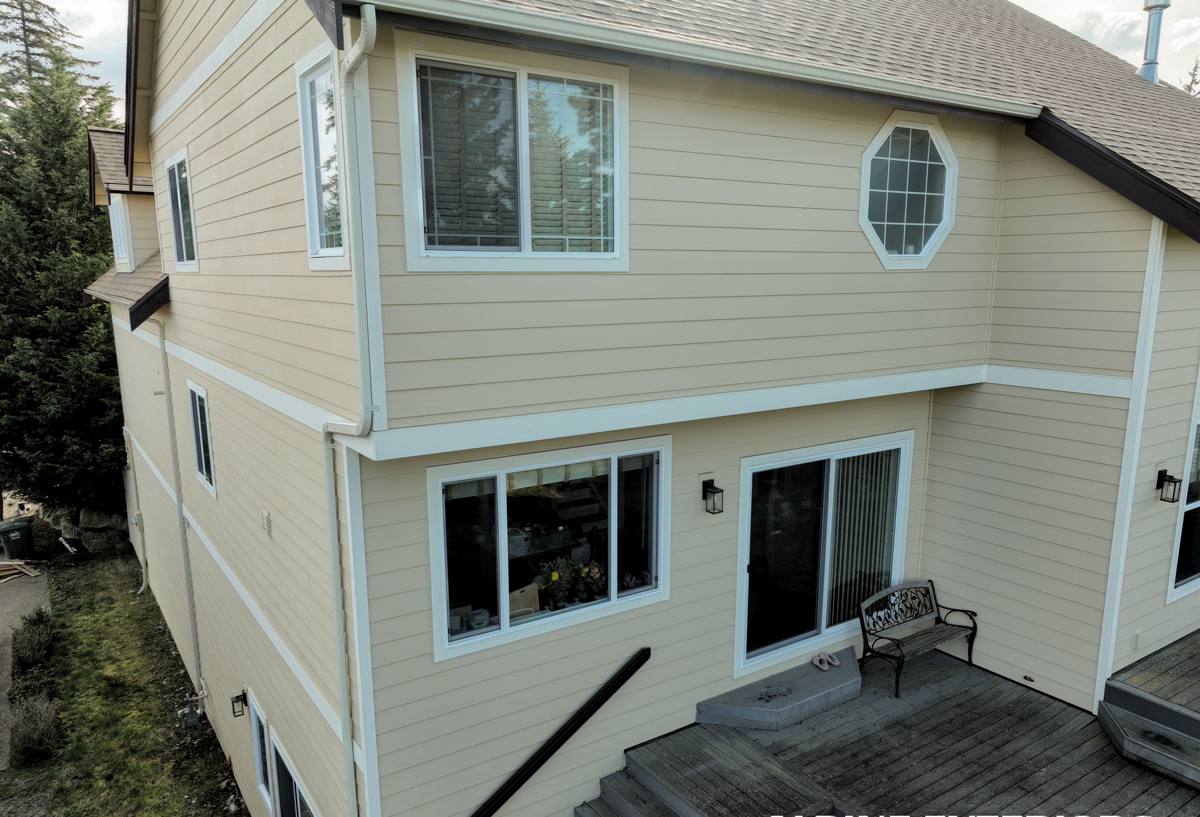
Signs a Deck Needs Replacement, Not Just Repair
Not every deck problem calls for a full tear-out. But there's a point where patching boards or re-sealing wood is just delaying a more expensive failure — and in some cases, a safety issue. Here's what tells us a deck in Westchase has crossed that line:
- Soft, spongy, or spring-like decking boards, especially near the house or stair landings
- Visible rot, dark staining, or fungal growth at the ledger board where the deck meets the house
- Rusted, loosened, or missing joist hangers and fasteners
- Wobble or movement in the railing posts or stair stringers
- Gaps opening up between boards that weren't there when the deck was new
- A deck that predates current attachment and flashing standards, regardless of how it looks on the surface
- Multiple past repairs that haven't solved the underlying moisture or structural issue
The ledger board connection deserves special attention. It's the single point holding the entire deck to the house, and it's also the hardest area to inspect without pulling boards. If a deck has any history of water intrusion at that connection, we treat it as a structural question, not a cosmetic one.
What a Proper Deck Replacement Actually Involves
A deck replacement isn't just swapping old boards for new ones on the same frame. Done correctly, it's a full evaluation of everything from the ground up.
Footings and Substructure
We check footing depth and condition, post connections, and whether the existing substructure meets current load and attachment standards. In many older decks, the footings are undersized or the posts aren't properly anchored — issues that don't show up until wind or weight tests them.
Ledger Board and Flashing
This is the connection point that fails most often in humid climates. A correct replacement uses proper flashing to keep water from tracking behind the ledger and into the house's rim joist, along with structural fasteners rated for the load, not just deck screws.
Framing and Joists
Joist spacing, hanger hardware, and beam sizing all get reviewed against current code, not just replaced to match whatever was there before. If the old deck was under-built, we're not going to repeat that mistake with new lumber.
Fasteners and Hardware
In coastal and near-coastal Florida air, standard galvanized hardware corrodes faster than it should. We use stainless steel or heavy-duty coated fasteners and connectors rated for coastal exposure — a small cost difference upfront that matters a lot ten years down the road.
Permitting
Deck replacement in Hillsborough County generally requires a building permit, and in a planned community like Westchase there may also be HOA design guidelines to follow on top of that. We handle the permit process as part of the job rather than leaving it to the homeowner to sort out.
Choosing the Right Decking Material for This Climate
There's no single "best" decking material — there's a best fit for how a homeowner wants to use and maintain the deck. We walk through the honest trade-offs rather than pushing one product line.
| Material | How It Handles Tampa's Climate | Maintenance | General Cost Position |
|---|---|---|---|
| Pressure-treated wood | Needs sealing to resist moisture cycling and UV; can warp or split if maintenance lapses | Annual cleaning and re-sealing recommended | Lowest upfront cost |
| Capped composite | Resists moisture and UV fading well when properly ventilated underneath | Occasional washing, no sealing or staining | Mid to upper range |
| PVC decking | Fully synthetic, very stable in humidity swings and salt air exposure | Lowest ongoing maintenance | Highest upfront cost |
| Tropical hardwoods | Naturally dense and rot-resistant but sensitive to installation and gapping errors | Periodic oiling to maintain appearance | Mid to upper range |
Our standard for composite and PVC installs comes down to how the product is detailed on site, not just the brand name on the box: proper ventilation gaps underneath, correct fastener spacing for thermal expansion, and hardware that matches the material's coastal exposure needs. A premium board installed without those details will still underperform, and a mid-range board installed correctly will often outlast it.
How We Approach a Deck Replacement
- On-site assessment. We inspect the existing deck's framing, footings, and ledger connection, not just the visible boards, before quoting anything.
- Material and design conversation. We walk through decking options, railing choices, and layout with honest pros and cons for your budget and how you use the space.
- Permitting. We pull the required Hillsborough County permit and handle any documentation an HOA in Westchase may require.
- Demolition and structural rebuild. Old decking, framing, and any compromised footings come out; new substructure goes in to current code and coastal-hardware standards.
- Decking, railing, and finish work. Boards and railing go in with attention to expansion gaps, fastener patterns, and drainage.
- Final walkthrough and inspection sign-off. We review the finished deck with you and make sure required inspections are closed out.
Why a Crew That Already Works Westchase Matters
Westchase is a large, established planned community, and that comes with its own practical realities on a job like this. HOA architectural guidelines can affect railing style, decking color, and sometimes footprint — a crew unfamiliar with the neighborhood ends up guessing or causing delays where a crew that's worked here before already knows what to expect and what documentation to have ready.
There's also a simple logistics benefit. A local Tampa crew that regularly works in and around Westchase can respond to questions, schedule follow-ups, and handle warranty callbacks without the delay of dispatching from across the metro. When a hurricane watch goes up and you want a quick check on a newly built deck's readiness, proximity matters.
Protecting Your New Deck After Installation
A correctly built deck still benefits from basic upkeep in this climate:
- Rinse off salt film and debris periodically, especially after storms with onshore wind
- Keep gutters and downspouts clear so runoff isn't dumping extra water onto or near the deck
- Reseal wood decking on the manufacturer's recommended schedule — don't wait for visible graying
- Check railing posts and stair connections annually for movement
- Trim back vegetation that's shading boards and keeping them damp longer than they should be
What Deck Replacement Typically Costs in Westchase
Costs vary based on deck size, material choice, height off the ground, stair and railing complexity, and how much structural rebuilding is needed. As a general guide, straightforward pressure-treated replacements sit at the lower end of the range, while larger composite or PVC decks with multi-level layouts or extensive railing run higher. The only way to get an accurate number is a site visit, since footing condition and framing issues often aren't visible until we're on the deck.
Below are the factors that move the price the most, independent of the finished square footage:
| Cost Factor | Why It Matters |
|---|---|
| Footing and structural condition | Undersized or damaged footings require additional excavation and concrete work |
| Decking material | Pressure-treated, composite, and PVC carry different material costs and install labor |
| Height and stairs | Elevated decks and multiple stair runs add framing, railing, and code requirements |
| Railing style | Cable, glass, and custom composite railing systems cost more than standard baluster railing |
| Access for demolition | Tight side-yard access or landscaping in the way can add labor time |
If you're weighing a Westchase deck replacement, we're glad to walk your existing deck with you, point out what we find, and give you a straightforward, no-pressure estimate using the form below.