 Tampa Siding
 Composite Decking Built for Town 'n' Country's Climate
Town 'n' Country sits inland enough to avoid direct waterfront exposure but close enough to Tampa Bay that homes still deal with salt-laden air, heavy afternoon humidity, and the same summer storm pattern that hits the rest of Hillsborough County. A deck out here spends most of the year in one of two states: baking under intense UV or getting soaked by wind-driven rain that shows up almost daily from June through September. That combination is hard on wood and hard on cheap composite alike, which is why the material choice and the install details matter more here than they would in a drier climate.
We've built and repaired decks throughout this neighborhood long enough to know which failure points show up first — fastener corrosion, ledger board rot where the deck meets the house, and boards that cup or fade unevenly because they were installed without enough airflow underneath. A deck that's built correctly for this climate should still look and perform well a decade in, not just at the walkthrough.
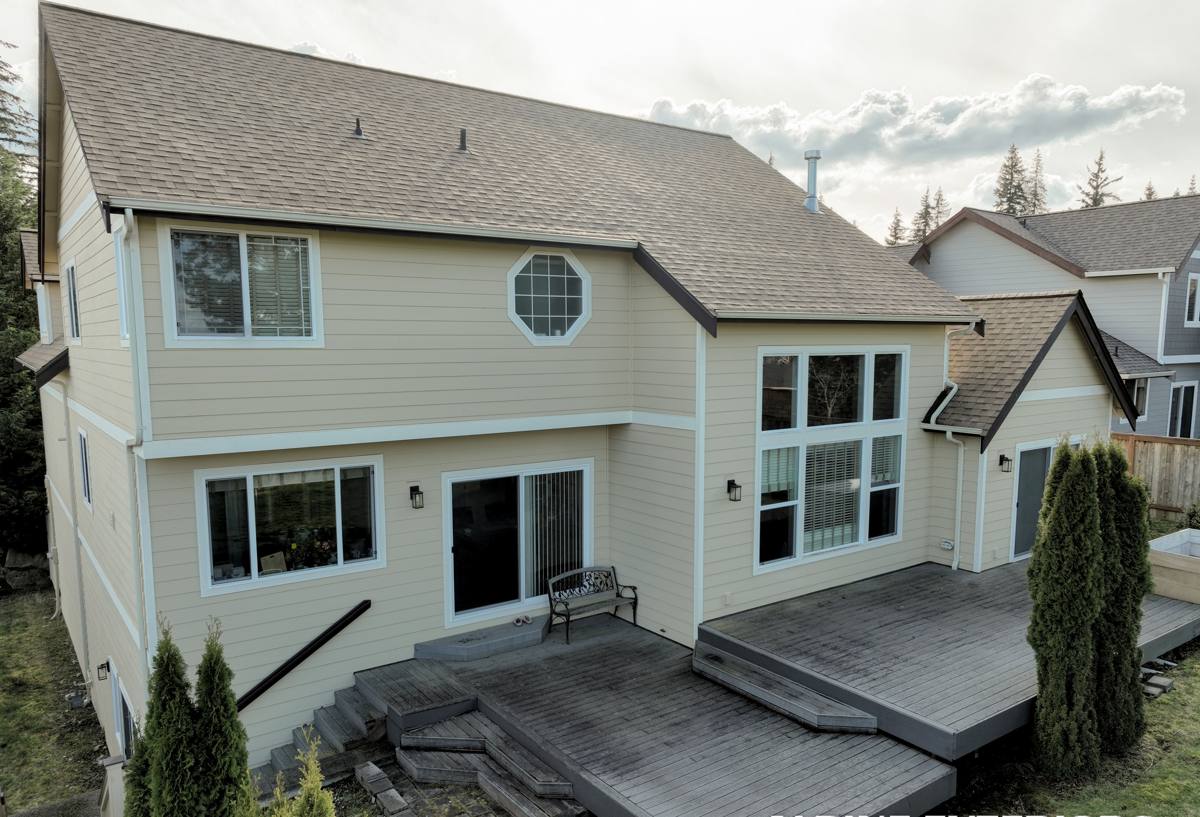
Why Composite Makes Sense for This Neighborhood
Wood decking isn't a bad product, but it asks a lot of a homeowner in a climate like Tampa's — annual sealing, sanding, and constant vigilance against rot and insect damage. Composite decking shifts that maintenance burden way down. The boards are engineered from a blend of wood fiber and plastic, capped with a protective shell that resists moisture absorption, UV fading, and the kind of splintering that shows up on wood decks after a couple of hot Florida summers.
That doesn't mean composite is maintenance-free — nothing exposed to Tampa weather year-round truly is — but it means the maintenance is mostly limited to periodic washing rather than refinishing. For a lot of homeowners in Town 'n' Country who want to actually use their deck instead of maintaining it, that trade-off is worth the higher upfront material cost.
What the Climate Actually Does to a Deck Here
- UV exposure: Nearly year-round sun breaks down uncapped or low-grade materials, fading color and drying out wood fibers faster than in northern climates.
- Wind-driven rain: Summer storms push moisture sideways into board gaps, fastener holes, and ledger connections — not just straight down.
- Humidity and poor airflow: Decks built low to the ground or without adequate under-deck ventilation trap moisture, which accelerates substrate rot even when the surface boards look fine.
- Salt air: Even away from the immediate coastline, airborne salt accelerates corrosion on hardware, screws, and any exposed metal brackets or ledger flashing.
- Hurricane-season wind loads: Structural framing and fastening need to hold up to gusts, not just support foot traffic.
What a Correct Installation Actually Involves
A lot of what determines whether a composite deck holds up in Hillsborough County happens before a single visible board goes down.
Framing and Substructure
Pressure-treated joists and beams rated for ground contact where applicable, spaced and sized to the composite manufacturer's span tables — composite boards typically require tighter joist spacing than wood decking, and skipping that step is one of the most common corner-cutting mistakes we see on decks that start to bounce or sag within a few years.
Ledger Attachment
Where the deck ties into the house, proper flashing is non-negotiable. This is the single most common point of hidden water intrusion on any deck, and in a climate with this much wind-driven rain, an improperly flashed ledger board can lead to rot in the rim joist and even the home's framing before it's ever visible from the surface.
Fasteners and Hardware
Stainless steel or coated, corrosion-resistant fasteners rated for coastal-adjacent environments. Standard hardware store screws and brackets corrode faster here than most homeowners expect, especially anything within a few miles of the bay.
Ventilation and Drainage
Adequate clearance beneath the deck surface so air can circulate and moisture doesn't sit against the substructure. On lower decks or those near grade, that sometimes means adjusting the framing height or adding drainage solutions during the build.
Board Installation
Correct gapping between boards to allow for thermal expansion — composite expands and contracts more than wood with Tampa's heat swings — and hidden fastening systems where the product allows, for a cleaner surface with fewer exposed screw heads that can corrode or loosen over time.
Comparing Decking Materials for This Area
| Material | UV/Fade Resistance | Moisture Behavior | Maintenance | Typical Lifespan Here |
|---|---|---|---|---|
| Pressure-treated wood | Fades and grays without regular sealing | Absorbs moisture; prone to rot and warping if not sealed annually | High — annual sealing/staining | 10-15 years with upkeep |
| Capped composite | Strong resistance to fading with UV-stabilized cap | Minimal absorption; resists swelling and rot | Low — periodic washing | 25-30+ years |
| Uncapped composite | Moderate — can fade and stain over time | More prone to moisture absorption than capped products | Moderate | 15-20 years |
| Tropical hardwood | Naturally UV-resistant but grays without oiling | Dense and moisture-resistant when maintained | High — periodic oiling | 20-25 years with upkeep |
We install capped composite on the large majority of Town 'n' Country projects because it's the best balance of upfront cost, low maintenance, and performance against this specific climate. That said, honest trade-offs apply to every product — capped composite costs more than wood or uncapped composite, and warranty terms vary significantly by manufacturer and product line, so we walk through those specifics with each homeowner rather than pushing one brand as a blanket answer.
Our Process for a Town 'n' Country Deck Project
- On-site assessment: We look at grade, drainage, sun exposure, and how the deck ties into the house before recommending framing or material specs.
- Design and material selection: Board color, railing style, and structural layout, matched to your budget and how you'll actually use the space.
- Permitting: Deck projects in Hillsborough County typically require permits and inspections — we handle that process rather than leaving it on the homeowner.
- Demolition (if replacing an existing deck): Removal and disposal of old decking and, where needed, damaged framing.
- Framing and flashing: Built to span tables and properly flashed at the ledger, inspected before boards go down.
- Composite installation: Boards, hidden fasteners, and railing installed to manufacturer spec.
- Final walkthrough: We go over care instructions and warranty paperwork so you know what's covered and what basic upkeep looks like.
Cost Factors Homeowners Should Know
Composite decking costs more upfront than pressure-treated wood, and pricing varies widely based on square footage, board tier, railing choice, and how much of the substructure needs to be built or replaced. Rather than quote a number that doesn't apply to your project, here's what actually moves the price:
- Deck size and shape: Multi-level decks or those with curves and cutouts cost more per square foot than a simple rectangle.
- Substructure condition: Replacing rotted or undersized framing on an existing deck adds cost but shouldn't be skipped for the sake of a lower bid.
- Board tier: Composite lines range from entry-level to premium, with differences in cap technology, color options, and warranty length.
- Railing material: Composite, aluminum, and cable railing all price differently and affect the overall look.
- Height and access: Elevated decks or difficult site access add labor time.
- Permitting and inspections: Included in most quotes but worth confirming is itemized rather than assumed.
Why Hire a Crew That Already Works This Neighborhood
Framing spans, flashing details, and fastener selection aren't guesswork — they're spelled out in manufacturer specs and county code. But knowing how those specs need to be adapted for a specific neighborhood's drainage patterns, sun exposure, and typical home age comes from doing the work here repeatedly. A crew that's built decks throughout Town 'n' Country and the greater Tampa area already knows which older homes tend to have undersized ledger connections, which lots have drainage quirks that affect framing height, and how to sequence a build around Florida's rainy season instead of getting caught mid-project by an afternoon storm.
Local presence also matters for warranty follow-through. If a manufacturer warranty issue or a fastener corrosion problem shows up two years down the road, you want a contractor who's still working in the area and stands behind the install, not someone who did one job in the neighborhood and moved on.
Maintenance Checklist for Composite Decking in This Climate
- Rinse the deck surface every few weeks to clear pollen, dirt, and organic debris that can stain the cap layer.
- Wash with soap and water (or a manufacturer-approved cleaner) a couple of times a year to prevent mold and mildew buildup common in Florida humidity.
- Check railing hardware and fasteners annually for corrosion, especially after hurricane season.
- Keep gutters and downspouts near the deck clear so runoff doesn't pool against the structure.
- Trim back landscaping that blocks airflow underneath or around the deck.
- Inspect ledger flashing and the house connection point periodically for signs of water staining.
If you're planning a new deck or replacing one that's showing its age, we're happy to come take a look and put together a straightforward, no-pressure estimate for your Town 'n' Country property. There's a form below to get that scheduled.