 Tampa Siding
 Deck Building Built for Westchase's Climate
Westchase homeowners ask for decks for the same reasons homeowners everywhere do — more usable outdoor space, a place to grill, a spot for morning coffee before the heat sets in. But a deck built in Westchase has to survive conditions that a deck built somewhere with mild winters and no hurricane season never has to face. Between the intense year-round Florida sun, wind-driven rain off the Gulf, and the occasional hurricane-force wind event, a deck here is under load almost every day of its life, not just during a storm.
We build decks for homes throughout the greater Tampa area, and Westchase's mix of established neighborhoods and newer construction gives us a good sense of what holds up locally and what doesn't. This page walks through what a deck actually needs to perform well in Hillsborough County, what a correct build involves, and how we approach the work from first estimate to final walkthrough.
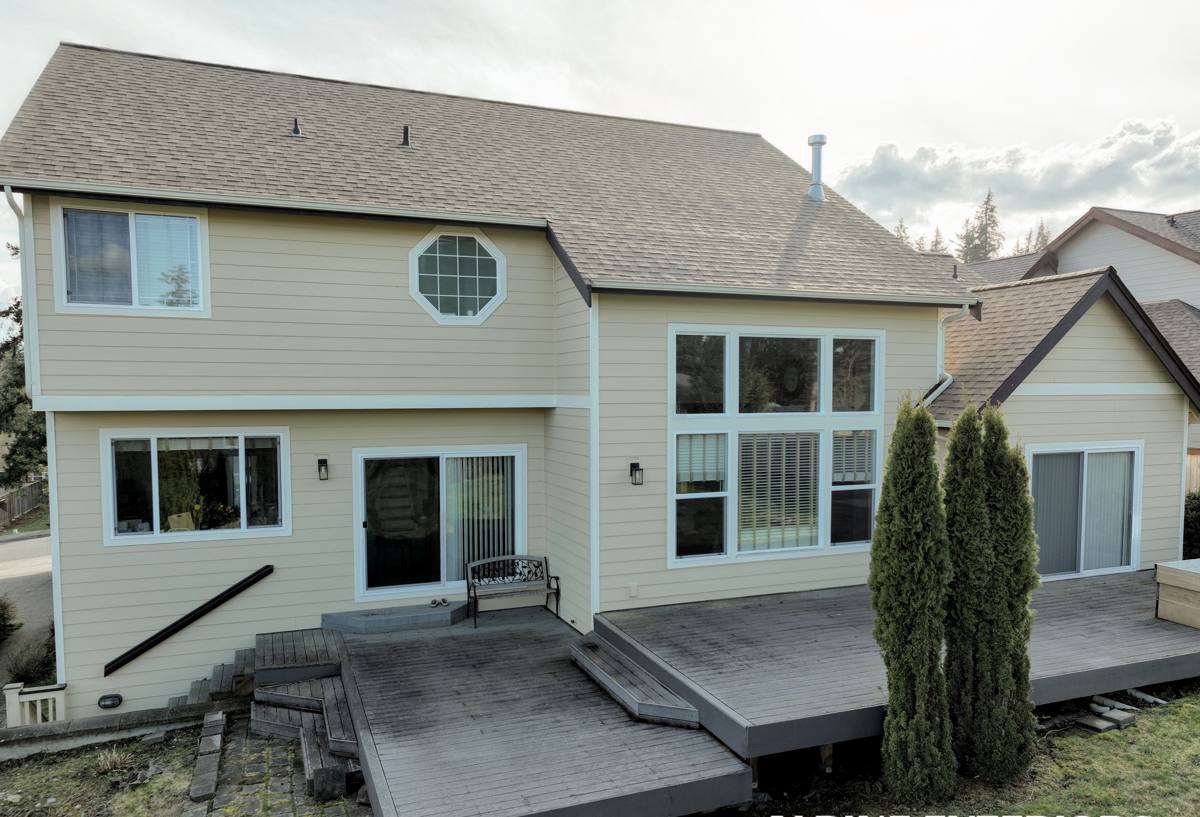
What Westchase Homes Actually Need From a Deck
Sun and Heat
Florida sun is relentless. UV exposure degrades wood fibers, breaks down sealers and finishes faster than in most of the country, and causes composite decking to fade or chalk if the product wasn't chosen with UV stability in mind. A deck that looks great the day it's finished can look tired within a couple of years if the materials and finish weren't matched to this exposure level.
Wind-Driven Rain and Moisture
Tampa Bay's rain doesn't fall straight down — it comes in sideways during storms, driving moisture into joints, fastener holes, and any gap in the structure that isn't properly flashed or sealed. Combined with our humidity, that means wood decking, framing, and especially the ledger board connection to the house need real moisture management, not just "treated lumber and hope."
Wind Load
Hillsborough County sits in a wind zone that requires decks to be designed and fastened to resist real uplift and lateral forces, not just gravity loads. Railings, post connections, and the deck's attachment to the house all need to be engineered with hurricane-force wind in mind — this isn't optional bracing, it's what keeps a deck attached to your house and in one piece when a storm comes through.
Salt Air
Westchase isn't right on the water, but Tampa Bay's salt air still travels inland and accelerates corrosion on lower-grade fasteners and hardware. Over years, that corrosion is one of the quieter causes of deck failure — a connection that looks fine on the surface can be badly weakened underneath.
What a Correct Deck Build Involves
A deck that's going to hold up here isn't just lumber and screws. Every stage matters, and skipping steps is exactly how decks end up with soft spots, rust streaks, or loose railings within a few years.
Ledger Attachment and Flashing
The ledger board — where the deck attaches to your house — is the single most common failure point on residential decks nationwide, and it's even more critical in a wind-driven-rain climate. Proper flashing keeps water from getting behind the ledger and into your home's wall assembly, and proper lag bolting or through-bolting keeps the deck structurally tied to the house under load.
Footings and Post Bases
Footings need to be sized and set to local frost-free and load-bearing requirements, and post bases should be raised hardware connections rather than posts buried directly in concrete, which traps moisture against the wood and shortens its life significantly.
Framing and Fasteners
Joist hangers, hurricane ties, and structural screws should all be rated for exterior and, ideally, coastal-adjacent use — stainless steel or a heavy-duty coated fastener resists the corrosion that standard hardware can't handle over time in our air. Joist spacing and beam sizing should be set by the actual load and span, not just "what's typically done."
Decking Material Selection
Wood, composite, and PVC decking all behave differently under Florida sun and rain. Each has real trade-offs worth understanding before you commit.
| Material | UV / Fade Behavior | Moisture Behavior | Maintenance |
|---|---|---|---|
| Pressure-treated wood | Grays and can check/crack without regular sealing | Absorbs and releases moisture; prone to warping if not sealed | Annual cleaning and re-sealing recommended |
| Composite decking | Fade resistance varies widely by product quality | Resists rot but can trap heat and moisture at fastener points | Low — periodic cleaning, no sealing |
| PVC/capped decking | Generally the most UV-stable option | Fully moisture-resistant, doesn't absorb water | Lowest — occasional cleaning |
| Tropical hardwoods | Naturally dense, still benefits from UV-protective oil | Naturally rot-resistant when properly finished | Moderate — periodic oiling |
Railings and Fastener Hardware
Railings take direct wind load and constant handling, so the connections matter as much as the material. We match hardware grade to the exposure the deck will actually see, not the minimum the code allows.
Our Deck Building Process
1. On-Site Assessment
We walk the property, look at grade, drainage, sun exposure, and how the deck will tie into the house, and talk through how you actually want to use the space — dining, lounging, grilling, pool access, or all of the above.
2. Design and Engineering
We design the layout and structure to meet Hillsborough County's building and wind load requirements, sizing footings, beams, and joists to the actual span and load rather than defaulting to minimums.
3. Permitting
Deck construction in Hillsborough County generally requires a permit and inspection. We handle that process so the finished structure is documented and compliant — which also matters for insurance and resale down the line.
4. Construction
Ledger flashing, footings, framing, decking, and railings are installed in sequence with attention to the moisture and wind-resistance details covered above. We don't skip steps to save a day of labor.
5. Final Walkthrough
We walk the finished deck with you, check every connection, and go over any maintenance the specific material you chose will need going forward.
Why a Crew That Already Works Westchase Matters
Deck-building rules aren't identical from county to county — wind zone requirements, footing depth, and inspection processes are specific to Hillsborough County, and a crew that pulls permits here regularly moves through that process without guesswork or delays. We also know how Westchase's mix of home styles and lot layouts tends to affect deck placement — grade, drainage paths, and how close structures sit to property lines — which shortens the design conversation and avoids surprises once work starts.
Just as important is knowing which materials and hardware actually hold up in this specific climate versus what a spec sheet claims in ideal conditions. A crew that's watched decks age in Tampa Bay's sun and salt air for years makes different material recommendations than one working from a catalog.
Maintenance That Extends the Life of Your Deck
Whatever material you choose, a little regular attention goes a long way in this climate:
- Rinse off pollen, salt residue, and debris every few weeks, more often near the coast
- Check fastener heads and railing connections annually for rust or looseness
- Re-seal or re-stain wood decking on the schedule the product recommends — don't wait until it looks dry and gray
- Keep gutters and downspouts directed away from the deck footings to reduce standing water
- Trim back landscaping that keeps decking damp or shaded for long stretches, which slows drying after rain
- Inspect the ledger flashing area for staining or soft wood, which can signal a moisture problem before it spreads
Common Questions About Cost Factors
Deck pricing varies with size, material, height off the ground, and site complexity. Rather than quote a number that won't mean much without seeing your property, here's what actually drives the cost:
- Square footage and shape — multiple levels or angles cost more than a simple rectangle
- Decking material — PVC and premium composites cost more upfront than wood but less in upkeep
- Height and footing depth — a raised deck needs more substantial framing and support
- Railing style and hardware — code-required railings on raised decks add cost proportional to complexity
- Site access and grading — a difficult lot or existing structure to remove adds labor
If you're planning a deck for your Westchase home and want a clear picture of what a properly built, wind- and weather-ready structure looks like for your property, we're happy to come take a look. The estimate is free, there's no pressure, and you'll get straight answers about materials and cost — just fill out the form below to get started.